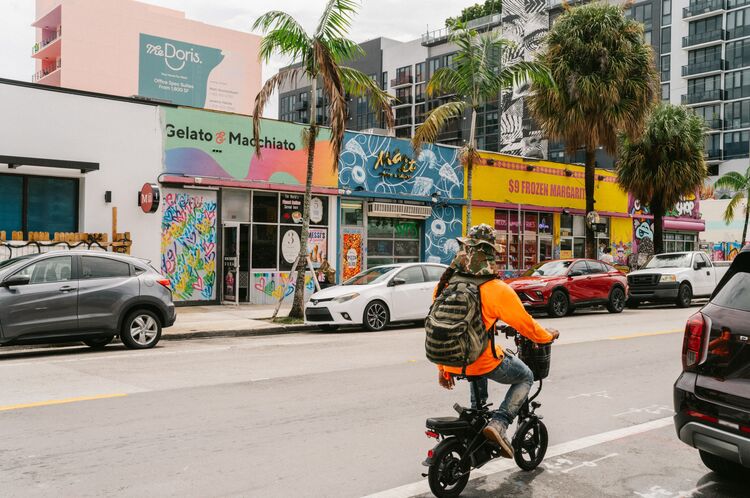
Moishe Mana arrived in Miami in 2009 and started snapping up property in the Wynwood district, a warren of vacant lots and warehouses where graffiti adorned the walls and the low-end rattle of sound systems from underground raves filled the night air.
His bet has now paid off in a major way.
Last week, billionaire Citadel founder Ken Griffin revealed that he had paid Mana $1.1 billion for about 35 acres of land in Wynwood where Carnegie Mellon University plans to open a Miami campus , a move the financier said will transform the Florida city into an education and innovation engine.
Read More: Griffin Envisions Miami as Far More Than an Enclave for Rich
Mana, who emigrated to the US from Israel in the 1980s and built a moving empire in New York, spent about $70 million to acquire the land. He said he only sold because he believed in Griffin’s vision — and that the land was likely worth even more.
“The whole transaction with Ken, it was not really about the money,” Mana, who owns around 80 properties in downtown Miami, said in an interview. “I just passed on the torch.”
Wynwood turns into a raucous nightlife district after dark, with drunken revelers spilling into the streets into the early hours of the morning. Once a hotbed of underground parties in the 2000s and 2010s, its outdoor dance clubs still feature famous DJs who draw large crowds most days of the week. It also has a vibrant visual art scene that plays a central role in Miami’s annual Art Basel event.
Mana — who stood up to John Gotti after the mob boss threatened him for stepping into Mafia-controlled business in New York — is regarded as an eccentric figure in Miami’s business world. He has hired artists to paint massive reproductions on his downtown buildings of masterpieces like the Mona Lisa and Girl With a Pearl Earring, and frequently talks of his ambitions to unite the Americas into a single economic bloc.
When he first invested in Wynwood, Mana saw similarities to New York’s SoHo, another gritty urban neighborhood that metamorphosed from an industrial center taken over by artists to a glamorous hive of upscale boutiques and trendy restaurants.
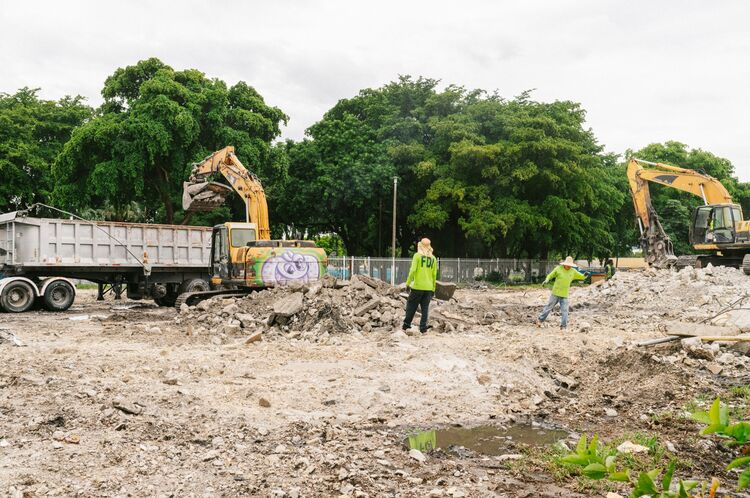
His holdings came to include a convention center, a concert venue, parking lots and empty land. He said he didn’t want to see Wynwood built up with residential towers, like other parts of Miami.
Mana praised Griffin, who has been refashioning Miami from a tropical playground to a capitalist paradise, comparing him to the family credited with underwriting the Italian renaissance.
“Ken is a Medici,” he said.
Before the deal with Griffin, Mana had promised grand neighborhood revamps and mega projects for Wynwood. In 2015, he released ambitious plans for up to 10 million square feet of development on the site that he sold to Griffin, but the project was never built.
“We’re grateful that Moishe Mana chose to sell and chose to sell to a group that is going to have monumental impact on the neighborhood,” said Jessica Goldman Srebnick, the co-chair of Goldman Properties, a real estate development firm founded by her father, Tony Goldman.
The Goldmans are among the largest land owners in Wynwood, and like Mana, they have roots in New York. Their company was behind projects in SoHo, purchasing and renovating properties along Greene Street in the 1970s, and in Miami’s South Beach in the 1980s, including the historic Tiffany Hotel, which was later renamed The Tony.
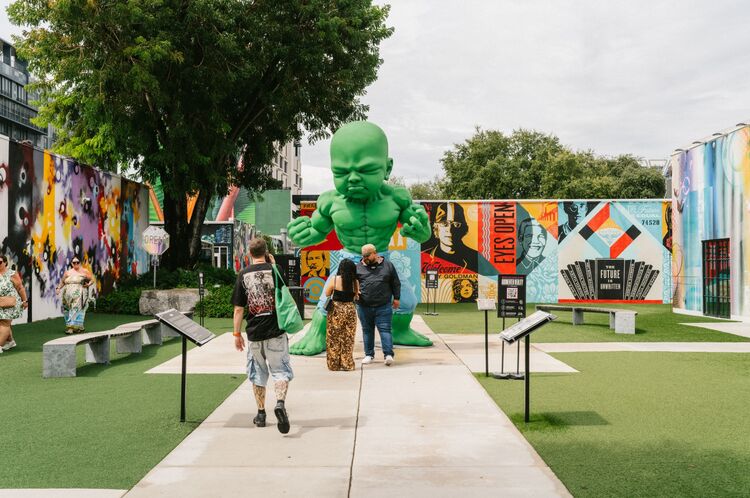
Often credited as the force behind Wynwood’s transformation, Tony Goldman started buying property there in the 2000s, when it was a sea of abandoned manufacturing facilities and warehouses covered in graffiti. He kept much of the street art and lured famous artists — including Shepard Fairey, Kenny Scharf and Brazilian duo Os Gemeos — to make splashy, colorful murals for display at Goldman’s Wynwood Walls, now a ticketed outdoor museum.
Goldman Properties owns a large portion of the area surrounding the future Carnegie Mellon Miami campus, including an office building they purchased in partnership with Griffin this year.
“There are going to be tremendous opportunities and tremendous new tenancies, new buildings,” Goldman Srebnick said. “I hope it’s going to carry the same spirit of innovation and creativity.”
She said “a lot of work to still be done” to attract large corporate tenants and make Wynwood the economic hub Griffin wants it to be. Wynwood’s office market competes with the modern skyscrapers of Brickell, Miami’s financial center, where Citadel’s future flagship skyscraper is being built.
Wynwood’s office vacancy rate was at 22% in the second quarter, compared with 15% vacancy in all of Miami, according to Blanca Commercial Real Estate.
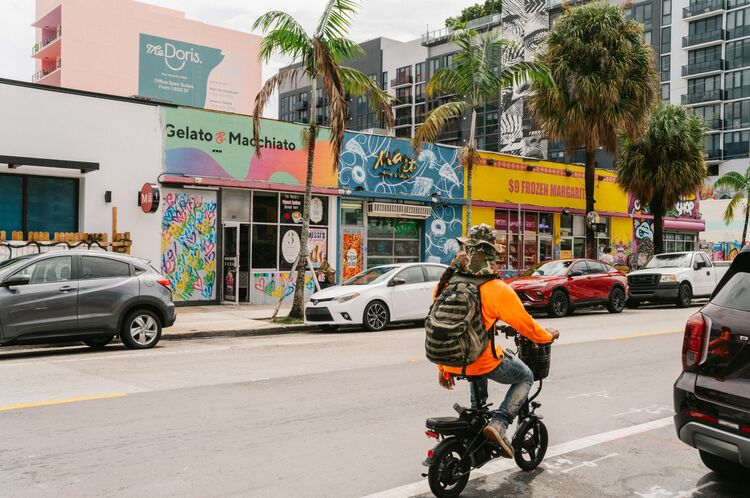
Despite an influx of upscale apartments, offices and restaurants, Wynwood retains much of the feel of its past. Murals and graffiti cover the walls of low-lying industrial buildings, and concrete and asphalt dominate the area, with few trees or patches of green.
Some tech companies have started to plant a flag in Wynwood. Amazon.com Inc. opened a satellite office there, and Peter Thiel’s Founders Fund is headquartered in the area.
Griffin and Goldman’s building, a glass tower near I-95, has tenants that include accounting giant PricewaterhouseCoopers and Gemini, the Winkelvoss twins’ cryptocurrency exchange. It’s also home to MIAX, an options exchange that opened Miami’s first trading floor last year.
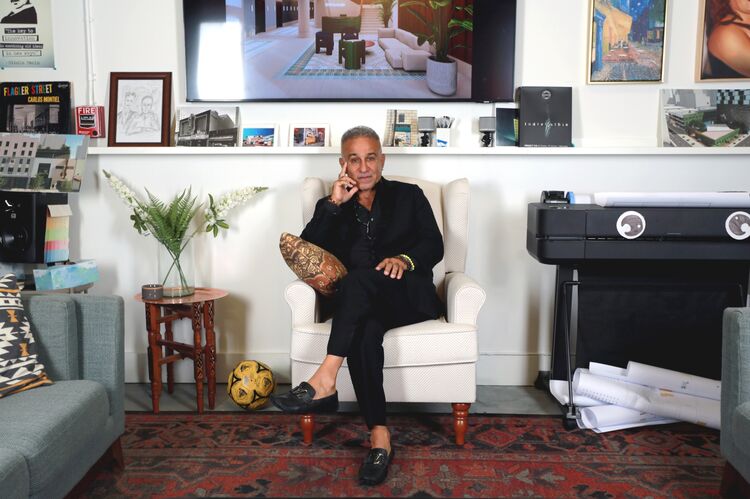
Kobi Karp, the founder of one of South Florida’s most prominent architecture firms, has his office in Wynwood. He called the location of the former Mana site “the 50-yard line,” for its central location.
Karp’s firm has designed hotels, offices and retail projects in the neighborhood — and he’s likely to benefit from the development rush expected from Carnegie Mellon’s arrival in Miami.
“What has been built thus far in Wynwood is not sufficient to supply this coming demand,” he said.