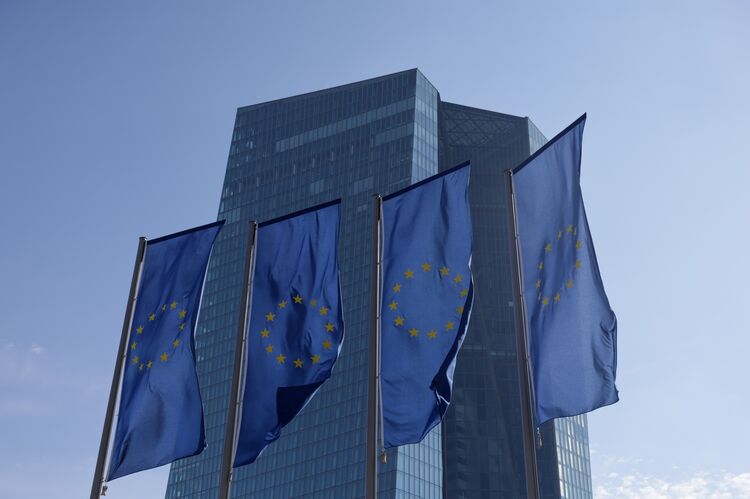
European Central Bank officials weighed the need to take further action on inflation last month alongside an assessment that any increase in borrowing costs would still not restrict growth, according to a summary of the meeting.
The account of the Sept. 9-10 gathering, where policymakers opted to tighten for the second time in response to the energy shock, showed how discussion focused on the calibration of such a move.
“While it was noted that the response should remain proportionate, it was also pointed out that a deposit facility rate of 2.5% remained in the range of neutral interest rates estimated by staff,” the ECB said in the
account
.
The ECB’s challenges have intensified since September. Inflation approaching 4% is underpinning bets on several more rate hikes, at a time when investors are dumping bonds of France and other highly indebted countries, feeding fears of another debt crisis just a decade after the last.
At their next policy meeting in three weeks, officials are set to keep the deposit rate unchanged — even as some including Croatian Governing Council member Ante Zigman anticipate an intense debate. Another hike following the ones in June and September is widely expected for the final session of the year.
Chief Economist Philip Lane reiterated earlier on Thursday that a “measured” response to the energy shock caused by the Iran war is appropriate as spillovers to the rest of the economy remain limited.
Below are other key comments from the ECB’s last meeting:
On Interest Rates:
-
“Communication should remain neutral, neither suggesting that the current decision was another step in a predetermined tightening cycle nor that it was the last rate hike.”
On Inflation:
-
“The longer energy prices stayed high, the more likely they were to drive up broader inflation through indirect and second-round effects.”
-
“In-depth analysis of the labor market was seen as a key input for assessing indirect and second-round effects of the energy shock through higher wages. However, given the typical timing of wage negotiations and the lags with which wages typically reacted to higher inflation, most new insight regarding wage developments was only to be expected early next year.”
On the Economy:
-
“The repricing at the long end of the yield curve, provided it remained orderly, also supported the intended monetary policy stance and could have implications for appropriate policy rates in the future. Model estimates suggested that the effects of higher long-term interest rates on growth and inflation could be material.”
-
“In this context, it was observed that the September staff projections incorporated the direct impact of the recent significant increase in long-term interest rates until the cut-off date.”
-
“The view was held that the recent resilience of the economy and the upward revision to the growth outlook suggested that the overall risk assessment for growth might place too much weight on the global energy crisis, and that risks to the economic outlook were arguably more balanced than previously, even if still skewed to the downside.”
On Markets:
-
“Recent moves at the longer end of the curve appeared to be driven primarily by higher real term premia, which could be explained by greater public and private debt issuance and uncertainty about the fiscal outlook.”
-
“Euro area sovereign bond markets had functioned in an orderly manner, showing some differentiation among Member States with different fundamentals.”