Saudi Arabia vaulted into the ranks of the world’s rich nations by selling oil worldwide. Inside the kingdom, a group of business families have built a fortune of more than $9 billion by betting on an even more essential commodity: Water.
Their ACWA Power Co. got its start building a water and electricity plant to supply Mecca, Islam’s holiest place. But it has since expanded into one of the biggest desalination companies in the desert nations across the Gulf. The war has further underlined the Middle East’s reliance on desalination, with governments rushing to assure residents that they could ensure continued water supply even as some regional facilities came under attack at the peak of conflict.
While Gulf infrastructure remains under threat as the conflict drags on, the breadth of ACWA’s facilities are expected to offer it some insulation. The Saudi company has been steadily adding water and power plants as well as renewable projects across the Middle East and beyond.
ACWA has a market value of $34.9 billion. Saudi Arabia’s Abunayyan and Al Muhaidib families together own at least 26.3%, both directly and through their joint holding company, Vision Invest, based on filings and calculations by the Bloomberg Billionaires Index. The kingdom’s $905 billion Public Investment Fund is the biggest shareholder, controlling 44.2%.
The bet on ACWA is among the big wealth-creation stories in the Saudi private sector, showing how large fortunes are being built through family-owned conglomerates aligned with national strategic priorities. Across the Gulf, local families may now be poised to benefit yet again as the regional conflict pushes governments to look inward and bolster domestic infrastructure from any potential shocks.
Water desalination is a key driver of ACWA’s revenue growth and the long term contracts for such business “partially insulates ACWA from short-term economic downturn,” said Jefferies analyst Prateek Bhatnagar. Meanwhile, development of water desalination, clean energy and renewable infrastructure is also a key part of Saudi Arabia’s long-term plans, the analyst said.
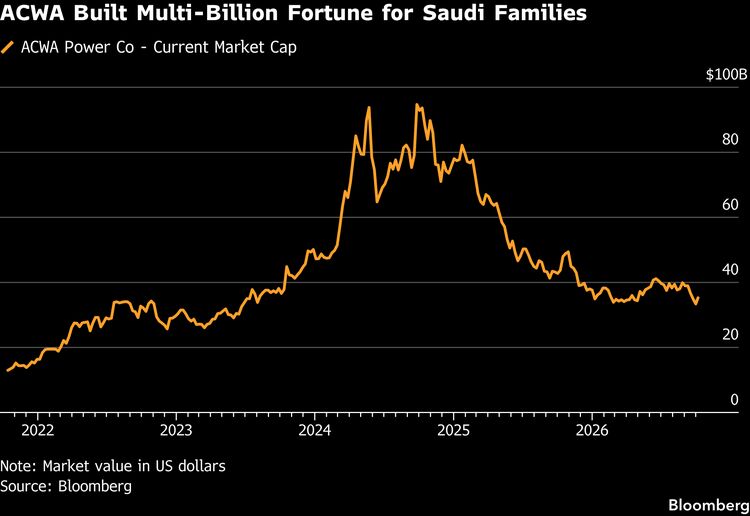
Last year, ACWA had one of Saudi Arabia’s largest ever rights issues. Its stock has seen sharp fluctuations with big declines in some years.
Still, even Wall Street firms expect steady demand for water-related infrastructure. As countries worldwide grapple with extreme weather conditions and shortages of clean water, asset managers and private equity investors from BlackRock Inc. to EQT Corp. have poured money into water-related projects. In few places is the need higher than in the desert countries of the Middle East.
About half of the world’s installed desalination capacity is spread across the six members of the Gulf Cooperation Council, including Saudi Arabia, Qatar and the United Arab Emirates, where tens of millions rely on treated water.
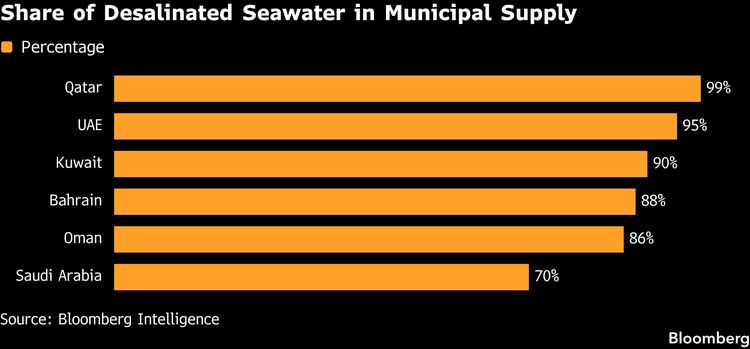
But the war has thrown up new challenges, highlighting broad risks to vital facilities in the region. Kuwait and Bahrain reported strikes to desalination projects in their countries earlier this year.
“Since the outbreak of the conflict, certain Group facilities within the region have come under attack,” ACWA said in a June investor report, without providing details. Still, the company “maintains a robust operational framework to manage associated risks,” it said.
Representatives for the three families and ACWA didn’t respond to request for comment.
ACWA was founded by three dynasties in 2004. Mohammad Abunayyan, who holds the largest individual stake at ACWA Power, brought water-sector expertise from having worked with his father who helped pioneer the use of diesel-powered turbine pumps in irrigation, but the business faced setbacks including the Gulf War which severely upended the sector, Abunayyan said at a business event in 2009. That made him eager to diversify beyond irrigation.
Also read: How Iran War Is Exposing Risks to Gulf Water Supply
Tycoon Sulaiman Al Muhaidib, meanwhile, represented a diversified merchant family with holdings across food, real estate and other sectors.
The third founder, Ahmad Al Rajhi also belonged to a major investment and industrial dynasty. The Al Rajhi clan held a 11.2% stake in ACWA through the Al Rajhi Holding Group at the time of the company’s 2021 IPO. During an internal restructuring in 2023, the group said it transferred ACWA shares to investment portfolios held by affiliated companies with the same shareholders as Al Rajhi Holding.
The recipient companies weren’t named in the disclosure, and no Al Rajhi-affiliated entities have more recently appeared among ACWA Power’s substantial shareholders with stakes of 5% or more. An 11.2% holding would be worth about $3.9 billion at current prices.
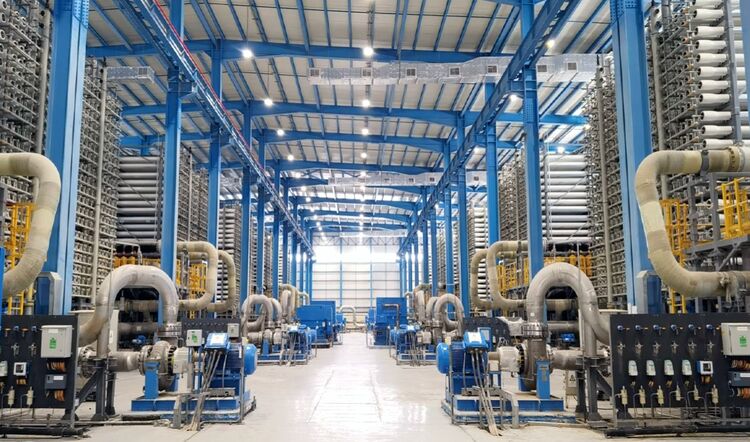
ACWA began development of the multi-billion dollar Shuaibah Independent Water and Power Project in 2005 shortly after the kingdom liberalized its utilities sector. Supplying water to Mecca, especially during the peak Hajj season, was both an issue of national security and religious duty.
Fast forward to today and ACWA Power is a huge domestic and global player: It’s among the world’s largest private desalination companies and among the largest Saudi power producers. ACWA is also at the center of the kingdom’s drive to increase renewables in its energy mix. It recently got government approval for the exclusive right to export green hydrogen produced in Saudi Arabia to global markets. In 2024, the company started an expansion to China with a push into renewable energy projects, and it’s exploring opportunities to enter the US market.
Bhatnagar, the analyst, said the company is relatively protected from security risks during the war because it operates a portfolio of more than 100 assets across multiple locations, with its geographic footprint gradually expanding beyond the Gulf into markets such as Morocco, Uzbekistan, Egypt and Turkey.
“Thus, the potential impact on the overall portfolio is partially mitigated by diversification,” the analyst said.