
The ongoing El Niño is expected to shatter water-temperature records set during previous episodes of the weather pattern, bringing heat and unusually dry or wet conditions to critical economic regions around the world, according to a seasonal projection issued Thursday by the United Nations’ World Meteorological Organization.
This El Niño reached 2C above normal this summer, and researchers project temperatures could peak at 3.7C above normal in the final three months of the year. An El Niño is considered very strong when the departure exceeds 2C.
“The ocean it's drawing from is the warmest we've ever measured,” said Celeste Saulo , the WMO’s secretary-general, at a conference in Bangkok. “There is simply more heat available to release.”
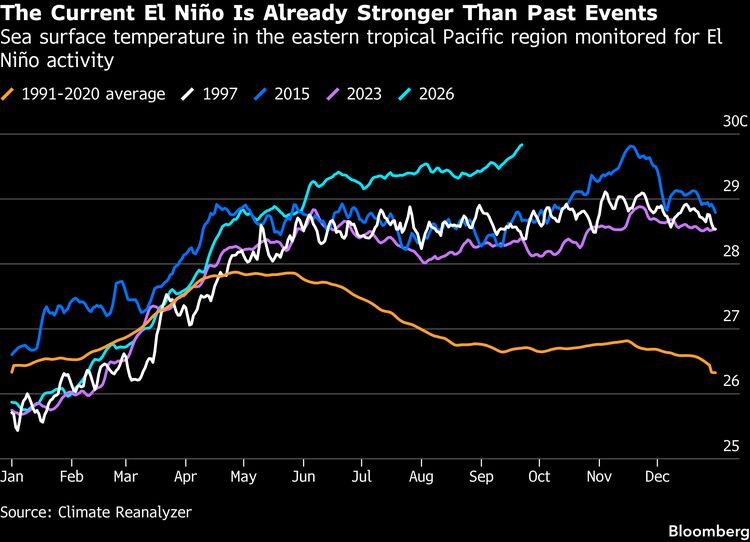
The strongest ever El Niño, in 2015-2016, raised water temperatures by a record 2.6C. It was responsible for almost $4 trillion in lost potential economic output over the following three years because of slower growth, according to a 2023 estimate by researchers in China.
El Niño is identified by continuously monitoring temperatures in the eastern tropical Pacific. When the average over several months rises 0.5C above the long-term norm, scientists expect shifts in weather patterns around the world. As the Pacific releases heat into the atmosphere, Australia, Southeast Asia and the northern US and Canada typically experience hotter, drier conditions. Flood risks increase across the southern US, Chile, Argentina and East Africa.
This year, El Niño has disrupted markets around the world. Heavy rainfall in Brazil is leaving sugar cane unharvested and raising concerns about next year’s arabica coffee crop. In California, increased rainfall is expected to fuel vegetation growth, leading utilities to forecast higher wildfire risks in 2027 and 2028. Meanwhile, El Niño-related drought is intensifying fires in Indonesia, the world’s top palm-oil producer.
El Niño years tend to push annual global average temperature to new records, as happened in 2024, according to Saulo. Data from the Copernicus Climate Change Service, the European Union’s Earth observation program, suggest that 2026 has a 26% chance of surpassing the all-time high set two years ago.