By Lily Meier | Updated on Oct 08, 2026 at 09:24 AM
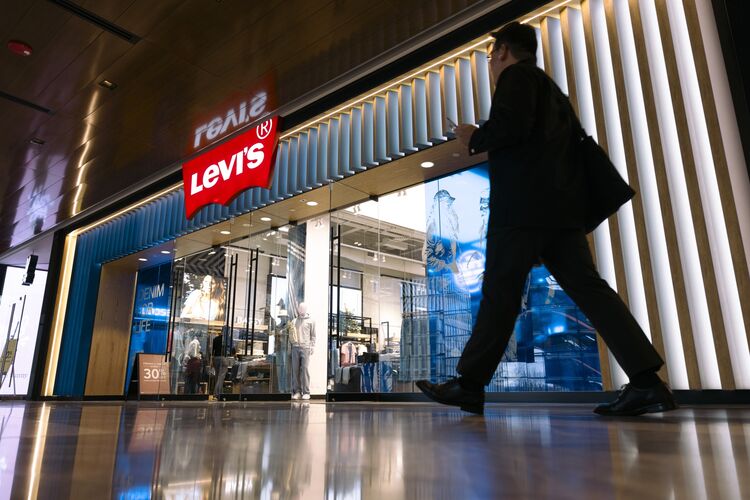
Levi Strauss & Co. posted the slowest growth in its direct-to-consumer channels since late 2022 — in part due to a marketing misstep — while raising its full-year earnings outlook.
Revenue generated from Levi’s own stores and website grew 2% in the third quarter ended Aug. 30, a marked deceleration from the previous quarter’s 11% growth. Revenue of $1.6 billion in the period was in line with the average of estimates compiled by Bloomberg.
Levi also raised its full-year guidance for earnings per share, excluding some items.
“Our direct-to-consumer business overall did fall short of our expectations, and that was driven largely by softer traffic trends in both the US and Europe,” Chief Executive Officer Michelle Gass said in an interview.
Shares in Levi Strauss fell as much as 2.1% in premarket trading on Thursday. The stock has declined 5.9% this year through Wednesday’s close, below the 14% gain of the Russell 1000 Index over the same period.
In the US, part of the problem was Levi’s back-to-school advertising that focused on baggy jeans rather than low-rise. “Our campaign was all about loose,” Gass said. “Now loose is still a very big and important part of our business, but a lot of the excitement and energy in the market was around low,” she added, referring to jeans that sit several inches below the waist.
The company expects direct-to-consumer growth for the current quarter, which includes part of the key holiday season, to increase by a mid-single digit. Gass said performance has picked up after the company changed its marketing to focus on low-rise jeans. Levi has also reorganized merchandise in its stores to focus on the trend.
Since becoming Levi’s CEO in 2024, Gass has focused on expanding the product selection at the namesake brand and prioritizing the company’s own sales channels. That strategy has been largely successful, with Levi raising its full-year outlook in both of the previous two quarters.
The company expects to invest $60 million of tariff refunds back into the business this year, with $35 million coming in the fourth quarter.
“The tariff refund has been helpful to profits this quarter, but the fact that Levi’s intends to reinvest some of the windfall is notable as it clearly sees some further headroom to boost sales,” Neil Saunders, managing director of GlobalData, wrote in an email. “However, with that commitment, it will be important for Levi’s to deliver a slightly punchier sent of numbers to round off the year.”
The San Francisco-based company recently named John Vandemore from Skechers USA Inc. as chief financial officer, replacing the retiring Harmit Singh.