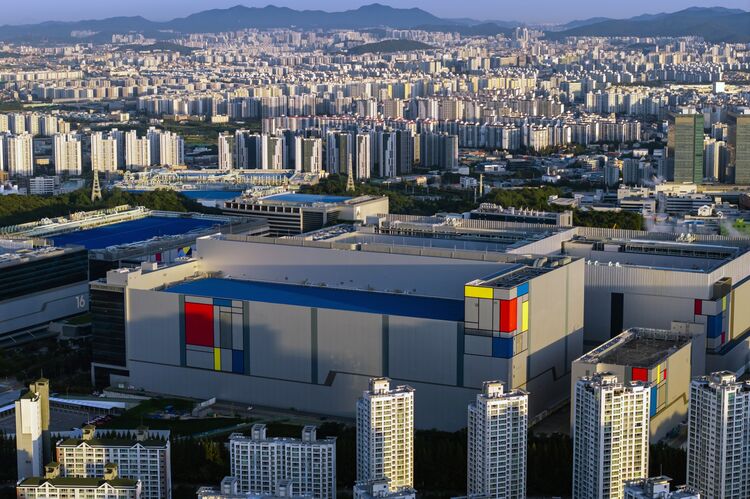
Samsung Electronics Co. earned a nearly nine-fold rise in quarterly operating profit, and Taiwan Semiconductor Manufacturing Co.’s sales jumped 51% · , reflecting the spoils of relentless spending on AI infrastructure.
Yet investor reaction to a day of record-setting results was muted, weighed down by worries about the staying power of an investment boom propped up by rising debt levels. Samsung’s stock price shed 2.4% Thursday in Seoul. In Tokyo, shares of both companies’ suppliers including Tokyo Electron Ltd., Advantest Corp. and Ibiden Co. declined.
Investors are questioning how long AI spending can last, especially as companies’ big capex plans come under pressure because of rising borrowing costs around the world.
“Are we going to see the sort of return that’s being promised at the moment?” said Jun Bei Liu, co-founder and lead portfolio manager of Ten Cap Investment Management.
| Read more |
|---|
|
Samsung Slips as Investors Demand More Than Record Profit TSMC’s Quarterly Revenue Jumps 51% After AI Demand Holds Up · Micron Gives Bullish Forecast, Even as Pay Raises Crimp Margins |
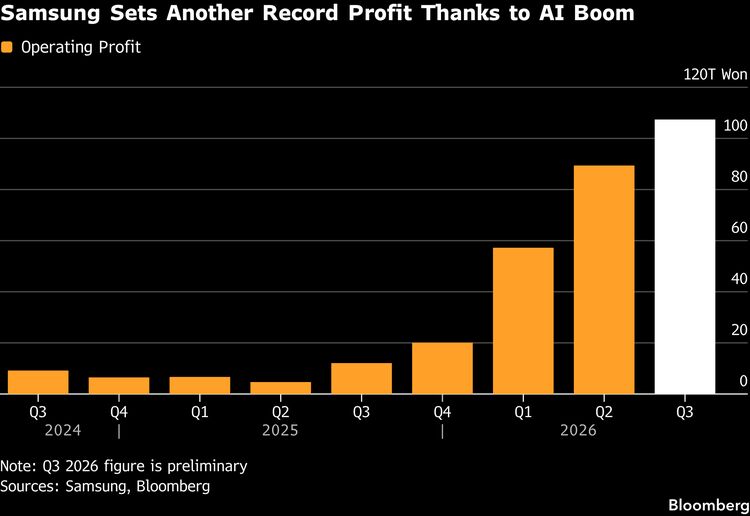
Samsung, which is the world’s largest memory chipmaker, posted a record preliminary operating profit of 107.4 trillion won ($80.1 billion) for the September quarter after revenue more than doubled. That still fell just short of the average analyst forecast.
“Samsung has delivered a record profit and still fallen short of expectations, which tells you just how demanding the AI trade has become,” said Josh Gilbert, lead Asia Pacific analyst at eToro.
Technology providers are rushing to secure supplies of memory needed to power AI services. High-bandwidth memory — the critical chips used alongside Nvidia Corp. and other AI accelerators — is drawing massive spending, with flash memory and low-power chips also in demand. The record numbers and high expectations underscore how sharply the economics of the AI boom have swung in favor of Samsung, SK Hynix Inc. and Micron Technology Inc.
Counterpoint Research raised its forecast for third-quarter DRAM prices to a 10% to 20% sequential increase, from 5% to 10% previously, saying customers are bringing forward orders.
“Samsung is quite undervalued right now,” said Neil Shah, vice president of research at Counterpoint. “They’ve got a lot up their sleeve for next year with HBM, mostly because the full effect hasn’t even landed yet.”
Citigroup analysts Peter Lee and Jayden Oh echoed that optimism, predicting 12-layer HBM4 prices could jump 100% to 150% next year, significantly boosting Samsung’s average selling prices and profit margins — although the brokerage has cut its full-year profit forecast for the company due to a stronger Korean won.
Read more: Won Gains After Samsung Results, Wider CA Surplus: Inside Korea
The boom has transformed Samsung’s semiconductor business, which only a few years ago was grappling with losses after a punishing downturn in demand. Now, the AI infrastructure buildout is absorbing vast amounts of advanced DRAM, while Samsung is gaining ground on SK Hynix in HBM. The strength of the cycle is also showing up in South Korea’s trade data, with semiconductor exports more than tripling from a year earlier in September.
Analysts on average estimate Samsung’s chip division will post operating profit of 110 trillion won while its electronics unit will report a loss. The Suwon-based company will release a full financial statement on Oct. 29.
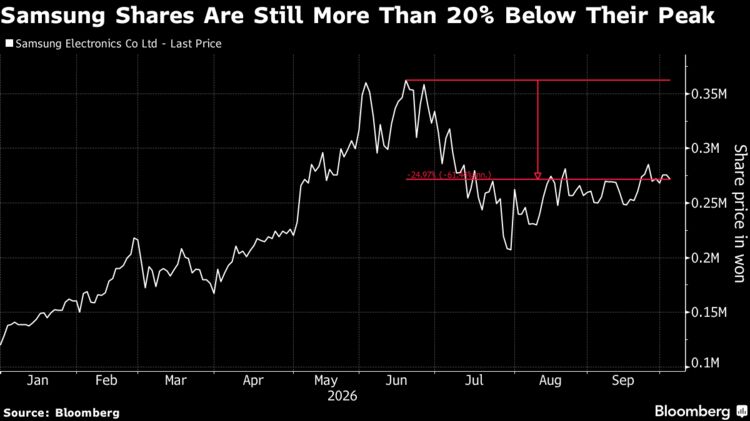
Market caution persists, however. Samsung’s shares remain about 25% below their June peak even after the company reported record-breaking results in July. Investors retain a measure of skepticism around soaring profits in a sector prone to boom-and-bust cycles. Samsung and SK Hynix are now expanding production capacity while also increasingly backing companies in the AI sector in a bid to drive more demand for their products.
Highlighting current market dynamics, Advanced Micro Devices Inc. Chief Executive Officer Lisa Su emphasized long-term strategic partnerships with both Samsung and SK Hynix during a visit to Seoul this week. Su confirmed AMD has begun shipping its next-generation Instinct MI455X and Helios systems featuring HBM4.
“Memory is so essential to overall computing; it has been a very tight supply environment,” Su told reporters, adding AMD’s HBM partnerships with Samsung and SK Hynix will span multiple product generations. “We’re encouraging our partners to build as fast as possible.”