Brazil’s next government has no time to lose when it comes to delivering sweeping fiscal policy changes, said Marcelo Kayath, who is seen as a top contender for finance minister should Flávio Bolsonaro win the presidency.
The local asset rally after Bolsonaro’s stronger-than-expected finish in the first round reflects hopes for an economic overhaul, Kayath said in an interview. Still, the surge shouldn’t be seen as a “blank check” from investors, he said.
“The market is saying, through prices, that it sees room for a change in direction in Brazilian economic policy,” said Kayath, who is Credit Suisse’s former head of investment banking in Brazil and currently a partner at asset manager QMS. “It’s a change in expectations, not a definitive assessment of a government that hasn’t even begun.”
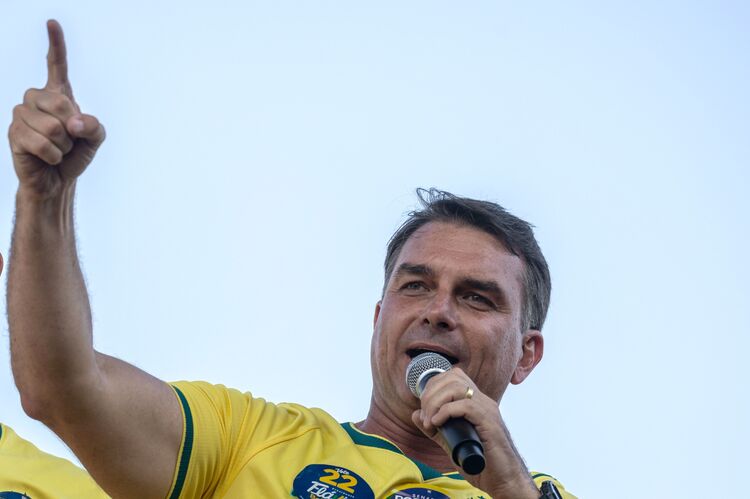
Bolsonaro’s surprise first-place finish on Sunday triggered euphoria across local markets as investors bet a change in government would bring tighter fiscal policy and lower interest rates. The senator has since consolidated support from key center and right-wing parties. He remains ahead of President Luiz Inácio Lula da Silva before the Oct. 25 runoff, with 53% of valid votes against 47% for the incumbent, according to an AtlasIntel poll published on Friday.
“We need to change the dynamics of spending, increase the efficiency of the state and create the conditions to stabilize the debt-to-GDP ratio over the four-year term,” Kayath said.
Aside from Kayath, some of the names that have been floated to manage Brazil’s economy should Bolsonaro win include Mansueto Almeida, Roberto Campos Neto and Alexandre Bettamio, Bloomberg News reported · Thursday, citing people familiar with the matter.
Asked whether he is in contact with the Bolsonaro campaign or would consider becoming finance minister, Kayath declined to discuss specific talks or roles.
“I’m honored by the confidence and by the people who have mentioned my name, but this isn’t the moment to discuss positions,” he said. “It’s the moment to have a much bigger discussion about Brazil’s economic future.”
Fiscal Adjustment
There are mounting signs of trouble in Latin America’s largest economy. Public expenditures have propelled the nation’s budget deficit to nearly 10% of gross domestic product, keeping inflation well above the 3% target even as growth wanes and the central bank fights back with ultra-tight monetary policy.
While Bolsonaro has pledged to cut spending, reduce bureaucracy and lower taxes, he has yet to detail how he would stabilize Brazil’s record public debt. Some of his economic advisers have told investors that a Bolsonaro administration would seek a fiscal adjustment equivalent to about 1.5% of GDP.
Kayath said a reduction of that size would be difficult but achievable — and that discretionary spending cuts alone wouldn’t be enough.
“We can’t pretend that Brazil’s budget has a large portion that is freely available to cut,” he said. “Over 90% of primary spending is mandatory, so we won’t achieve a structural adjustment simply by cutting discretionary spending.”
Carrying out reductions worth 1.5% of GDP would require work across a slew of areas, Kayath said. For starters, the government would need to review spending increases that are indexed to inflation, fight fraud and reassess privileges including outsized public-sector salaries, he said.
The administration would have to scrutinize tax breaks and subsidies, he said. More broadly, it should implement a new and credible fiscal framework.
“There’s no point in creating a sophisticated rule if the market knows it will be changed at the first sign of difficulty,” Kayath said. “The anchor needs to be tied to a sustainable debt trajectory and accompanied by concrete measures to control spending.”
Read More: Bolsonaro Promises Pension Raise Above Inflation for Retirees
Congress
Going forward, right-wing victories in Brazil’s Congress and key state races could help Bolsonaro advance his economic agenda, Kayath said. The senator’s Liberal Party will hold 28 seats in the Senate starting next year, making it the chamber’s largest caucus.
“That helps, but it doesn’t replace the ability to build a majority,” he said. “An economic reform agenda won’t be approved solely through the strength of one party.”
Kayath also cautioned against concluding that the real’s post-election gains are permanent. The exchange rate has appreciated about 4% in the past week, the biggest jump among emerging market currencies.
“The real showed that there is room for a change in perception, but it is still too early to say that the currency has definitively moved to a new level,” he said. “The market is assigning value to the possibility of a change in economic policy.”
Outside finance, Kayath, 62, is an internationally acclaimed classical guitarist who has won global competitions and recorded several albums.
Kayath’s emergence as a contender to run Brazil’s economy also comes with an unusual political history. He backed Lula against Bolsonaro’s father, former President Jair Bolsonaro, in the 2022 election. Furthermore, he was considered for a central bank board seat the following year as he maintained a close relationship with then-Finance Minister Fernando Haddad.
“Cutting privileges, fighting fraud, improving state efficiency and creating conditions for lower interest rates aren’t left-wing or right-wing issues,” he said. “They are matters of responsibility with public money.”