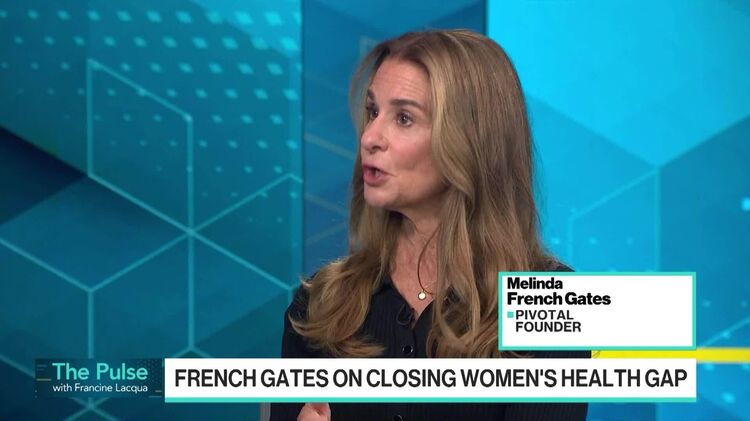
Health problems are pushing women out of the workforce and limiting their ability to participate fully in public life, according to Melinda French Gates, who is stepping up investment in research and care through her organization Pivotal.
New Gallup-Pivotal research found more than four in 10 UK women said their health had prevented them from doing everything they wanted, while 34% said it kept them from reaching their potential at work. Among women who have experienced menopause or perimenopause, 58% said it had negatively affected their life or work in at least one way.
“We are way behind on women’s health across the world,” French Gates, who founded Pivotal, said in a Bloomberg Television interview in London on Friday.
More research and better data are needed to persuade governments to prioritize the issue and direct funding to where it can have the greatest impact, she said.
“Measuring matters,” French Gates said. “Let’s come back and measure this in four or five years” to see whether women are better able to find treatments. Governments have a particularly important role in funding research, while health systems need to invest more in prevention and tackle biases that can result in women’s symptoms being dismissed, she said.
| Read More About Woman’s Health: |
|---|
|
The economic consequences can be particularly acute because perimenopause and menopause often affect women just as they are reaching the peak of their careers. Women report taking time off work and seeing multiple doctors to get symptoms addressed, French Gates said. Health problems can become “an off-ramp to their dreams.”
French Gates, who has committed $215 million in new funding for women’s health through Pivotal, said stigma remains an obstacle, particularly around menopause.
“It is time we look at this issue,” she said. “Let’s invest in it though now.”
The need extends beyond wealthy countries.
In Africa, French Gates said one of the most important lessons from her work has been that when women can “time and space the births of their children” and can lead healthy lives, “they flourish, and everyone around them flourishes.”