By Jorge Valero, Kamil Kowalcze and Laura Noonan | Updated on Oct 09, 2026 at 02:59 PM
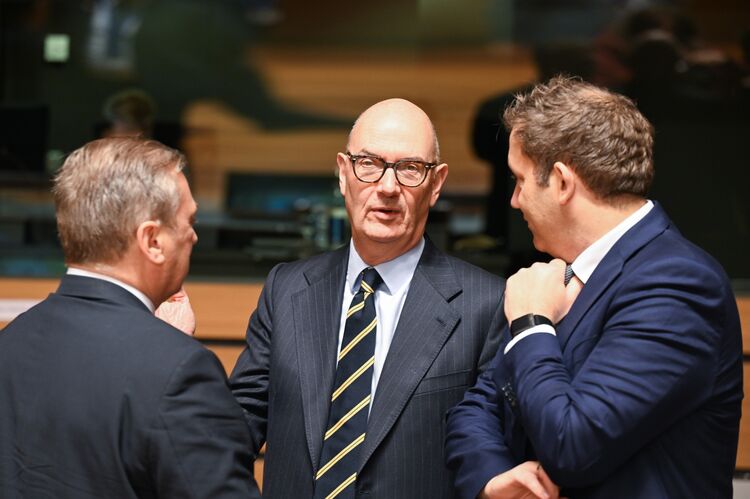
European Union member states reached a deal over a revamp of markets supervision after a decade-long effort to bring down national barriers and spur private financing.
Finance ministers in Luxembourg on Friday agreed on the so-called Markets Integration and Supervision Package, or MISP, that will centralize supervision and enforcement under the Paris-based European Securities and Markets Authority.
Ireland, who is currently holding the EU’s rotating presidency, put forward a compromise proposal to bridge differences over deciding which “significant” institutions should fall under direct supervision of ESMA and what entities were exempted, including handful of large ones including Germany’s Deutsche Boerse.
Countries were also haggling over how much power to give a new executive board that will oversee ESMA’s operations, and how a more powerful ESMA should be funded.
Ministers discussed the latest changes over dinner on the eve of a public debate on Friday. The package must still be agreed with the European Parliament over the next months before ratification.
The new compromise was initially questioned by some member states including France, and also by the European Commission, the people added, on condition of anonymity because the discussions are private.
Financial Services Commissioner Maria Luís Albuquerque told ministers on Friday that the compromise weakens the governance of the financial markets regulator, introduces “unnecessary complexity” and undermines the effectiveness of supervision, making ESMA “costly and cumbersome.”
“The European Commission cannot support this approach,” she said in the debate, adding that she hopes that the European Parliament will put forward a more ambitious proposal.
Speaking later to reporters, she stressed that “this is a way less efficient way of doing central supervision, less agile, it will be duplicative and in our view it will be costly and more complex.”
“On the scope of the entities which will be subject to ESMA supervision, we have some significant trading and post-trading infrastructures which are scoped out — Deutsche Boerse is the most obvious example,” she said.
In briefing notes for Friday’s meeting, Ireland had said the compromise text “maintains the bulk of the Commission’s proposal and delivers on the core objectives while reflecting significant negotiations and trade-offs.”
“The text should be viewed as a package, and securing political agreement on the package is a significant step for EU financial markets,” the note adds.
Recalling a saying about Germany and football, France’s Roland Lescure said during the Friday discussion that the “EU is a game of 27 that often last more than 90 minutes but at the end Europe wins, with one condition: we need a good captain.”
“It’s an ambitious text,” he added, signaling support for the measure with the amended governance structure.
The MISP package was put forward to spearhead efforts to build a true capital markets union in Europe, aiming to unlock financing to boost Europe’s ailing competitiveness. EU member states have been struggling for over a decade to bring down national barriers impeding the free flow of capital in the bloc.
“Europe cannot afford to lose momentum on capital markets integration,” said Adam Farkas, chief executive officer of lobby group the Association for Financial Markets in Europe. “At a time when Europe is looking to boost growth, competitiveness and investment, maintaining ambition on capital markets integration is more important than ever.”
Speaking on his way into the meeting, Ireland’s finance minister, Simon Harris, defended the compromise.
“At the end of the day, people have to decide this today, or indeed in the days ahead,” he said. “People can hold out for the perfect, or people can hold hands and jump together with the good.”