By Lydia Beyoud and Nicola M White | Updated on Oct 09, 2026 at 05:35 PM
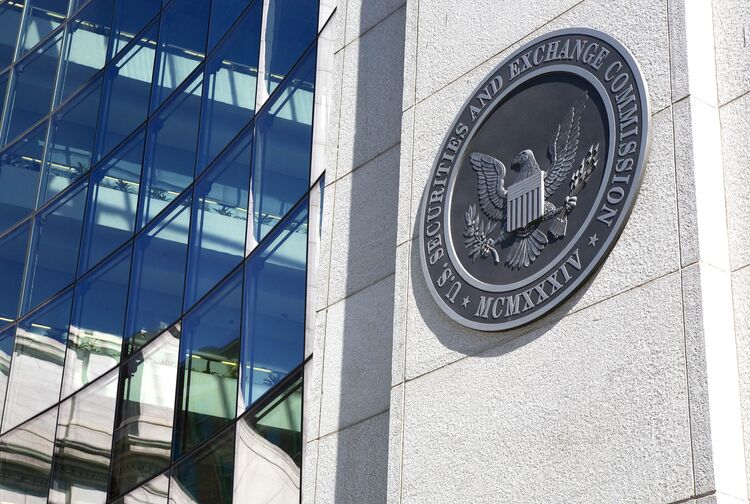
The Securities and Exchange Commission issued a proposal to let money managers once again cross-trade fixed-income securities, backing a change proponents say would bring about significant cost savings for investors.
Guidance from the agency in 2020 restricted fixed-income cross trading, which involves affiliated funds trading bonds directly with each other. Fund managers often recalibrate their investment portfolios to comply with fund rules or tweak client investments. Cross-trades can allow them to do so at lower costs than selling the bonds on the open market.
SEC rules generally prohibit affiliated funds from trading with each other but the proposal released Friday would allow funds managed by the same entity to do it, so long as they adhere to fair pricing and board oversight.
Cross-trading, which can be considered a form of self-dealing, may help funds better manage their liquidity and avoid having to sell assets at severe discounts during periods of market distress. That price might reflect “a temporary lack of market liquidity rather than a change in underlying fundamentals,” SEC Commissioner Mark Uyeda said in a statement. “If that price is then used in mark-to-model valuations, the effects can reverberate throughout the market.”
The Investment Company Institute estimated that in 2020 fixed-income cross-trading had saved funds nearly $330 million. Modernizing the rule “will reduce transaction costs, improve portfolio management, and benefit fund shareholders while maintaining strong investor protections,” ICI Chief Executive Officer Eric Pan said in a statement.
The SEC stopped short of allowing the riskiest, hardest-to-value assets from being eligible for cross-trading. Those types of assets aren’t frequently traded and therefore have values that are difficult to pin down.
However, the measure would expand cross-trade permission to other types of investments that historically weren’t available for it prior to 2020. The expansion would include securities whose values are observable from direct or indirect sources, such as quoted prices for similar securities in active markets, or for identical or similar securities in non-active markets.
The proposal, if finalized, would also add more conditions that funds would have to meet to engage in cross-trading, including determining that the trade is in the best interest of each registered fund involved in the transaction and does not favor any client over another. Those safeguards are meant to address some of the potential risks of cross-trading.
SEC staff issued a warning last month to the financial services sector about valuations of opaque investments. The announcement signaled that the markets watchdog was keeping a close eye on how firms determine what their investments are worth and how their value and risks are disclosed to investors.