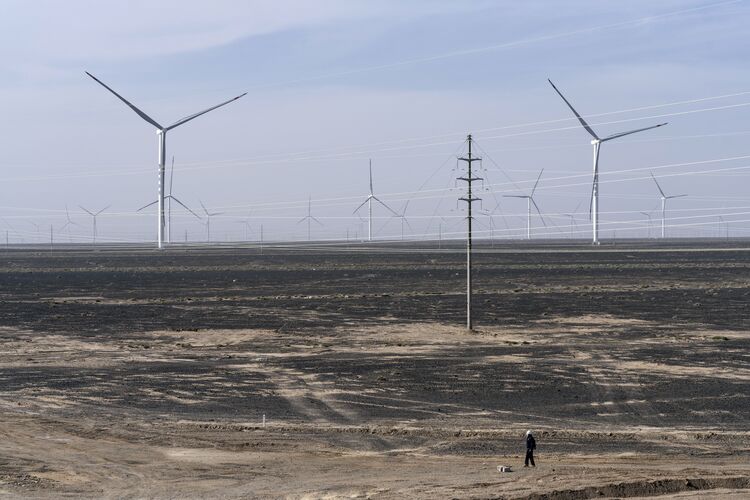
To grasp the gargantuan scale of China’s green-energy revolution, consider Gansu. In this arid strip on the edge of the country’s western expanses, it is possible to drive an hour or more through barren landscape without a single break in the neatly regimented lines of wind turbines, stretching out to the horizon.
Jiuquan, in the north of the province, is home to the world’s largest wind farm – more than 20 gigawatts built on the edge of the Gobi desert by dozens of companies over the past two decades. That’s enough to power as many as 20 million Chinese homes.
The catch is that neither these households nor energy-starved industries are close enough to easily use all of that capacity. Much is sent to cities hundreds of kilometers away. Every year, more is produced and more is going to waste.
China is now poised to spend trillions of dollars on fixing this leakage with history's most ambitious power grid buildout. Spanning power lines, mega-batteries and other longer-term energy storage, the effort has the potential to harness the world's biggest trove of renewable energy and tip the scales in Beijing's competition with the US to develop artificial intelligence. It may also provide a template for other countries wrestling with squandered capacity and even blackouts, as parts of southern Europe saw last year .
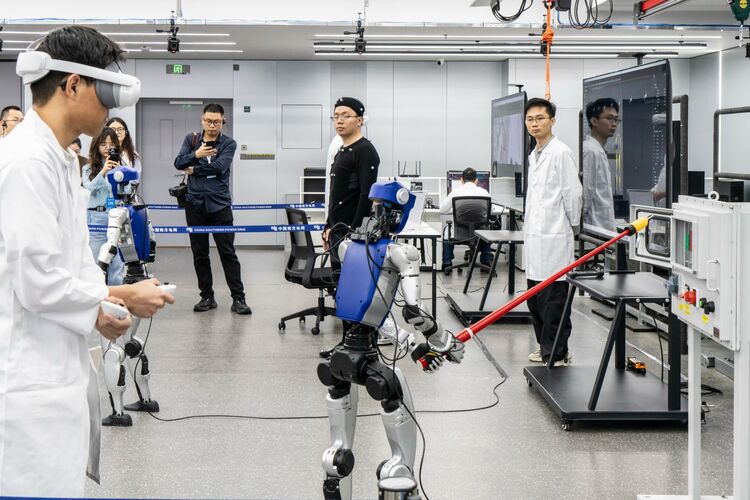
“Absorbing renewable energy into the grid is of paramount importance,” said Zhao Li, planning director at the Guangdong unit of China Southern Power Grid Co., one of the country’s two dominant utilities.
“New energy is defined by its intermittency and volatility. That is what makes grid integration the central challenge,” he added, speaking at the sleek Guangzhou office from which he oversees one of China’s most power-hungry provinces — and one of the first to face outages during the energy crunch of 2021.
The first challenge in China’s clean-power transition was to build — at speed. The world’s top polluter embarked on a race to add more generation capacity than any other country, and won.
But its second test will be even more consequential: figuring out how to use that abundance.
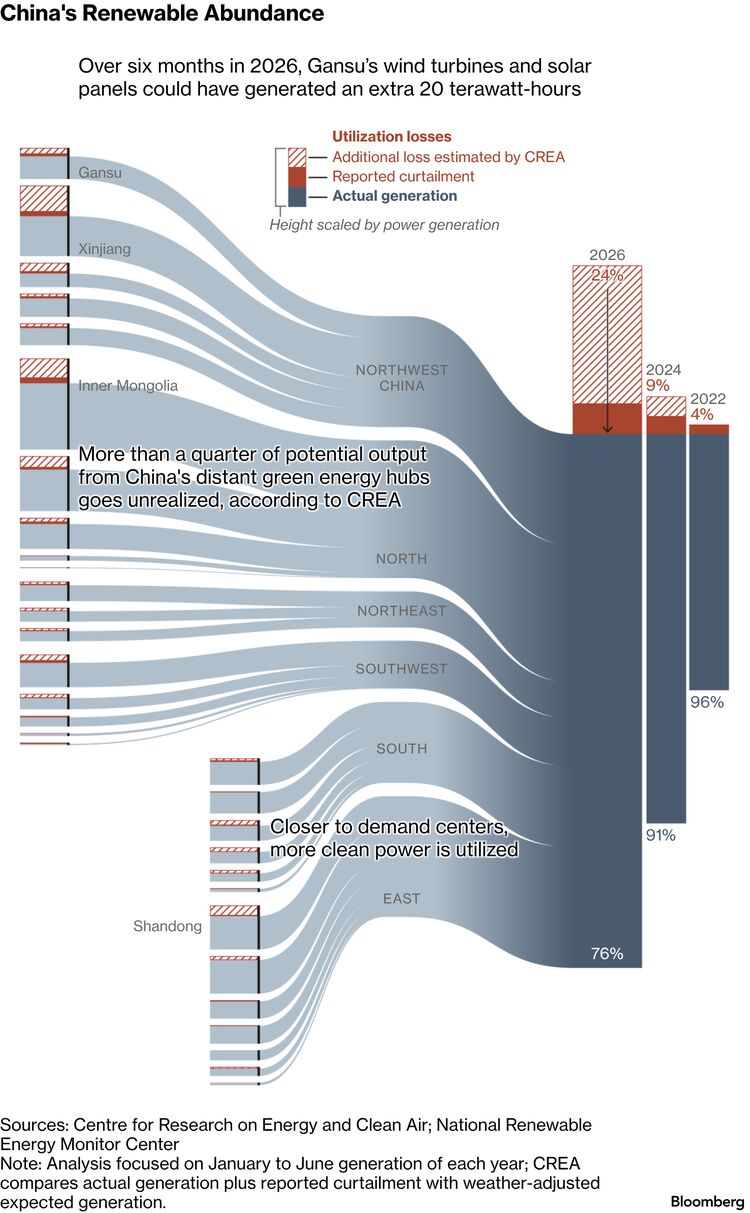
Official curtailment figures — effectively, the share of renewable energy that could have been generated but was never sent out into the world, because of insufficient grid capacity or demand — suggest about 9% of wind and solar energy was wasted in the first half of this year. That almost certainly underestimates the problem, given the scale of green production.
China could have generated an extra 401 terawatt-hours of power in the first six months alone, according to the Centre for Research on Energy and Clean Air, a nonprofit supporting efforts to curb pollution — nearly as much as Spain and the Philippines’ combined annual generation.
Granted, there are encouraging signs: incremental gains in spot power trading, increased utilization of battery storage and a more flexible use of power lines. China is also tapping its excess energy to accelerate an affordable artificial intelligence data center buildout — the US, by contrast has struggled with soaring power bills.
But there’s a long way to go. More power lines, batteries and long-term energy storage is needed. BloombergNEF estimates the country will need to pour $3.9 trillion into the grid through 2049, well over a quarter more than what is expected from either Europe or the US.
It will also need to tackle an opaque system of electricity trading that’s prevailed for decades, edging toward a more market-oriented solution. A deft political touch, meanwhile, will be needed to begin dismantling a coal economy that still employs millions – without causing backlash, social unrest or stunting growth.
“Building more wind and solar and even electric vehicles, those are the easier parts of the transition,” said Muyi Yang, an analyst with clean-energy think tank Ember. “Now China is entering a more demanding phase. The new system is growing fast and it has achieved scale and depth that means it is putting more direct pressure on the legacy system.”
Building Power
The scale of the energy challenge today is in direct proportion to an earlier conundrum. In 2021 and 2022, China was hit by a series of widespread power shortages. There were coal mine disruptions, a drought that shrunk hydropower output and at the same time Russia’s invasion of Ukraine sent oil and gas prices soaring.
An even bigger problem was electricity demand — it was growing faster than anyone expected. Portions of the Chinese manufacturing complex were emerging from the dormant Covid years with an insatiable appetite for power as the economy went electric – green-vehicle factories, sprawling battery plants and then data centers, all drawing more from the grid.
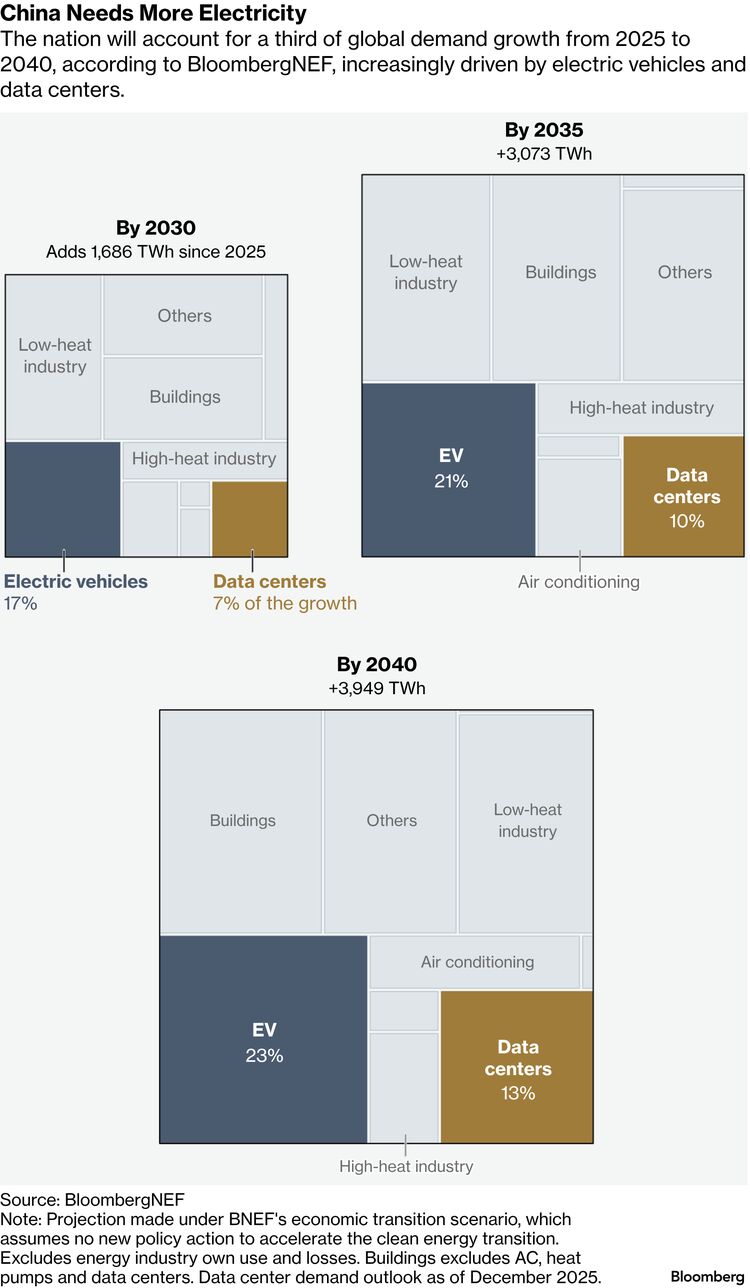
In a five-year plan running from 2021, officials estimated that China would need to produce at least 4.6 billion tons of coal equivalent a year by 2025, using officials’ preferred method of calculating energy consumption across different sources. That was a 14% increase from 2020 levels. In fact, demand grew so fast that total output ended up at 5.13 billion tons.
The pace of electrification has been staggering. From around a tenth of total energy use at the turn of the millennium, electricity accounted for 30% last year and it could hit 35% by the end of the decade. In 2025, power demand exceeded 10 trillion kilowatt-hours — a first for any country.
“This is a remarkable achievement, one that we had not previously anticipated would reach such a high level of growth,” said Ren Yuzhi, the director of planning at China’s National Energy Administration. “Forecasting future energy demand — especially electricity — is a key challenge in the next planning cycle.”
Beijing responded to surging demand with the largest power build-out in history. Between 2022 and 2025, China added more generating capacity than the entire US power system, pursuing an “all of the above” strategy that expanded coal, solar, wind, nuclear and hydropower simultaneously.
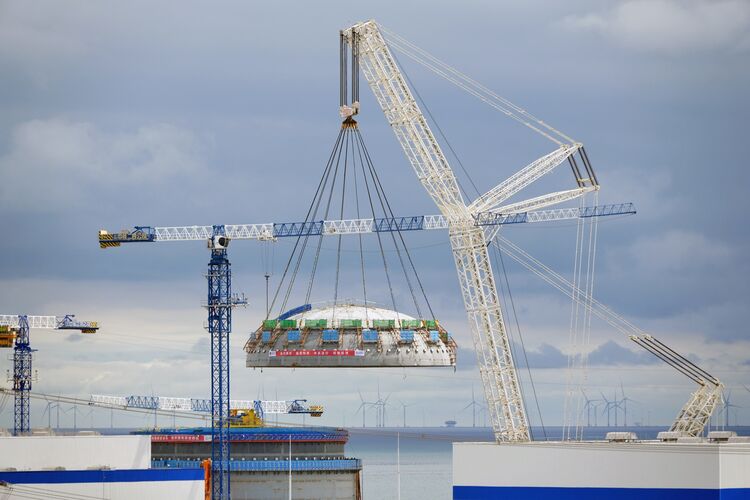
For atomic energy, at least 10 new reactors were approved each year from 2022 to 2025. More than half the atomic power capacity under construction around the world is now in China, according to BNEF, and the country is expected to overtake the US as owner of the largest nuclear fleet sometime around the end of the decade.
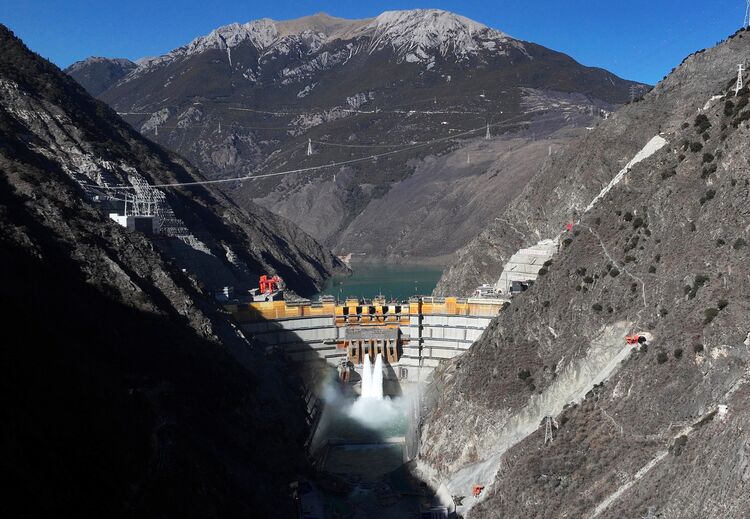
And then there’s hydropower. Four of the seven largest operating hydropower plants are in China, and construction has begun on a project in Tibet that will be the world’s largest power plant when it’s completed.
Add in world-beating wind and solar additions, and China has created exactly the energy abundance that many more countries have been seeking to emulate since the war in Iran began.
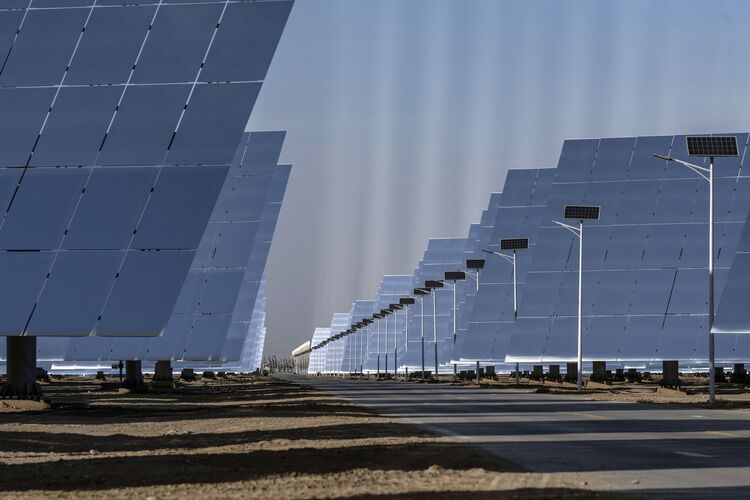
The advantage is particularly apparent in the AI race. Regions in western China that produce more than they can consume are becoming centers for energy-hungry servers and other hardware. Areas like Gansu and Inner Mongolia will become top computing hubs by 2028, helping the country double its data center capacity in the next five years, according to BNEF.
China has so much power that it can manage its fleet of data centers and still export computing capacity to the world – as Shantou, along the coast of Guangdong, does, thanks to a fiber-optic cable link to Singapore.
In the US, by contrast, the backlash against data centers has become a major political issue in this year’s midterm elections — in large part due to power costs — and several states have effectively frozen new developments.
Still, turbines and panels now account for roughly half of China’s total power capacity, and a quarter of generation. That means that roughly one out of every four electrons now traveling through the grid operate at the whim of a cloud or a breeze.
Electric systems are incredibly delicate, and must be kept in constant balance. More intermittent power raises the risk that grid frequency and voltage can drift outside safe limits, risking equipment damage, instability and potential outages.
Squandered Energy
One unexpected outcome is that unutilized green power has led to renewed growth in fossil-fuel generation, prolonging demand for expensive imported energy and reducing returns on renewable investments.
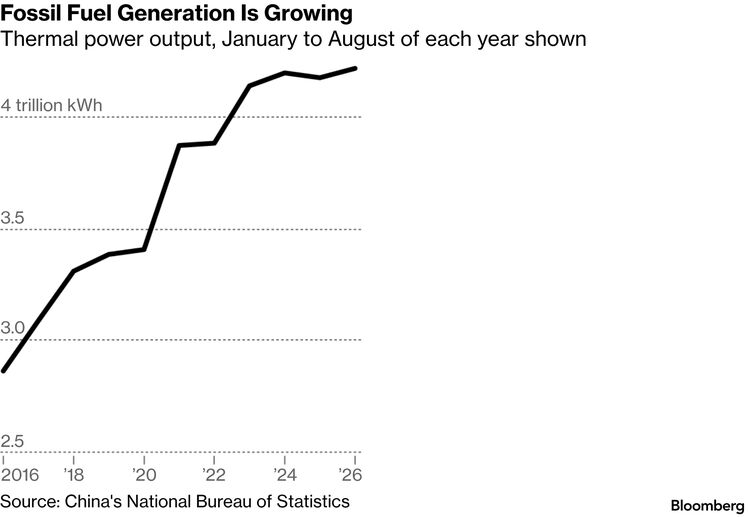
China’s expansion of coal-fired generation capacity in the first six months of this year was the highest of any first half in a decade. Leaders refer to the fuel as the country's "ballast stone" and are allowing for increased use through 2030.
Does that mean China’s record-breaking wind and solar rollout is moderating?
After installing 315 gigawatts of new solar and 119 gigawatts of new wind capacity last year, both records, China added a more modest 72 gigawatts of panels and 39 gigawatts of turbines in the first half of 2026.
That’s more than any other country has added in a full year — ever.
“China’s not going slowly,” said Michal Meidan, head of China energy research at the Oxford Institute for Energy Studies. “It’s going super-fast or super-duper fast.”
Still, it’s a change of pace as even the world’s energy powerhouse begins to hit infrastructure speed bumps.
Curtailment isn’t a unique conundrum. Wasted energy has been a growing headache in recent years across markets including the US, Australia and the UK. The only difference is that China’s market is so large that these problems – and experiments to fix them – are super-sized.
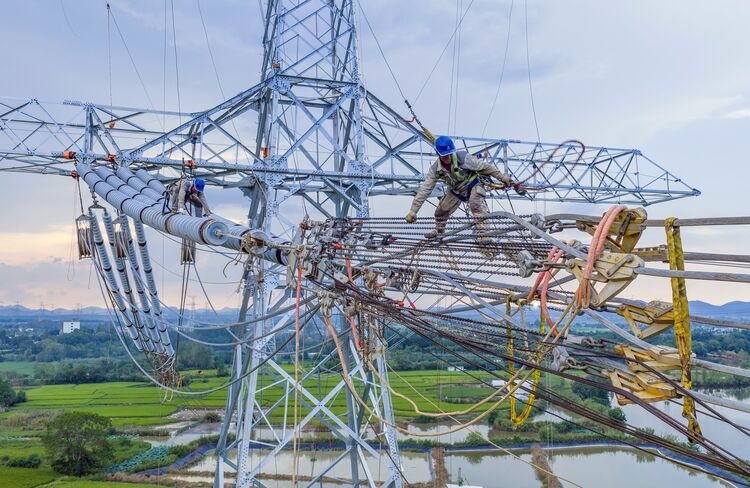
For Southern Grid’s Zhao and other operators, the first step toward a solution is building the infrastructure needed to move electricity across time and space: energy storage systems and power lines.
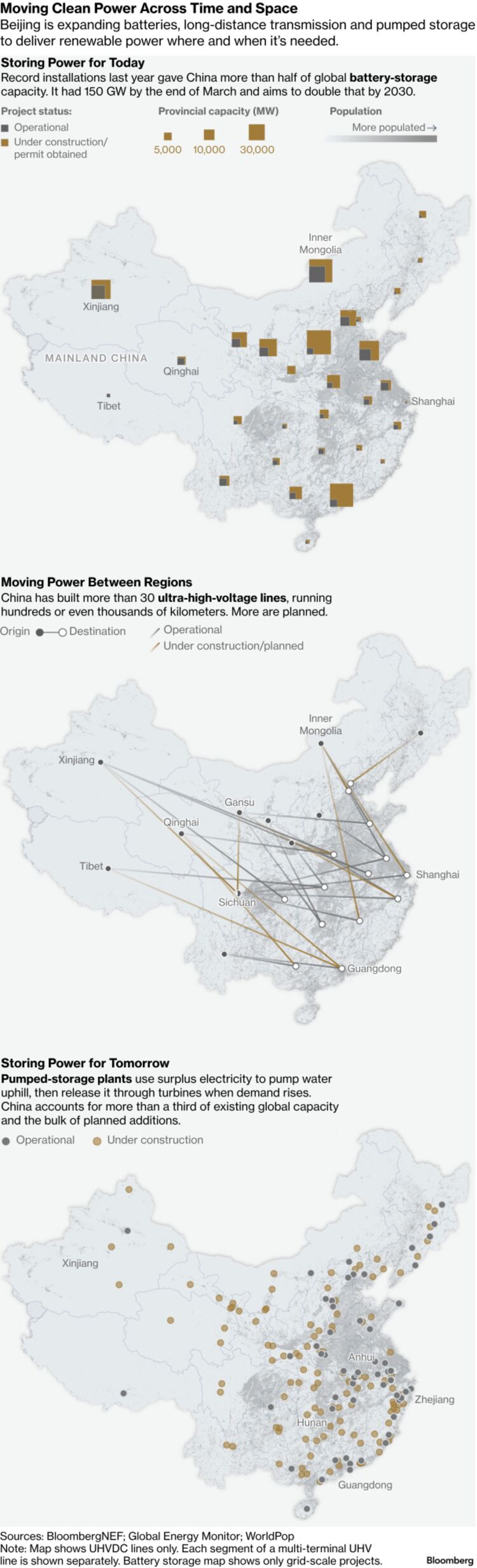
Transmission is vital, given so much of China’s best solar and wind resources are located far from major industrial and population centers. Then there’s better storage, meaning both batteries that can last a few hours and pumped hydro stations that can last days.
“We need multiple and coordinated efforts to improve absorption capacity and efficiency,” said Zhao. “Our investment is focused on building a new type of energy system — especially distributed integration and grid infrastructure.”
The final piece for China will be the ability to manage this increasingly complex system, at a time when a top-down approach still determines prices and makes operating decisions. That has paid dividends, helping the country rapidly expand electricity access while keeping prices relatively stable to underpin decades of economic growth.
It may not, however, be a system for the future.
Ma Kui is one of millions of Chinese technicians and workers on the front lines. A veteran clean-energy engineer, he’s now based in the eastern province of Jiangsu, where he operates a 100-megawatt battery storage plant for Concord New Energy Group Ltd., a sliver of national battery storage capacity that stood at 144 gigawatts at the end of 2025, according to BNEF — more than the rest of the world combined.
When too much energy is produced by rows and rows of nearby wind turbines, Ma turns to his batteries. He charges them for several hours before releasing that power later in the day, as demand picks up and solar and wind generation begins to drop off.
“The storage system is basically like a power bank for the grid,” said Ma, who has worked for various renewable companies for nearly 20 years.
But unlike an equivalent engineer in, say, California, who would respond to changing prices through the day, Ma sees no such signals. When the wind begins to blow, bringing tufts of white fluff from nearby willow trees, or power demand rises, the grid calls.
“We don’t decide when to charge or discharge,” he said. “The grid tells us what to do, and we follow the dispatch plan exactly.”
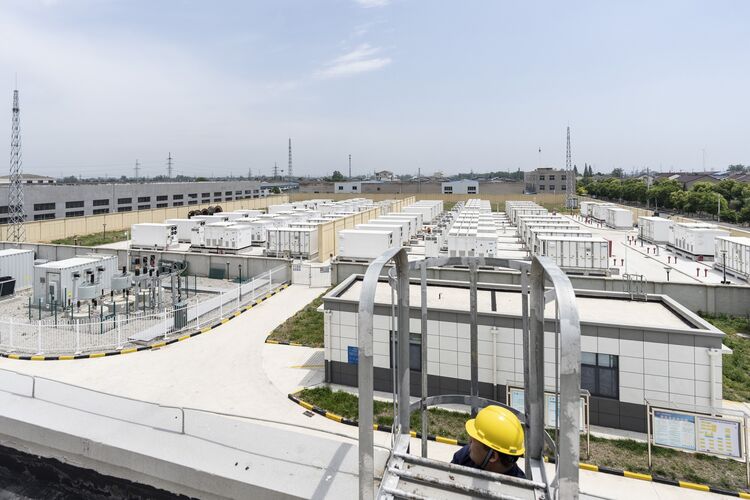
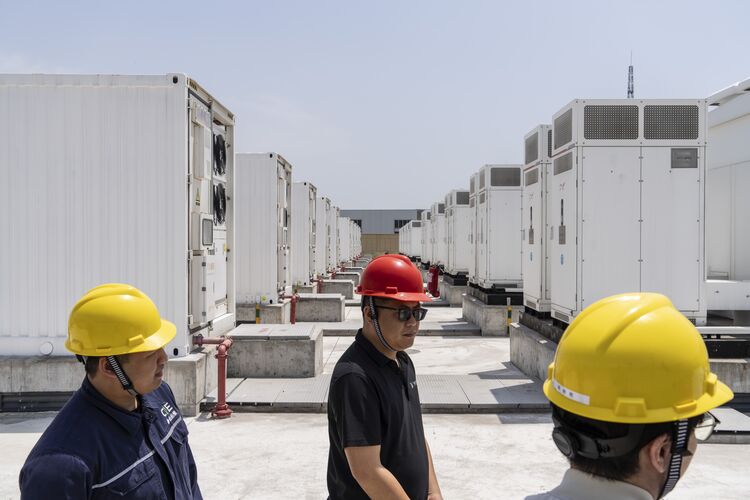
That system is already an improvement, given many batteries sat idle until recently. Last year, standalone battery operations averaged 299 charge-discharge cycles for the year, more than double the level from 2022, according to research group Ember. The international benchmark is at least 350 times a year, basically once a day.
China is only beginning to edge toward using price signals to manage who generates power. The vast majority of its coal power is still sold on long-term contracts that can crowd out wind and solar.
Short-term trades are increasing, though, and accounted for 12% of all power transactions in the first half, compared to just over 4% in 2025. In June, the country for the first time let private players bid for space on a cross-border transmission line.
“Making those lines more flexible is key to both providing reliability, but also bringing down curtailment and increasing integration,” said Michael Davidson, an associate professor at the University of California at San Diego who has researched China’s power sector.
The country’s leaders have made it clear that they want to move to a more open power market, with President Xi Jinping himself saying in 2023 that it was imperative to build a system that’s “economical and efficient, well-coordinated between supply and demand, and flexible and intelligent,” according to state media.
The government has announced a goal of creating a unified national power market by 2030, and introduced a flurry of market-based reforms around renewable power contracts, transmission costs and green energy certificates.
What is less clear is what shape these reforms will take, how much of the market China will be happy to integrate and how long it will take to reach a meaningful, wholesale transformation.
“The biggest bottleneck that is left is really changing the system and the incentives,” said Belinda Schäpe, an analyst with CREA. “The long-term trajectory for China is very clear. The question of how to get there is a lot more unclear.”