PepsiCo Inc. sounded the alarm over its North American soda business — a fresh concern for a company that’s also working to turn around its snack sales.
The maker of Smartfood popcorn and Poppi soft drinks now sees a measure of earnings growing between 1% and 2% for the current fiscal year. That’s down from the previous range of 4% to 6%.
While PepsiCo has continued to report international sales growth, the company is still trying to bounce back in North America. Third-quarter organic revenue, which strips out items such as currency volatility, declined slightly in North America for both food and beverages.
“We don’t feel good about the beverage business,” Chief Executive Officer Ramon Laguarta said on a call with analysts Thursday. “We’re putting all of the urgency of the business and the focus in improving our performance in soft drinks.”
Weakness in North America beverages is another headache for PepsiCo as management works to win back investor confidence following a steady share decline since the start of March. Sales volumes of North American beverages have fallen 3% so far this year, with zero-sugar and flavored options doing better than full-sugar versions. PepsiCo is going to invest more in some of its brands including Poppi, a healthier brand it acquired last year, Pepsi and Mountain Dew.
The company has also struggled to boost sales of salty snacks as inflation pressures consumers. PepsiCo cut prices on some marquee brands earlier this year, but the impact of the reductions fell short of what the company had hoped for. It will now be raising some prices in the coming months.
Read More: PepsiCo to Raise Some Prices After Cuts Failed to Grow Sales
Laguarta said the company was pleased that the price cuts had helped reverse a decline in sales growth and push the business into slightly positive territory, but there was “less volume growth than what we had initially anticipated” due to the financial stress pressuring consumers.
Those price cuts give the company “flexibility in what we do to absorb this new wave of inflation,” Laguarta said, noting that even with an increase, prices next year will still be below where they were in 2025.
The cost of PepsiCo’s chips, in particular, came into focus earlier in the year after the company lost grocery store shelf space because they’d gotten too expensive — with some topping $7 a bag. Chief Financial Officer Steve Schmitt said that subsequent price reductions cut into its margins.
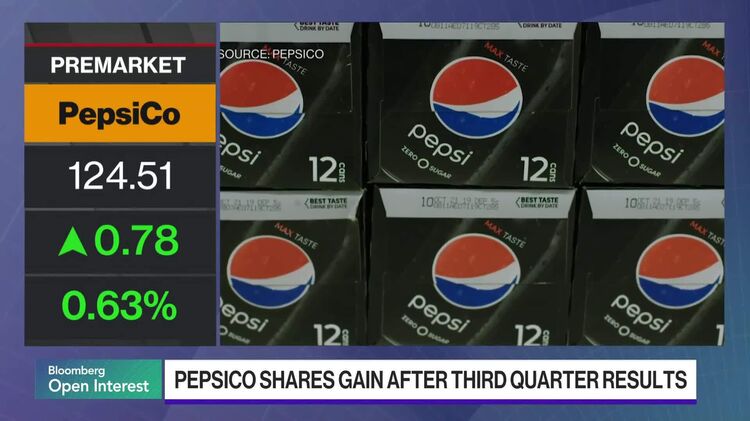
Shares of PepsiCo rose 1.2% at 11:08 a.m. in New York. They had declined 14% this year through Wednesday’s close, compared with a 14% increase in the S&P 500 Index.
Some analysts said PepsiCo’s results weren’t as bad as they had expected.
“While there have been some signs of progress, rate of improvement has stalled given the inflationary pressures,” RBC Capital Markets analyst Nik Modi wrote in a note Thursday morning. But overall, results were “marginally better than feared,” he said.
The company will continue to offer more products with protein and fiber, as well as those with simpler ingredients and different oils, including avocado oil, Laguarta said. Many big food companies are working to win over consumers who have shifted their spending to less-processed foods.
PepsiCo is seeing value in its pilot program to integrate its snacks and beverage business, Laguarta said. But while that will work in some parts of the country, it doesn’t make as much sense in other areas, where the company will look for opportunities to refranchise its bottling, he said.