It seems there’ll be few fireworks to spark a strong year-end for luxury’s biggest names, leaving investors to wait until 2027 for any potential upswing.
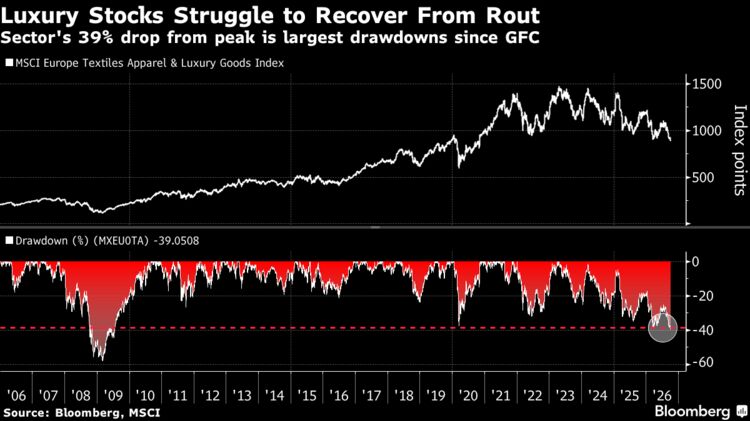
The MSCI Europe Textiles Apparel and Luxury Goods index is down 25% this year, seemingly unable to sustain a series of technical bounces in recent months. The slump is deeper than the 21% drop by the auto sector, the Stoxx 600’s worst-performing subindex.
Subdued Chinese demand and the troubled geopolitical context have combined with rising interest rates and reduced pricing power to derail hopes of a resurgence. With luxury stocks down almost 40% from their last record high, bulls will be looking to the coming earnings season for some good news to at least stem the slide.
“The Iran conflict, slower industry self-help and softer trends over the summer have further delayed the recovery,” said UBS Group AG analysts led by Zuzanna Pusz. Confidence the team had in an earnings stabilization earlier this year proved premature. “We continue to view the downturn as cyclical rather than structural.”
The disappointment has prompted a reset in expectations for 2027, where the “focus is increasingly shifting” to reflect weaker trends, the analysts said. They are most positive on hard luxury, favoring buy-rated Richemont SA and Watches of Switzerland Group Plc. They recently downgraded Hermes International SCA to sell because of indications that its earnings profile is becoming increasingly linked to economic cycles.
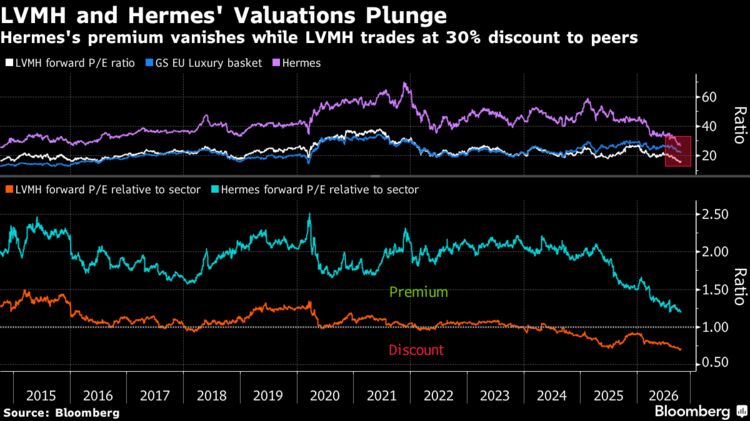
In a sign of the times, shares in two former darlings of the sector have collapsed. Both LVMH and Hermes are down 40% this year, dragging their respective valuation levels to the lowest in 12 years. The fall in grace for LVMH is particularly stark: it now trades at a record 30% discount to the broader luxury sector. Its absolute forward price-to-earnings ratio has slid below 16. Meanwhile, Hermes’s premium to the sector has been vanishing fast, from 100% to just 22% in a mere 18 months.
“With a softening macro backdrop and the luxury digestion cycle lasting longer given apparent structural headwinds facing the sector, we see little scope for multiple expansion over the next 12 months,” said Morgan Stanley analysts including Natasha Bonnet. “We continue to favor the names most exposed to the K-shape, driven by AI wealth creation.” That view underpins overweight stances on Ferrari NV, Richemont and Brunello Cucinelli SpA.
For Bonnet’s team, the growing popularity of second-hand luxury, a reduced ability to hike prices and what they termed “luxury fatigue” are added challenges. They also noted a shift in toward wellness and longevity purchases that’s competing for discretionary spending.
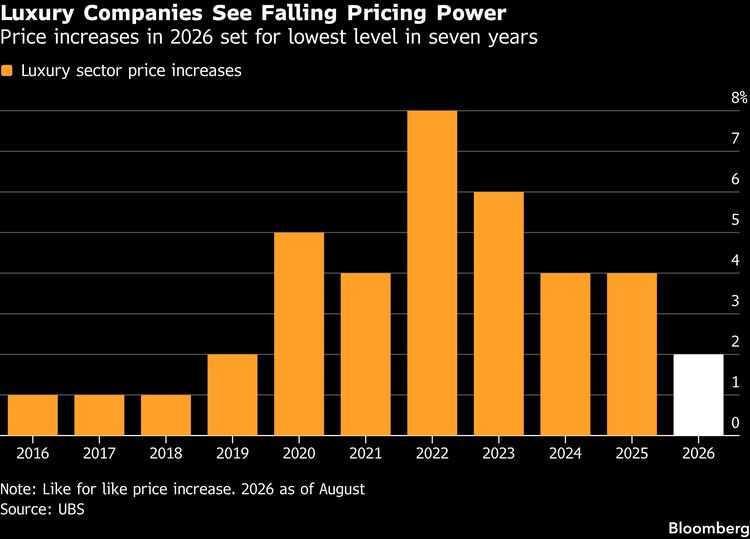
It’s getting harder for bulls to sustain their optimism. Rising interest rates and higher inflation caused by elevated oil prices are denting middle-class consumer spending and confidence. Meanwhile, appetite for luxury items has shown only a tepid recovery this year after several quarters in the doldrums. Plus, a return to the heydays of strong pricing power for the likes of LVMH and Hermes seems unlikely. Increases this year are set to be the lowest since 2019.
Much of the outlook for the sector hinges on a long-awaited recovery in Chinese consumer spending. But there was more bad news on this front recently, as early data pointed to muted travel and softer entertainment spending patterns during this month’s Golden Week holiday.
“The Chinese luxury market is defined by structural not cyclical challenges,” said Berenberg analysts led by Nick Anderson. Weak third-quarter readings from China shouldn’t come as a surprise, they said, tipping the data to continue to disappoint more often than not. “This matters as consensus and many corporates still expect the Chinese consumer to be a key driver of global growth into the 2030s. The risk to sector consensus thus remains firmly to the downside, as we have consistently argued.”
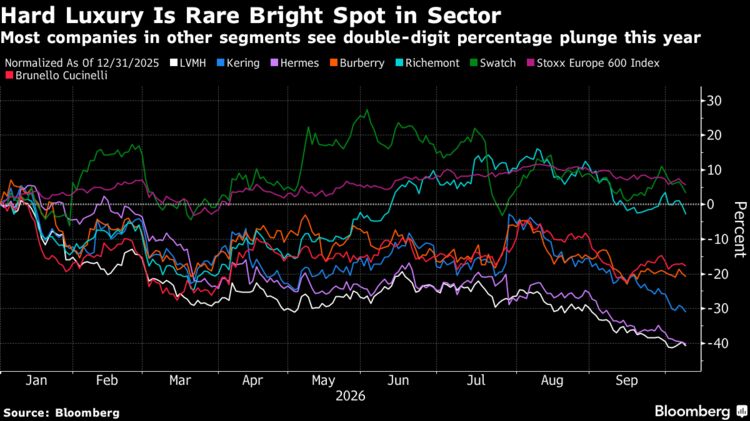
The third-quarter reporting season kicks off with LVMH’s update due after market close on Monday. Street expectations are for slower organic growth rates across the sector. Hard luxury and high-end brands are forecast to be more resilient than soft luxury again. Kering SA’s recent pre-close call set a cautious tone, with a worsening backdrop and persistent weakness in China.
For all that, there are a few encouraging signs. Privately owned Chanel Ltd., for instance, produced stellar first-half sales growth of 16%, a sharp contrast to soft luxury peers like LVMH, and more in line with the hard luxury recovery seen at Cartier-owner Richemont. A broader turnaround would need the macro economy to stabilize and for companies to address their in-house idiosyncratic issues.
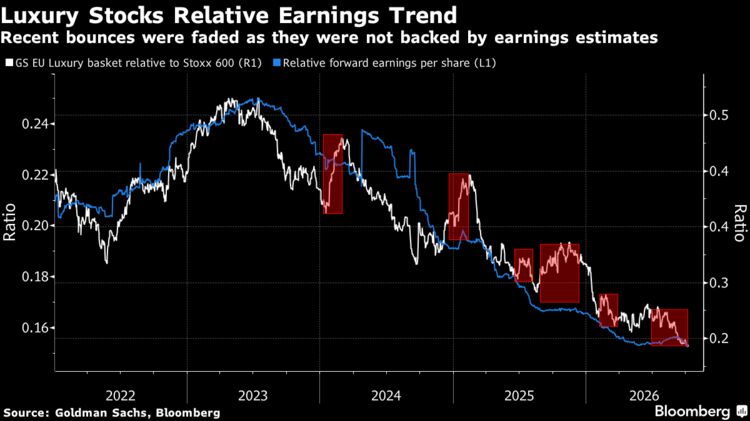
Goldman Sachs Group Inc. analysts are among those seeing scope for this to play out.
“Aggressive pricing, strategic inertia and limited product innovation, combined with macro headwinds, have constrained sales momentum across the luxury sector. Can the sector return to decent growth? We believe so,” said a team led by Erwan Rambourg. “We see 2027 as a turning point after three years of post-COVID normalization, with the sector reverting to mid-single digit organic sales growth. Why? Primarily because the sector is gradually addressing company-specific factors that had previously weighed on growth.”