By Jimmy Jenkins | Updated on Oct 09, 2026 at 05:52 PM
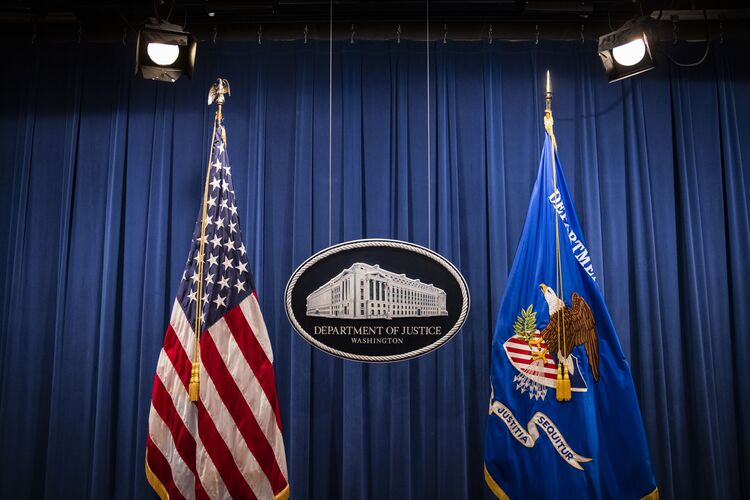
The head of the US Justice Department’s Criminal Division is urging companies to self report possible fraud, favoring settlements with companies that proactively disclose potential violations over what could become costly and time-consuming prosecutions.
The approach has prompted criticism from some public-interest groups that President Donald Trump’s second administration is being soft on crime, with one group publishing a report Wednesday listing the “cancellation” of more than 200 enforcement actions inherited from the Biden administration. Those actions include ending federal investigations, lawsuits, and settlements.
Assistant Attorney General Tysen Duva said in an interview with Bloomberg News that the approach is already paying off for the Justice Department. In the coming months, he said he will be announcing corporate enforcement policy resolutions, non-prosecution agreements and deferred-prosecution agreements with companies, and charges against individuals that were a result of self disclosures.
“It is better to try to obtain cooperation from an entity and provide incentives for them to come in and tell you what happened,” Duva said. “Because if they don’t, it’s up to a whistleblower or a confidential informant. And then you get in this lengthy, protracted litigation.”
Duva said if the Justice Department is able to convince companies to come in early and self disclose, his agency can truncate — and in some cases eliminate — a costly legal process. He said his emphasis on self-disclosure followed a precedent set before he was tapped to run the Criminal Division last year.
Duva was elevated from his previous post as a Jacksonville, Florida-based assistant US attorney in July of 2025, and confirmed by the Senate the following December.
“We really want to try to allay some fears and communicate very clearly that this means if you come in, and you self disclose, that you can obtain the declination, but you have to fully cooperate,” Duva said. “It is laying out what you learned, how you learned it, and who did it. And as part of that, you would take that information and pursue charges against individuals.”
The Justice Department pointed to a resolution reached in March with medical device company Balt SAS as an example a self-disclosure success. The department said the company disclosed and took steps to remediate the behavior. In return, DOJ declined to prosecute Balt as a company, instead bringing charges against two individuals. The company also agreed to pay $1.2 million in disgorgement.
Duva said unless systemic fraud is suspected, companies are better off disclosing when they’ve discovered potential violations by employees, instead of the Justice Department punishing investors and other employees that are not involved.
That position runs counter to the role the Justice Department should be playing, according to Rick Claypool , research director focusing on corporate crime and wrongdoing for Public Citizen, a nonprofit consumer advocacy organization. Claypool says the focus on so-called bad apples runs the risk of allowing corporations to put forth scapegoats while insulating the company.
Public Citizen maintains a corporate enforcement tracker and the report said it found 212 “canceled” actions against 205 corporations, including 80 closed probes, 67 dismissed lawsuits and 54 terminated or reversed actions resolved during Donald Trump’s second term. Those included 14 pardons of corporations and executives, the group reported.
“We know that the worst of corporate misconduct is often systemic and comes down from the top,” Claypool said. “To invite companies to be exempt from enforcement is a recipe that seems to encourage corporate crime.”
In response to the Public Citizen report, the Justice Department said in a statement “there are dozens of open and active corporate investigations in the Criminal Division, which are expected to result in charges and other consequences for criminal corporate and individual actors.”
The Justice Department has pursued similar policies in the past, including under former President Joe Biden’s administration.
In 2022, then-Deputy Attorney General Lisa Monaco announced a policy allowing more companies that voluntarily report misconduct and cooperate on remedial actions to avoid pleading guilty as part of a bid to crack down on corporate crime. The department also shifted the focus to prosecuting executives by encouraging companies to claw back compensation from those responsible for wrongdoing.
During the second Trump administration, Duva has been taking his message on the road. Addressing a room full of corporate defense attorneys in Manhattan recently at a conference, Duva said their clients would do well to come to the Justice Department early, and with open books.
“Individuals commit crime,” Duva said. “The focus is not to ruin a company.”