China has allowed its provinces to tap 550 billion yuan ($82 billion) in unspent bond quotas saved from previous years, as Beijing adds to a stimulus effort aimed at meeting this year’s growth target.
The allowance includes 300 billion yuan in general bond quota to help county-level authorities meet their daily spending needs, the Ministry of Finance said in a statement on Friday. The other 250 billion yuan in special bond quota is granted to regions “with actual project funding needs” in October-December to support existing programs and major initiatives like the Six Networks to drive investment, the ministry said, adding it will favor stronger provincial economies.
Greater access to borrowing will enable local governments to fund more investment and give room to cope with their debt burdens. It’s the latest installment of the stimulus package unveiled by Beijing in late September to shore up economic growth that had slipped below this year’s target of 4.5%-5%.
Before the announcement, economists broadly expected the additional allowance to be at 500 billion yuan, similar to what was granted in 2024 and 2025.
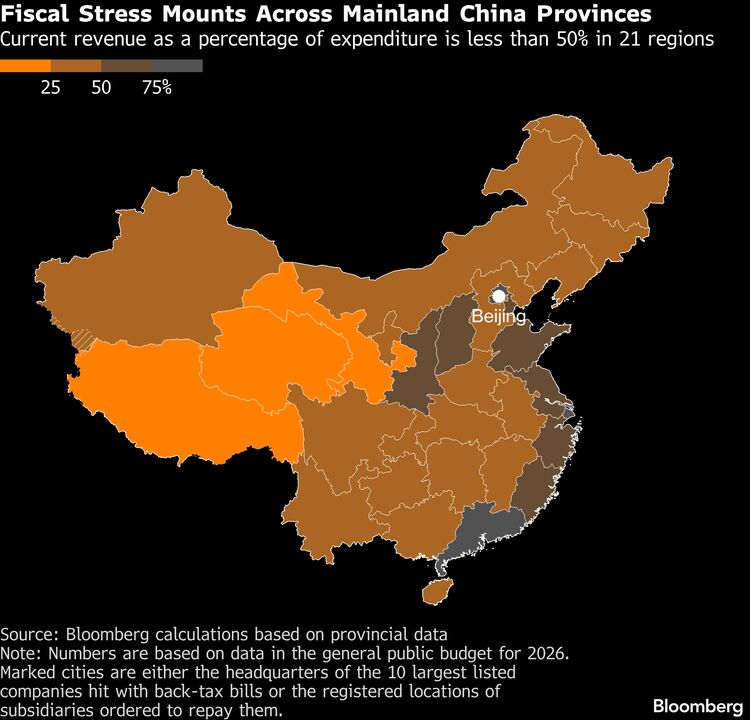
The ministry’s clarification on the use of some of the bonds to meet general local needs highlights the financial stress faced by counties and lower-level governments. Its emphasis that the special bond quota is meant to fund tangible investment projects with priority given to stronger regions offers the latest sign Beijing is increasingly wary of allowing a buildup of debt that yields no returns.
“The detailed breakdown of the quota earmarked for counties points to mounting fiscal stress at local levels,” said Zhaopeng Xing, senior China strategist at Australia & New Zealand Banking Group. The additional investment bond allowance is set to help the Chinese economy meet the government’s growth target for this year, he added.
As part of the effort to prop up growth, the government has started providing mortgage subsidies and expanded central bank support for targeted sectors. It acted soon after the State Council, the country’s cabinet, vowed new measures to meet economic and social development goals late last month.
| Read More About China’s Economy: |
|---|
Among the newly announced steps, some analysts view the use of unspent local bond quotas as the most effective lever at Beijing’s disposal to get growth back on track. BNP Paribas SA economists led by Jacqueline Rong expected it to become “the backbone of the fourth-quarter mini-stimulus package.”
Since 2022, Beijing has regularly acted halfway through the year to allow provinces to draw on unspent bond quotas.
BNP has estimated that carry-over quotas this year for local governments stood at 557 billion yuan for general debt and 1.1 trillion yuan in special bonds — amounts it said provided “sufficient fiscal headroom.”
China refrained from ramping up stimulus for this year when its leaders announced the annual budget back in March. At the time, the government looked to curb local debt risks as a tariff truce with the US reduced threats to the economy.
But until now, even as China’s growth wobbled in recent months, officials have shown little sign of pulling back from the fiscal restraint. A broad measure of government expenditure contracted for six straight months through August, meaning fiscal policy became a key drag on the economy this year.
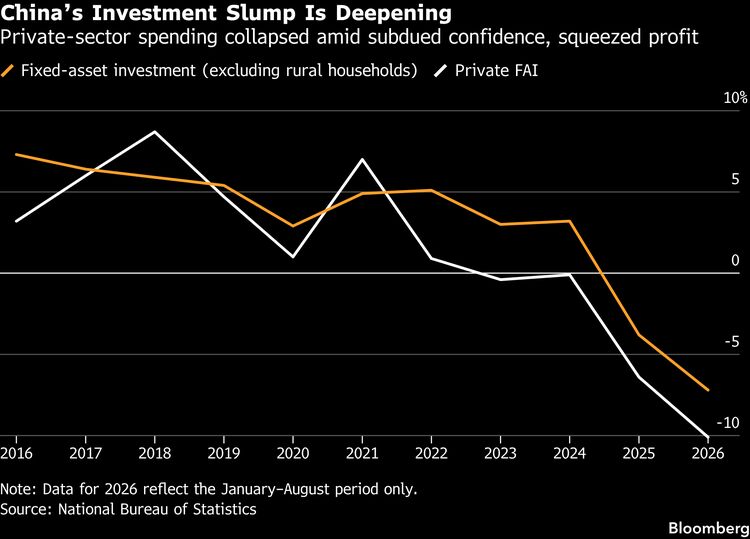
Local authorities are prioritizing Beijing’s directive to reduce off-balance-sheet debt while coming to grips with falling income from land sales. A saturation of infrastructure such as roads and bridges after decades of development in China has made it harder to identify projects that can at least break even.
Officials have also become cautious about big investments given President Xi Jinping’s anti-corruption campaign and a looming reshuffle in China’s provincial leadership before the ruling Communist Party’s national congress that’s expected next year.
“The main issues that have held back domestic demand, especially investment, this year are not the lack of fiscal resources or high cost of financing, but rather slow implementation of the budget on the spending side,” said Ding Shuang, chief economist for Greater China and North Asia at Standard Chartered Plc.