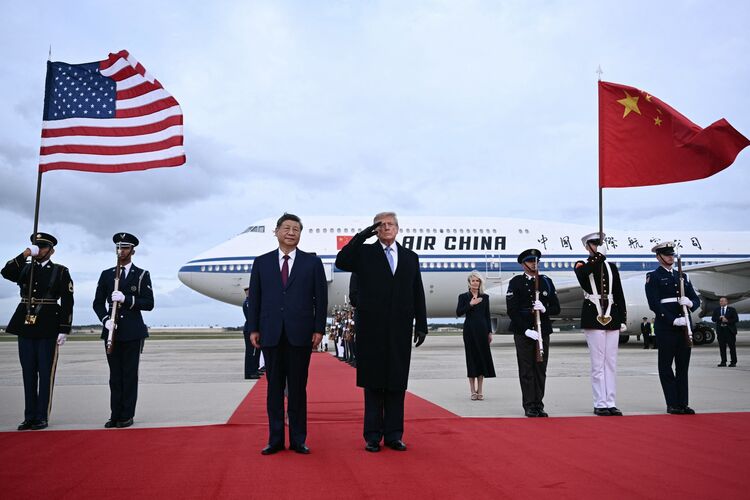
The US has allowed a flurry of engagements with Taiwan in the wake of Donald Trump’s lavish welcome for China’s Xi Jinping, signaling support for the island democracy even as it keeps a major arms sale in limbo ahead of more meetings between the leaders this year.
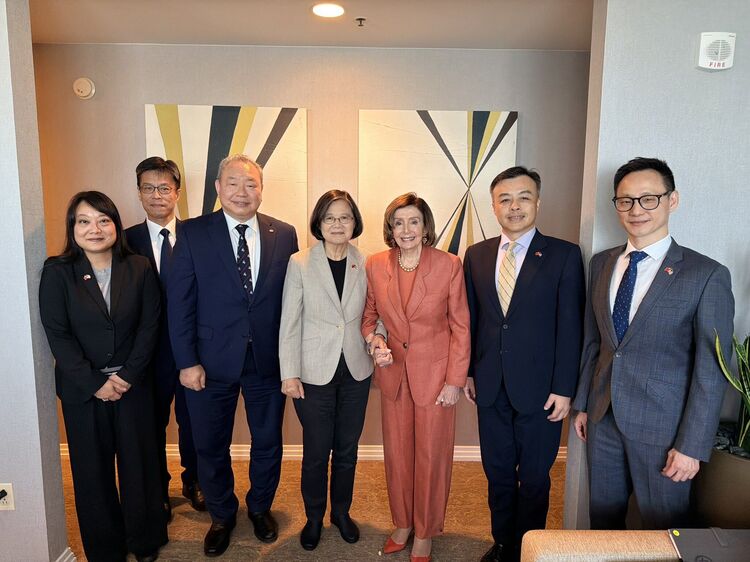
Former Taiwanese President Tsai Ing-wen on Wednesday made her first US visit since leaving office in 2024, posing with former House Speaker Nancy Pelosi, whose 2022 trip to Taiwan angered Beijing. Earlier in the week, Foreign Minister Lin Chia-lung traveled to Arizona to open Taipei’s first new representative office in America since 2020. And after years of delays, Taiwan received two new US-made F-16s last week.
The engagements show the Trump administration is carrying on with regular engagements with Taiwan after a series of actions have called its commitment into question — including his slow-walking any new arms sales and showing restraint in countering a Beijing narrative on the US relationship with Taiwan.
“Despite the reduced visibility on Taiwan, US-Taiwan bilateral engagement remains regular and substantive,” said William Yang, a senior analyst for Northeast Asia at the International Crisis Group.
The bigger question is whether that engagement translates into further support, including an arms package worth as much as $14 billion — approved by the US Congress in January 2025 — and permission for Taiwanese President Lai Ching-te to transit through the US mainland. Either is likely to provoke Beijing, which claims the self-ruled island as its own territory and sees US weapon transfers and visits by Taiwanese leaders as tacit support for an independent Taiwan.
Taipei’s handling of Lin’s visit underscores the sensitivity. It scheduled his trip to avoid clashing with the Trump-Xi summit last month, according to a person familiar with the matter.
The decisions over arms supplies and a potential stopover loom as Trump and Xi seek to stabilize relations in two more meetings before year-end, giving the Chinese president fresh opportunities to push for weakening US support for Taiwan. The duo are next expected to meet at November’s APEC summit in Shenzhen and December’s G20 gathering in Miami.
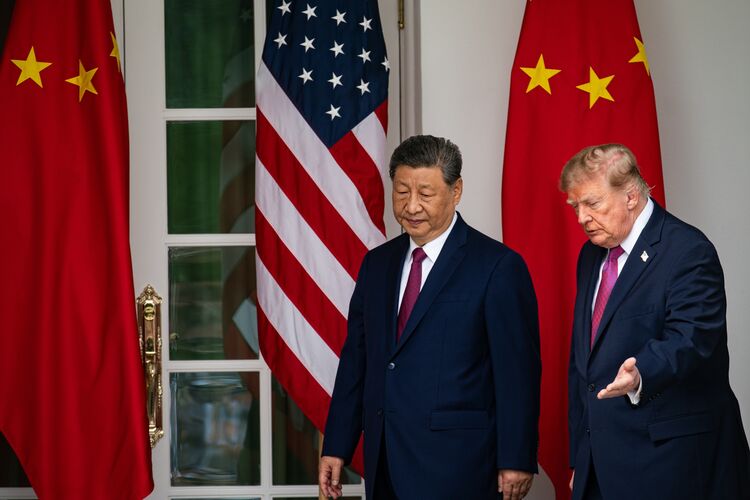
In Washington, Xi pressed Trump to “oppose” Taiwan independence, marking only the second time the Chinese leader made public such a request to his US counterpart, according to a Bloomberg analysis of readouts. That language, if adopted by the US, would rewrite decades of US policy toward Taiwan, in which the US has said it doesn’t support independence but has maintained ambiguity about whether it would defend Taiwan if it’s attacked.
The US announced no change in its Taiwan policy after the summit. David Perdue, the US ambassador to China, said Trump is “as strong on Taiwan as I’ve ever seen anybody,” pointing to a large amount of arms sales approved under his watch.
Asked whether the US would be willing to approve any portion of the latest $14 billion package even over Beijing’s protests, a White House official referenced Trump saying he’ll make a determination in a fairly short time. The official touted more arms sales for Taiwan in Trump’s first year of his second term than the entire previous administration, including a $11.1 billion package approved last December.
China’s Taiwan Affairs Office didn’t respond to a request for comment, including on whether Beijing will seek commitments from Washington on future US arms sales or a stopover for Lai.
The recent visits and deliveries don’t necessarily reflect a coordinated administration effort to reassure Taipei. Some stem from longstanding arrangements, and their timing may be coincidental, said Wen-ti Sung, a nonresident fellow at the Atlantic Council’s Global China Hub.
“Beijing won’t like it, but these aren’t breaking new ground, per se,” Sung said.
Taiwanese foreign ministers have visited the US before, while former presidents generally have more freedom to travel there than sitting leaders. Tsai’s Stanford University appearance was scheduled by the university’s Hoover Institution before the Trump-Xi summit.
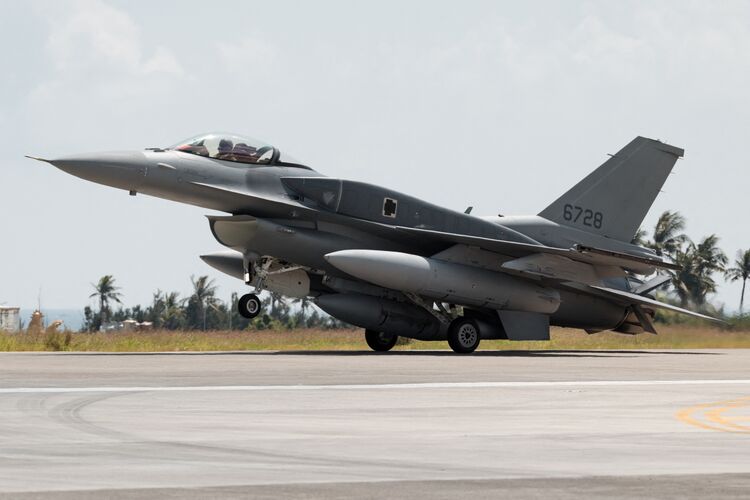
The F-16s are part of an $8 billion purchase approved in 2019. The first two arrived more than two years after deliveries were originally expected to begin, with the remaining aircraft yet to reach Taiwan. US foreign military sales, once approved, typically take years to reach delivery.
Such engagement can continue even without direction from the White House, said Jennifer Welch, chief geoeconomics analyst for Bloomberg Economics, who previously served as US National Security Council director of China and Taiwan. Trump’s “more decentralized approach” to policymaking leaves departments and agencies with room to maneuver on issues outside the White House’s immediate focus, she said.
“There is much that can, and is, still happening in US-Taiwan ties, below the threshold of what the president may focus on,” Welch said.
US action against alleged Chinese pressure could be another potential source of reassurance. FBI Director Kash Patel highlighted Sunday’s arrest of a woman accused of surveilling Lai’s son and his family for Beijing.
Read More: FBI Says China Agent Spied on Taiwan President’s Son in US
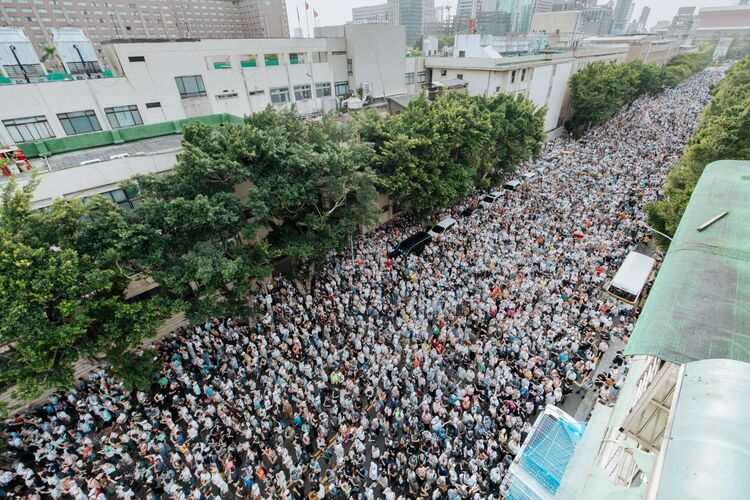
For Lai, the diplomatic uncertainty coincides with local elections on Nov. 28, when voters will choose mayors, county leaders and other officials. The contests will test the strength of his Democratic Progressive Party midway through his term, although the local races so far appear to focus on more economic and governance issues.
Questions about Washington’s commitment surfaced earlier this year, when a senior Taiwanese official expressed concern that the island could be “ on the menu ” ahead of Trump’s visit to Beijing in May.
After that summit, Trump explicitly linked the pending arms package to his dealings with China, describing the weapons as a negotiating chip. In an interview with Fox News, he said US policy toward Taiwan remained unchanged but cautioned against the island declaring independence and expecting American forces to fight a war “9,500 miles away,” while urging China to cool down.
At Stanford this week, former President Tsai urged democracies to deepen defense cooperation, arguing that the chip hub’s advanced manufacturing capabilities make it a critical security partner.
“We have to respond to sustained pressure in ways that preserve our own confidence and freedom of action, while continuing to strengthen our capacity to defend ourselves should deterrence fail,” she said.