By Magdalena Del Valle and Patrick Van Oosterom | Updated on Oct 09, 2026 at 06:16 PM
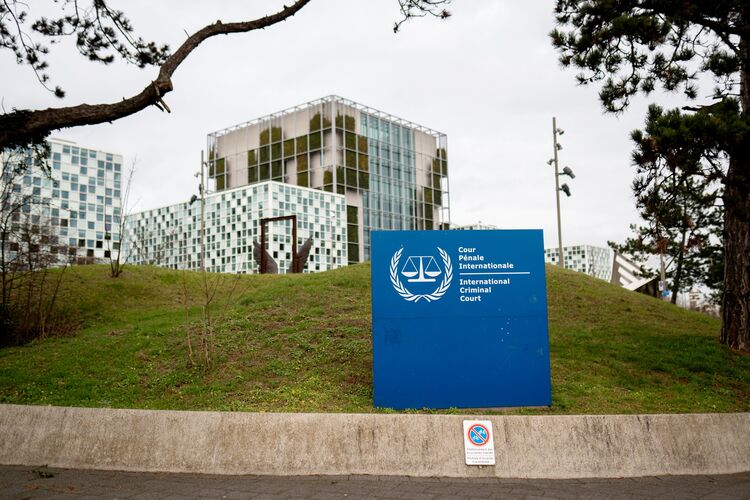
The Trump administration imposed fresh sanctions against the International Criminal Court, signaling its determination to cripple the organization on the same day that a former ICC judge won the Nobel Peace Prize.
The Treasury Department added the entire court to its Specially Designated Nationals list, a move that would impose financial punishment on any entity that does business with the ICC. That announcement was a step up from past sanctions that targeted top officials on the court but not the body itself.
The White House has long accused the court of unfairly targeting the US and Israel, and Secretary of State Marco Rubio made clear the Trump administration was prepared to go even further.
“Either the ICC will end its threats, or we will end the ICC,” Rubio said in a video posted on Friday. He added that the court can’t prosecute Americans such as border patrol agents, service members or elected leaders and said that he expects US allies to “rein in” the body.
The symbolism of the move was stark given that it was announced hours after former ICC judge Navi Pillay was awarded the Nobel Peace Prize. President Donald Trump, who has long coveted the prize himself, reposted a social media message saying the Norwegian Nobel Committee had “shamed itself beyond repair” with the decision.
It was not immediately clear if the sanctions were deliberately timed to coincide with the Nobel announcement.
Read More: Nobel Peace Prize Goes to International Jurist Navi Pillay ·
The US decision spurred swift pushback from the European Union and numerous US allies that support the court. The foreign ministers of a number of ICC member-states issued a statement defending the court, which has about 900 staff members from 100 countries and a 2026 budget of nearly €197 million ($220 million).
“If put into effect, these sanctions will have a significant impact on the Court’s work, its dedicated staff and their families,” said the statement from Canada, Denmark, Germany, France, Italy, Japan, the Netherlands and the United Kingdom.
The ICC was established in 2002 to prosecute perpetrators of the most serious crimes, including war crimes, genocide and crimes against humanity.
ICC judges have issued a total of 68 arrest warrants, according to its website, including one against Prime Minister Benjamin Netanyahu in 2024 for alleged war crimes in Gaza and another for Russian President Vladimir Putin in 2023 over war crimes related to the alleged abduction of children from Ukraine.
The ICC rejected the new sanctions and called on states “to continue taking concrete actions” to ensure it can continue its work. United Nations Secretary General Antonio Guterres condemned the US action, according to his spokesman Stephane Dujarric. Dujarric said Guterres was “deeply alarmed by the expected impact of today’s sanctions on the International Criminal Court as a whole, and in particular, its continued ability to perform its important mandates.”
The EU’s foreign policy chief Kaja Kallas and Dutch Foreign Minister Tom Berendsen both pointed to a six-month window before the measures take effect as a period for “dialogue.”
“The ICC is the cornerstone of the international criminal justice system. It prosecutes individuals responsible for the most serious crimes under international law,” Kallas said on X. “Protecting the ICC remains an EU priority.”