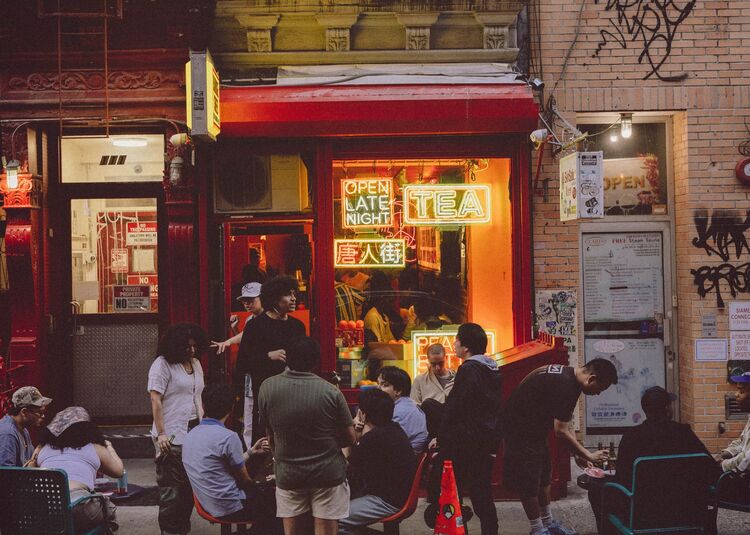
Eldridge Street Store is a temple to downtown New York dining institutions and traditions. The recently opened restaurant on New York’s Lower East Side showcases physical mementos, like a glass-encased pale-blue waiter’s jacket from Wo Hop , the 88-year-old basement spot where generations of diners closed out long nights with platters of lo mein and egg rolls.
But the decor isn’t the only way Eldridge Street Store is honoring New York’s dining heritage. The restaurant stays open until 4 a.m. on weekends and midnight other nights.
“New York definitely lost part of its culture when the pandemic hit,” co-owner Kenney Shi tells me, lamenting the pandemic-era shift by restaurants like Great N.Y. Noodletown and Wo Hop to more conventional closing hours. “We were waiting for late night to come back,” he says. “Eventually we decided if no one’s gonna do it, why not us?”
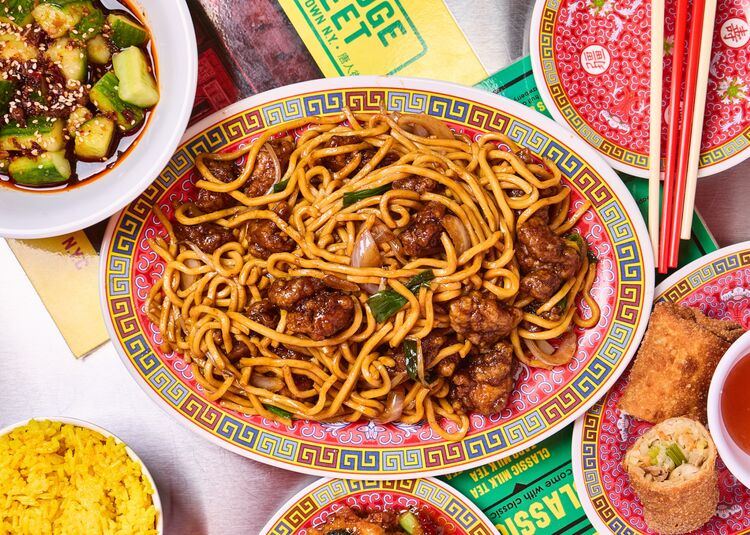
Based on the packed house I found when I walked into Eldridge Street Store at 11.30 on a Sunday night, diners had been waiting too. (I was, appropriately, fresh out of a showing of Martin Scorsese’s 1985 cult movie After Hours. ) It was hard to find an empty seat. Tables were stocked with food reflecting the cultural mingling of Chinatown and the Lower East Side Latino community. Fujianese peanut butter noodles were being eaten with fried chicken wings and tostones. Neon-hued drinks, served in jumbo deli cups, reflected the space’s previous life as a boba shop.
After a near-global swing toward early-bird suppers in the wake of Covid-19, diners’ night owl tendencies are reasserting themselves. From Philadelphia to London, operating hours are extending, late-night menus are on offer, and seats are being filled when they’d normally be stacked on tables for cleanup.
Roni Mazumdar , co-founder of New York’s juggernaut Unapologetic Foods group, observes the shift at his restaurants like Semma and Dhamaka . “Now that we are more than a few years into the post-pandemic era, I’m seeing people actually seek out the 9:30 reservations. And it’s not just simply because they cannot get that 6 p.m. reservation.”
“Every year since Covid, we have seen a 5 to 10% increase in diners between 4 a.m. and 5 a.m.,” adds Ara Cho, chief executive officer of New York’s 24-hour hotspot missKOREA BBQ . Cho attributes the growth in part to a “more diverse group of people, including tourists, frequenting the bars and clubs in and near Koreatown.”
What’s driving the late-night trend? Recent months have produced numerous reasons for people to adjust their schedules. Round the clock Imax screenings of The Odyssey had people looking for something more substantial than popcorn before or after 2 a.m. screenings. The World Cup prompted cities from Boston to London to extend legal operating hours for pubs , bars and restaurants, while other sporting events, from the US Open to the New York Knicks championship run have had a seemingly lasting effect on spectators’ otherwise staid schedules.
Even as debate continues over the long-lasting impact of the World Cup’s nightlife bump , restaurants have seen sustained interest. In New York, reservations platform OpenTable reports a 15% year-over-year increase in seated diners in the 9 and 10 p.m. hours for the six month period between April 1 and Sept. 30. In London, 9 p.m. diners rose 10% over the same period.
New York’s Union Square Hospitality Grou p reports a distinct uptick in post-9 p.m. bookings at Gramercy Tavern : Third-quarter 2026 bookings in those later hours are up 5% from the same period in 2025. The surge was enough for the venerable restaurant to move up plans to extend its Tavern hours to 11 p.m. ahead of the holidays.
“We want to start to rebuild the city that never sleeps,” says Gramercy Tavern’s general manager, Asher Russem, who cited a surge in post-match US Open traffic as one factor pushing the city’s dining hours later. The movement is happening across the dining spectrum: This spring, the Ukrainian restaurant Veselka returned to 24-hour weekend service at its East Village flagship location after its hours were curtailed during the pandemic.
In Massachusetts, Boston Mayor Michelle Wu is seeking to make extended World Cup hours permanent . Babak Bina, a founding partner at Boston’s BCB3 Hospitality, cites “meaningful growth” in late-night demand at restaurant jm Curley . “From April through Aug. 23, sales between 11 p.m. and 2 a.m. increased 18.4% year over year, while orders increased 24%,” Bina says. “The business is also moving later into the night: 1 a.m. sales are up roughly 39% year over year, now representing 20.6% of late-night sales compared with 17.5% last year.”
In the UK, the new North London pizza spot Bar Etna serves pies until 12.30 a.m. on weekends, while Islington’s Stable Wines announced it plans to extend its license past midnight in November in response to customer demand for its wine bar. But the best indicator might be Bobbi’s Bar , the high-style lounge within the St. Clement hotel. It’s the brainchild of Nick Jones , co-founder of Soho House ; he’s keeping the place open until 3 a.m. every day but Sunday, when it closes at midnight.
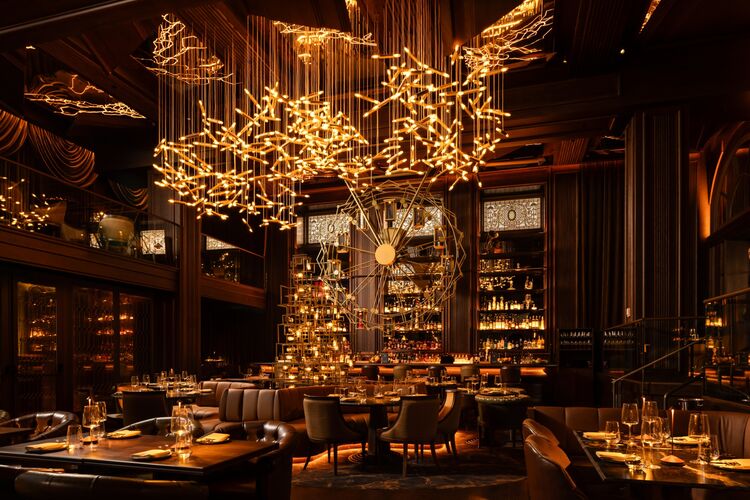
In Philadelphia, at the new supper club Mr. Edison in the Bellevue Hotel, where Gilded Age glamour rules with an oyster and caviar menu and tableside Negroni service, “we definitely see a strong increase in traffic around the 10 p.m. and 10:30 p.m. mark on the weekends,” says Adrian Hardy, brand and entertainment director, who notes that events like live music keep late-night diners in their seats.
The surge in late-night activity contrasts with the mood just one year ago. In the 2025 Resy Retrospective report, the platform noted “the uptick in post-pandemic early dining has yet to tick down. This year, more people dined between 5 p.m. and 6 p.m. than in the three hours between 8 p.m. and 11 p.m.” Nor was it exclusively an American trend. In 2025, UK restaurant technology company Zonal released the report “Why 6:12 pm is the new 8 pm.” It noted that 37% of early-evening consumers dined earlier for convenience’s sake, while 26% attributed it to lifestyle changes.
But for many diners, the move toward earlier reservations doesn’t preclude late nights. Zonal noted that 56% of all respondents — and 63% of Gen Z respondents — who went out earlier than usual for a “high tempo” occasion used the earlier start to extend their evening. Resy, meanwhile, found that 40% of Gen Z respondents to its survey reported that earlier starts have led to two-dinner nights.
For some restaurateurs, particularly in New York, capturing a second dinner crowd can pay off. “From a business perspective, staying open later also allows us to make better use of our space,” says Seungcheol Baek, who heads front of house at Jeong Yuk Jeom , the Manhattan outpost of the venerable Los Angeles Korean BBQ spot. “Restaurant space in Manhattan is expensive, and extending the useful hours of that space can certainly help offset fixed costs. On busy late nights, particularly Fridays and Saturdays, we’re able to serve an additional group of customers during hours when the restaurant otherwise would be sitting empty.”
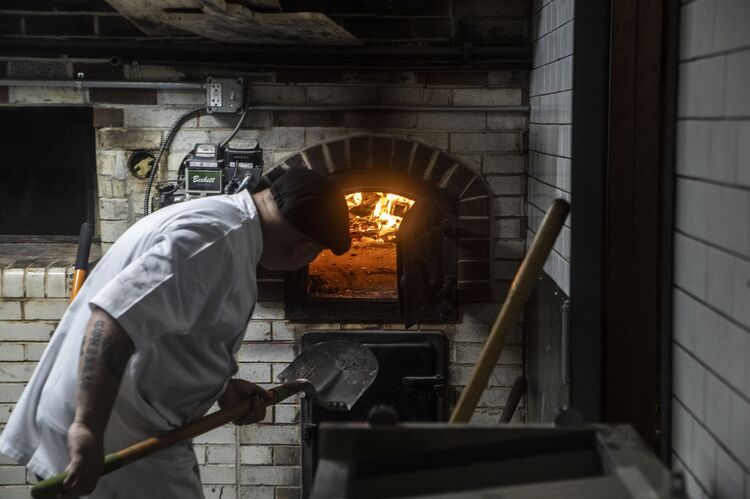
For other restaurateurs, restoring New York’s “city that never sleeps” status has risen to the level of a moral imperative. “It does not make financial sense to open that late, but we do it for the love of the game,” says Nino Coniglio, owner and head pizzaiolo at Lucky Charlie in Bushwick, Brooklyn, home to what might be the city’s oldest operational coal oven. “You look at the numbers, and think that this isn’t a logical business decision. Late-night people drink less... shockingly, a lot less. At 1 a.m., they are drinking 80% less than they are from 6 to 8.”
So why does Coniglio do it? “We are a 4 a.m. city, so we are open out of principle and spite,” he says, adding, “This is not Connecticut, this is not New Jersey; we will stay open until the city shuts us down.”