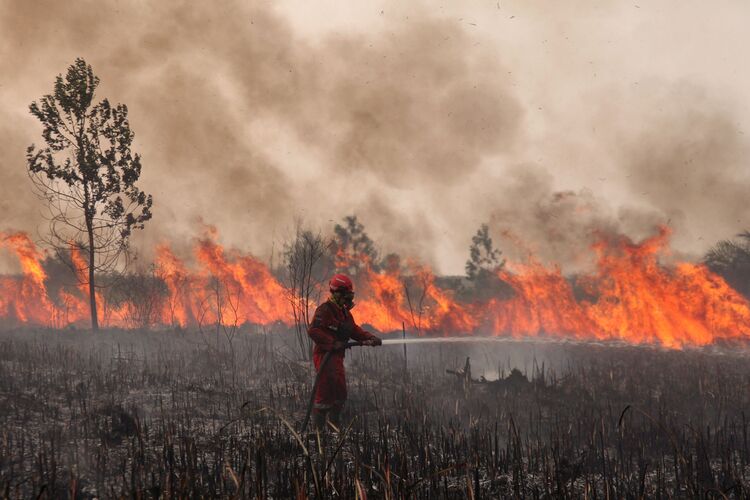
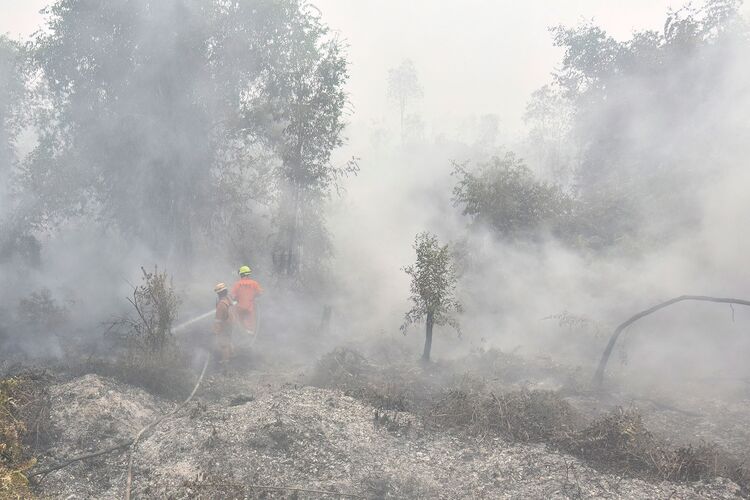
Several Southeast Asian countries have been blanketed for weeks in toxic haze spewing from forest fires in Indonesia. Cases of respiratory illnesses have soared, schools have been closed and flights canceled. Governments are under pressure to step up and coordinate a response to what’s shaping up to be the worst such episode in more than a decade.
Why is the haze so bad this year?
While the fires and accompanying haze are a near-annual occurrence in Southeast Asia, the situation this year is particularly bad. In September, the number of satellite-detected hotspots in Indonesia — thermal anomalies that indicate a fire — were at their highest since 2015.
Man-made climate change has increased the frequency and intensity of droughts, and this year a record El Niño weather pattern caused by a warming Pacific Ocean has exacerbated and prolonged the dry conditions in Southeast Asia. Fires used to illegally clear vegetation are burning out of control on land that’s already been degraded by decades of extractive, industrial-scale agriculture.
The blazes across Borneo, Sumatra and other islands are burning through forests and across dried-out peatlands, where they can be particularly hard to extinguish as they often smolder underground and release noxious and warming gases like methane, carbon monoxide and sulfur dioxide.
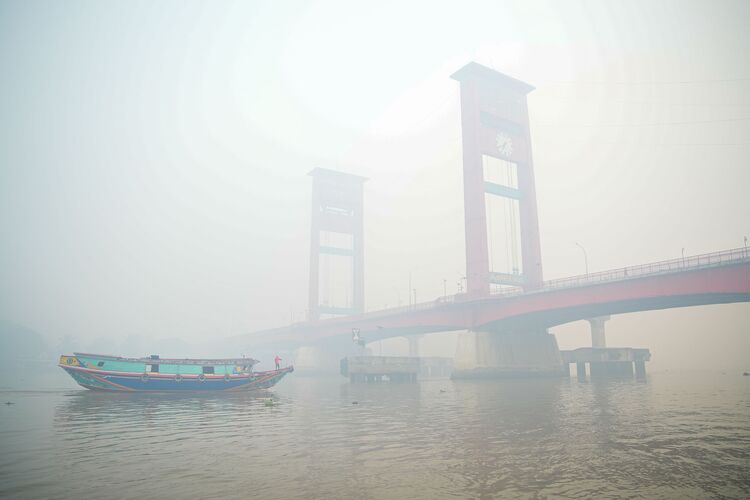
The thick smog, which is sometimes visible from space , has cloaked Indonesian cities and drifted north and east over Malaysia, Singapore and as far away as the Philippines and Vietnam.
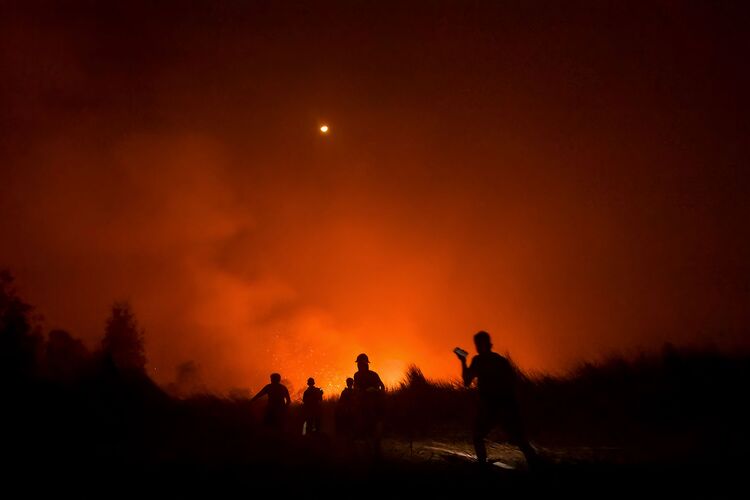
Indonesia has deployed hundreds of personnel, roping in state employees and plantation workers working 10-hour shifts to fight the fires. Dozens of aircraft were being used for cloud-seeding and water-bombing operations.
How is the haze affecting communities, industries and ecosystems?
The fires have ripped through areas that are home to orangutans and other endangered species. President Prabowo Subianto has called the deliberate setting of fires to clear land “ecological terrorism.”
Thousands of residents in Indonesian Borneo, which along with Sumatra has seen the worst of the fires and haze, have reported respiratory infections in the past few months, according to local media. Local governments have had to set up “oxygen houses” to help those with sensitive lungs, particularly children and the elderly.
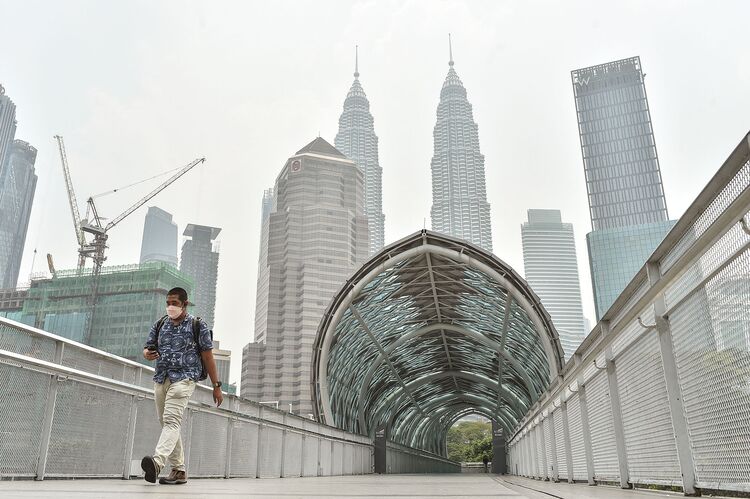
More than 2 million students in Malaysia were ordered to stay at home on Oct. 9 as the air quality deteriorated. Parks in the capital Kuala Lumpur emptied of pedestrians and joggers. Organizers of the city’s annual marathon had to cancel a kids’ event , though they decided to press ahead with the adult full marathon and half-marathon.
Flights were disrupted or rerouted in Malaysia and Indonesia as visibility dropped below levels deemed to be safe.
Air quality has also deteriorated in Singapore, where many residents have begun wearing face masks. The city state’s flagship Formula 1 race on Oct. 11 was still going ahead as planned, with Lana Del Rey, Mark Ronson and other international acts scheduled to warm up the crowds. The event was expected to attract at least 300,000 people.
Plantation and mining operations in parts of Indonesia have been disrupted as employees work fewer hours outside and low water levels in some rivers hold up the transportation of timber, palm oil and coal. The full impact of the drought and haze on production of palm oil — a major export commodity for Indonesia and Malaysia — is likely to be delayed until next year.
What impact can the haze have on public health?
Authorities across the region have issued warnings, especially for vulnerable populations, to stay indoors and avoid outdoor exercise.
Generally, the haze causes scratchy throats, burning eyes and headaches, and can worsen inflammation and asthma. It can also affect the body’s nervous and reproductive systems and contribute to chronic cardiovascular and respiratory diseases. Exposure to fine pollution particles known as PM2.5 during pregnancy has been linked to a higher risk of premature birth. Recent studies have linked PM2.5 exposure to adverse effects on the brain and an increased risk of diseases such as Alzheimer’s.
Air pollution, including particulate matter, is associated with more than 8 million premature deaths each year, according to the United Nations Environment Programme, and is now the world’s greatest single environmental risk to humans. A study published in Lancet Planetary Health found that long-term exposure to air pollution increased deaths in India by 1.5 million per year.
Is government data on the air pollution reliable?
Pollution measurement standards vary across countries, but the World Health Organization has air quality guidelines that focus on “classical pollutants” including PM2.5 and PM10, ozone, nitrogen dioxide, sulfur dioxide and carbon monoxide, given their observed health effects.
Singapore follows those guidelines, computing the Pollution Standards Index based on the six pollutants, with data gathered using specialized equipment that follow internationally recognized methods. However, its main reporting system is a 24-hour rolling index that tends to be a lagging indicator and pulls the reading below real-time data such as those on IQAir or aqicn.org .
The Malaysian government this year launched a new air-quality forecasting system in an attempt to better monitor and predict haze conditions.
Are governments cooperating to tackle the haze problem?
Past haze crises have caused diplomatic rows and blame games between Southeast Asian neighbors. Indonesia has been accused of not doing enough to prevent the fires, while Singapore and Malaysia have been criticized for hosting companies whose supply chains include plantations on fire in Indonesia.
This time around, officials have been more restrained with their criticism, stressing cooperation instead.
Malaysian Prime Minister Anwar Ibrahim called Indonesian leader Prabowo to discuss joint efforts to tackle the crisis. Kuala Lumpur has offered to send aircraft and personnel, though it’s unclear if these have arrived.
There were calls for the Association of Southeast Asian Nations, or Asean, to coordinate a response. But the bloc’s non-interference principles and a lack of data-sharing have made it difficult for its members to agree on meaningful remedial measures. The Asean Agreement on Transboundary Haze Pollution, although ratified by all members since 2015, is a voluntary, collaboration-based framework — unlike directives in the European Union.
Singapore enacted a transboundary haze law in 2014, allowing it to fine companies as much as S$100,000 ($78,000) per day of pollution. The city-state tried to enforce it after record-breaking smog in 2015, but the environment ministry conceded it was having difficulty getting information from its Indonesian counterpart on companies suspected of illegal burning. A decade on, four companies continue to be under investigation.
Following criticism in 2015, Indonesia took unprecedented measures, declaring a moratorium on peatland conversion and halting new palm-oil plantation permits. And in 2019, when then-president Joko Widodo threatened to sack police officials in areas with fires, he said Indonesia would be “humiliated in front of other countries” if it doesn’t solve the problem.
How long will the fires and haze last?
Scientists have declared this year’s El Niño is set to be the strongest on record, and Japan’s weather agency sees a 100% chance of it continuing through the northern hemisphere winter. It’s already upended weather patterns worldwide, and its impact in Southeast Asia is manifesting in a longer-than-usual dry season.
Indonesia’s weather agency has forecast that the start of the rainy season will be delayed to November or December.
— Ishika Mookerjee, Karoline Kan and Kanupriya Kapoor