Taiwan President Lai Ching-te called on democracies in the region to unite against threats to stability, as the island faces pressure from Beijing and concerns that Donald Trump’s rapprochement with China could come at Taiwan’s expense.
“We welcome the United States and China managing their competition through dialogue and reducing the risk of conflict and war,” Lai said in his National Day address in Taipei on Saturday.
But maintaining regional peace and security requires “a correct understanding of how history has unfolded,” he said. “Democracies in the Indo-Pacific must join forces to ensure the status quo of peace and stability in the region is not changed.”
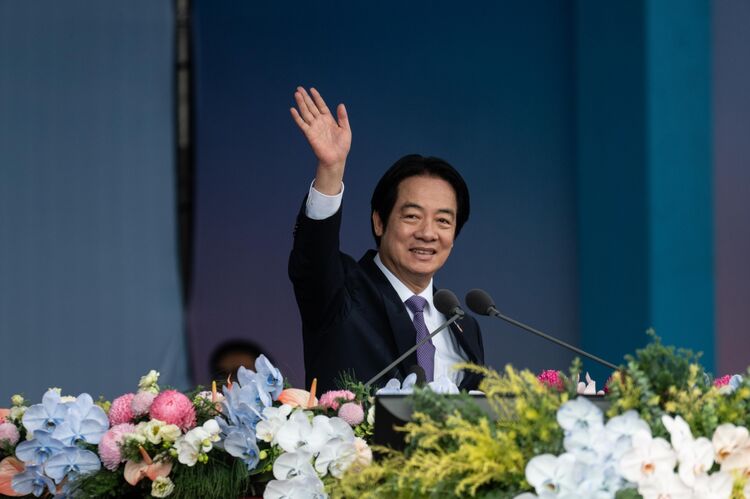
Lai’s speech came two weeks after Trump hosted Chinese President Xi Jinping in Washington, which saw the two leaders bond over a lavish state dinner and agree to mutual tariff cuts .
During Xi’s visit, the Chinese leader urged Washington to explicitly oppose Taiwanese independence, a departure from the longstanding US position of not supporting it. US Ambassador to China David Perdue later said American policy on Taiwan was unchanged.
Senior officials in Taipei have expressed concern that Taiwan could be “on the menu” in Trump’s talks with Xi, particularly as his administration has held up an arms package for the island potentially worth as much as $14 billion.
Washington has nevertheless continued engagements with Taipei, including by allowing a visit from former Taiwanese President Tsai Ing-wen and the opening of Taiwan’s first new representative office in the US since 2020. Trump is seeking further meetings with Xi before the end of the year.
Lai proposed a record NT$1.12 trillion ($35 billion) defense budget for 2027 and has pledged to raise Taiwan’s defense spending to 5% of gross domestic product by 2030, as an artificial intelligence-driven economic boom gives his government more resources.
Beijing considers Taiwan part of its territory and has vowed to bring the island under its control, by force if necessary.
Taiwan is also seeking to strengthen its domestic drone industry and invest in missiles, air defense systems and other weapons designed to deter a potential Chinese invasion. The military has introduced more realistic exercises, including unscripted combat scenarios, simulated mobile-internet disruptions and the mobilization of civilian resources.
At the National Day address on Saturday, Lai also pledged to ensure the benefits of economic growth reach more people, including through higher wages, cash handouts, tax relief and expanded social welfare programs.
Taiwan’s economy is enjoying its strongest expansion in decades as surging global demand for AI fuels exports of advanced semiconductors and servers. The government raised its 2026 growth forecast to 11.05%, which would mark the fastest expansion since 1987.
This year’s National Day also marks the 30th anniversary of Taiwan’s first direct presidential election in 1996, a milestone in the island’s transition from authoritarian rule to democracy.
Lai said the anniversary demonstrated that Taiwan’s future belonged to its people, reiterating a position that puts him at odds with Beijing’s claims over the island.
“Taiwan cherishes peace, but we will not give up our freedom,” he said. “We are open to exchanges, but will not accept subordination.”