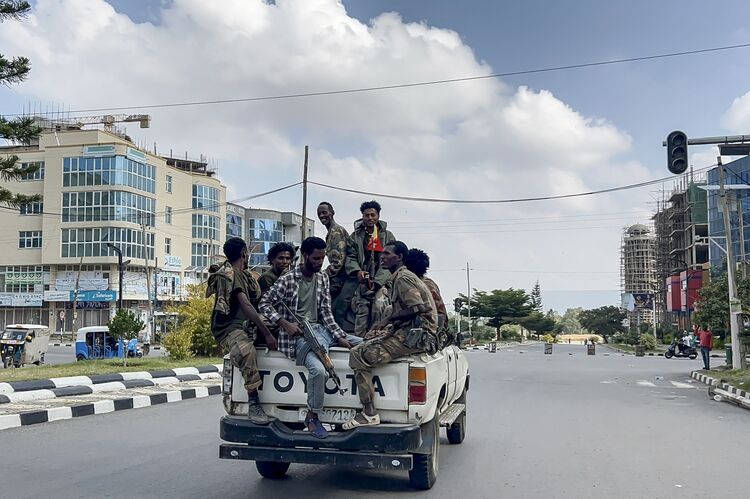
Ethiopia is on a precipice, with rival armed forces mobilizing across the country, old alliances fracturing and clashes intensifying.
Federal authorities in Addis Ababa are at loggerheads with leaders of the northern Tigray region and the rulers of neighboring Eritrea. As a result, the Horn of Africa nation risks sliding into another all-out conflict three years after a deal was reached to end a civil war that claimed at least 600,000 lives.
There’s even speculation that Ethiopian Prime Minister Abiy Ahmed could try to seize control of the strategic Red Sea port of Assab in Eritrea and restore maritime access for his landlocked country. This would deepen instability along a vital shipping route that’s already been disrupted by fighting between Iran-backed Houthi rebels and government forces in Yemen, and risks drawing other countries into the fray.
Why has conflict flared again?
The origins of the current fighting stem from the civil war that erupted in 2020 and dragged on for two years before Abiy’s administration and Tigray’s leaders signed a peace accord. Its provisions included the disarmament of the Tigray People’s Liberation Front and the restoration of land annexed by the Amhara region to Tigrayans, but they were never fully implemented and tensions have simmered ever since.
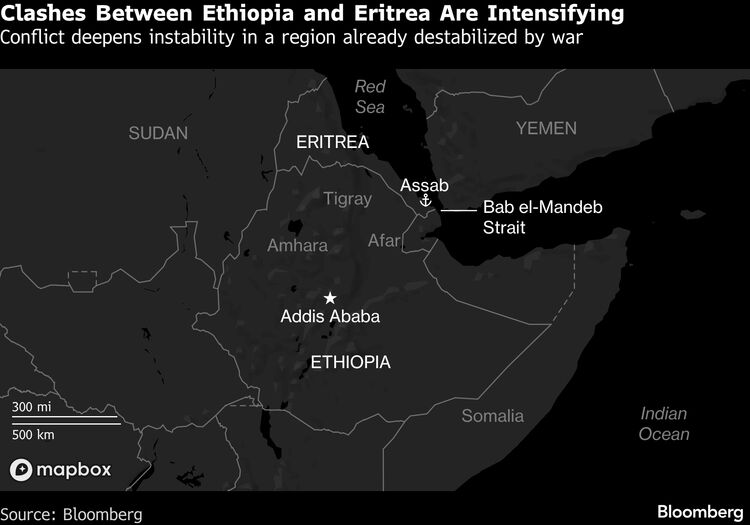
Abiy has upped his rhetoric calling for a direct path to the Red Sea , which Ethiopia lost in 1993 after Eritrea gained independence. This has heightened speculation that his army may seek to restore access by force.
Tigray’s regional government split in early 2025 and its new leaders allied with Eritrea against Abiy. All of them have since begun preparing for war, recruiting additional soldiers and stockpiling weapons.
On Oct. 7, Ethiopia accused Eritrea of sending troops into its territory and demanded their immediate withdrawal. Eritrean Information Minister Yemane Gebremeskel didn’t respond to the allegation and accused Ethiopia of laying the groundwork for a war aimed at seizing the Assab port.
Who are the main antagonists?
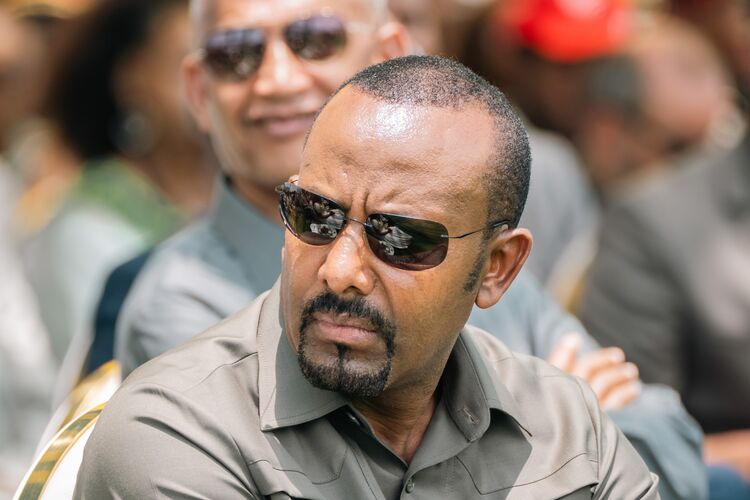
The principal players in the conflict are Abiy, who set about consolidating power under his Prosperity Party in 2018, and the TPLF. But this isn’t simply a fight between the central government and one restive province. The TPLF was long the dominant force in Ethiopian politics after a Marxist regime was overthrown in 1991. It’s now joined forces with a group dubbed the Alliance for Survival that includes militias from several other regions of the country, including Oromia, Amhara, Somali, Afar and Benishangul-Gumuz. Members of the alliance have clashed with government forces in Oromia, Amhara and Afar since its formation in September.
Foreign powers are also implicated. The United Arab Emirates has backed Abiy’s administration, providing billions of dollars in investment and financial support to the central bank. Saudi Arabia, Egypt, Somalia and Sudan are broadly lined up behind Eritrea, although there is no evidence they have given the country material support, and they deny any involvement.
The Saudi government is particularly concerned about the militarization of the Red Sea and has sought to reinforce the principle that security there should be controlled by the states on its coastline — a stance Ethiopia has flatly rejected.
What are the global implications?
A war between Ethiopia and Eritrea would make an already unstable region even more chaotic, and the consequences could be felt across the world.
To the northwest, a civil war between Sudan’s army and the paramilitary Rapid Support Forces has been raging for more than three years. East of Ethiopia across the Red Sea, Yemen’s Houthi militia has imposed a blockade on Saudi shipping through Bab el-Mandeb, disrupting the waterway linking Asia and Europe that in normal times is the conduit for 30% of global container traffic and almost 5 million barrels of oil a day. A war for control of the Eritrean port would add new dangers for ships plying Bab el-Mandeb, potentially driving up freight, insurance and other costs.
An even more alarming scenario would be for the UAE, Saudi Arabia, Egypt and Sudan to be drawn into the fighting, essentially merging several localized wars into a broader regional one that spans both shores of the Red Sea.
Why are relations between Ethiopia and Eritrea so fraught?
Animosity dates back decades. The two nations fought a border war from 1998 to 2000 that killed tens of thousands of people and remained bitter rivals until Abiy became prime minister in 2018. He won the 2019 Nobel Peace Prize after reaching a peace agreement with Eritrean President Isaias Afwerki. But the truce unraveled, with Addis Ababa accusing Eritrea of backing Fano militias that are battling federal forces in Ethiopia’s Amhara region.
Eritrea and the TPLF were once enemies. They have since found common cause in confronting Abiy’s government, and the rhetoric among senior Ethiopian officials about gaining access to the Red Sea has diplomats and analysts in the region more concerned than ever that war will erupt.
The US issued a security alert for Ethiopia on Oct. 8, urging citizens to reconsider travel to the Horn of Africa nation due to the threat of long-range attacks. The embassy in Addis Ababa advised Americans to avoid the Amhara, Tigray and Afar regions and urged those already in these areas to leave or shelter in place until conditions improve.