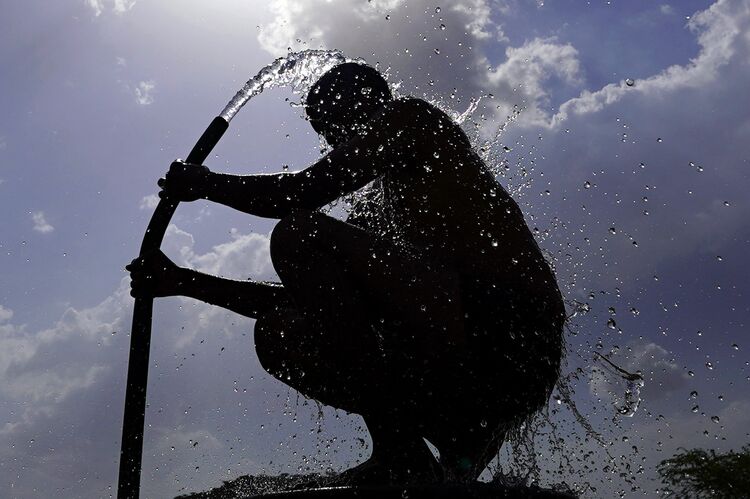
To say that central banks dislike making policy based on extreme weather is an understatement. But they can’t duck the economic reverberations of the powerful El Niño that’s roiling Asia.
The dry spell is another shock that monetary authorities could do without. They spent years getting on top of the inflation surge that followed the post-pandemic economic reopening and Russia’s invasion of Ukraine. Officials watched with trepidation as the US imposed extensive tariffs, and then had to deal with the spike in energy prices from the Iran war.
Now comes a new blow from climate and the challenge of responding to the phenomenon one policymaker called a “ Godzilla .”
The weather pattern, which has brought drought to South and Southeast Asia, is likely to get stronger. Odds are it will surpass all records going back to 1950, according to US experts. It’s disrupting markets for commodities like rice, contributing to shortages of water and, further afield, slowing traffic in the Panama Canal, forcing up costs for shippers. The weak monsoon was one factor driving the Reserve Bank of India’s rate increase on Wednesday.
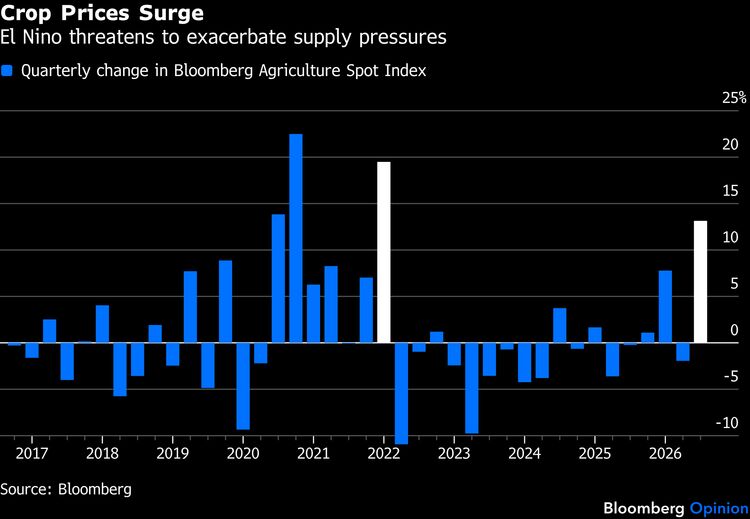
Central bankers will endeavor to figure out how much of the impact will be short-lived and what risks becoming entrenched in the decisions of companies and consumers. The problem today is that officials are running out of scope to wait and see.
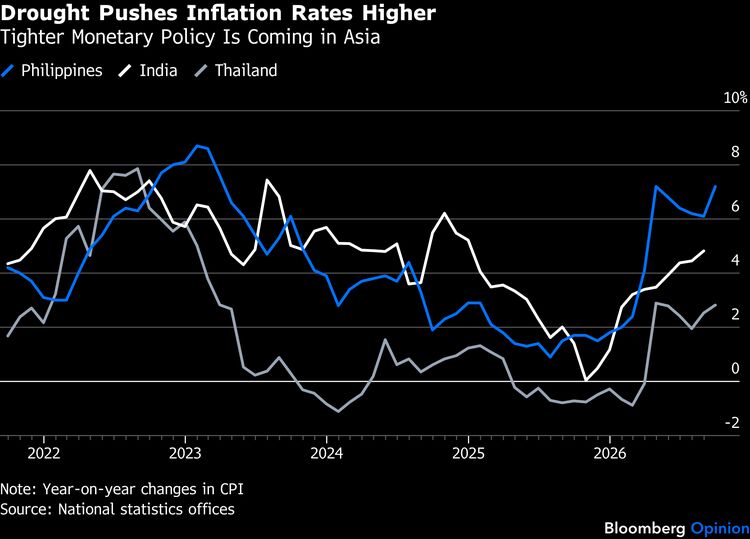
Bond yields are climbing in Thailand and the Philippines, reflecting renewed inflationary forces. Long-term market rates in India jumped to the highest level in almost three years after the RBI pivoted to a more hawkish stance. And Manila got some bad news last week: After decelerating for four months, inflation punched through 7% in August, which means additional tightening is in the cards this month.
Credibility is on the line. Policymakers can afford to look through an isolated shock or two. But if they start to stack up and exacerbate each other, the luxury of waiting disappears. Some central banks avoided hiking when the Middle East conflict erupted and are now playing catch up.
But there’s an important distinction between responding to higher inflation which can be caused by bad weather, and developing policy according to climate projections. Financial institutions, often regulated by central banks, must be sturdy enough to withstand the impact of severe weather. Fires, flooding, the outlook for agriculture and transportation are all important factors in the economic health of nations, too. But the environment is one area where central banks have been accused of over-reach.
It’s tempting to take on extra responsibilities, especially when legislatures seem unable to deal with weather events effectively or in a timely manner. But fall down on traditional missions like price stability or a solid labor market, and other initiatives — however worthy — can lead to backlash. The subject is particularly sensitive in the US, where the Federal Reserve has backtracked on some of its engagement on climate issues. Across the Atlantic, however, the work continues. A top official from the European Central Bank said this month that trying to deny the impact of environmental change on the economy is reckless. It’s not so much mission creep as recognizing reality .
The Fed, despite its independence in setting rates, endeavors to sniff the political wind. Within days of Republicans taking control of the House of Representatives in 2023, Chair Jerome Powell declared that the Fed isn’t, and doesn’t seek to be, a climate policy shop. Days before Donald Trump was sworn in for a second term as president, the bank quit a network of central banks and regulators engaged in the study of climate risk. The Fed would stick to its knitting , Powell insisted, and thus defend its autonomy.
This pushback isn’t a uniquely American phenomenon. An independent review into the Reserve Bank of Australia found that climate change
should be a factor in modeling and forecasting, but that policy should remain the domain of parliament. The most scathing critique came from a former executive at the Bank for International Settlements, a kind of club for central banks. Claudio Borio, who led the monetary and economic division, said a few days ago that hubris had infected policy making and that a dangerous gap had opened between what central banks can deliver and what they are expected to achieve. Among the major errors: “
flirting with objectives
which are really far away from the mandate” such as “the green transition or the idea of inclusive growth.”
Central bankers, on ascending to the top job, often receive mementos from esteemed predecessors such as a coffee mug with encouraging words or a relic of the institution’s history. This generation must wish they had been given a hazmat suit.
More From Bloomberg Opinion:
- China’s Growth Target Has Become a Trap for Xi : Daniel Moss
- El Niño Is a Rehearsal for the Rest of Our Lives : Mark Gongloff
- The Bond Market’s Balancing Act Is Perfectly Normal: Nir Kaissar
Want more Bloomberg Opinion? OPIN <GO> . Or you can subscribe to our daily newsletter .