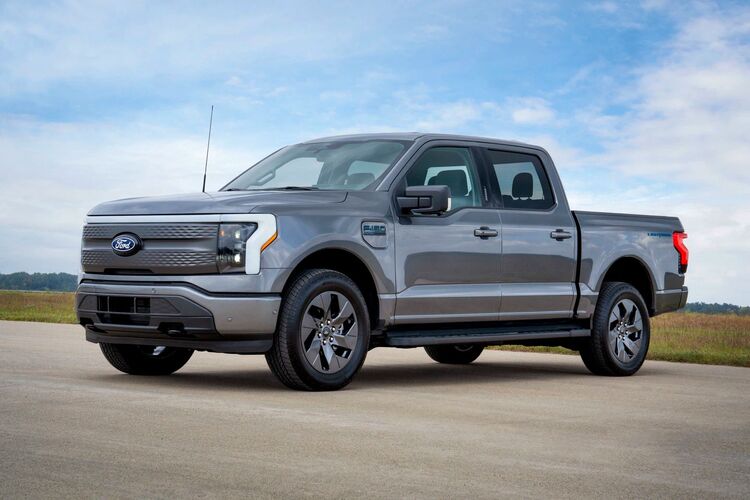
It turns out, to make Ford Motor’s electric pickup truck a sales champion, the company just had to stop making it.
Since the final F-150 Lightning rolled off the assembly line in December, it has become one of the most coveted cars in America and a glowing ember in the red-hot market for used electric vehicles. The surging demand shows that there is plenty of appetite for electric trucks among US drivers, provided the pickups aren’t too expensive, said Jimmy Douglas, CEO of Plug, a wholesale electric vehicle dealer.
“When Ford was selling it brand new, the math was complicated,” Douglas said. “But used, the Lightning is 50% to 60% of the sticker price and that is really a sweet spot; it’s an incredible truck for the money.”
In addition to being put off by high prices, truck drivers have been relatively slow to go electric because the machines aren’t very aerodynamic. The boxy build and hefty weight of a half-ton pickup hamstring driving range. However, combustion trucks fight the same physics when it comes to mileage. Pickup fans, in short, have felt the sting of the high gas prices, spiked by the Iran war, more keenly than most drivers.
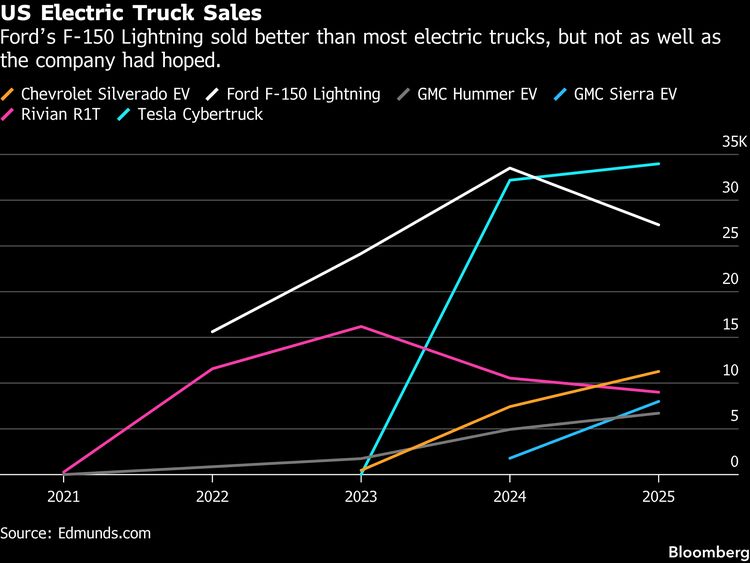
Scarcity has helped too. In a good year, Ford sells about 900,000 gas-powered F-150s, whereas it moved slightly more than 100,000 of its electric version in a little over four years.
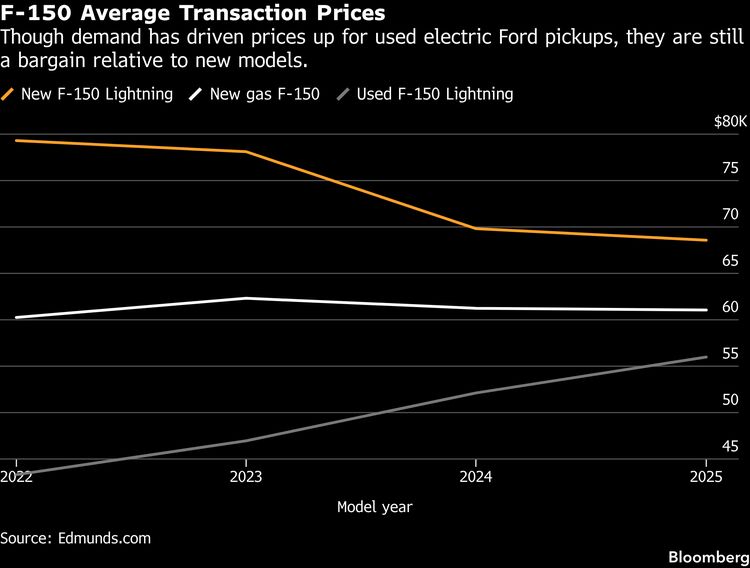
The typical Lightning is changing hands in about 20 days in the US, versus 44 days for the average used vehicle. The price has steadily risen to $50,000, an increase of 4% since the start of the year, according to Edmunds.com.
And nearly one-third of used Lightnings are being sold by dealerships that peddle other brands. Typically, those stores would flip a used Ford to a Ford dealer, according to Douglas, but many are electing to list the car directly to tap red-hot demand.
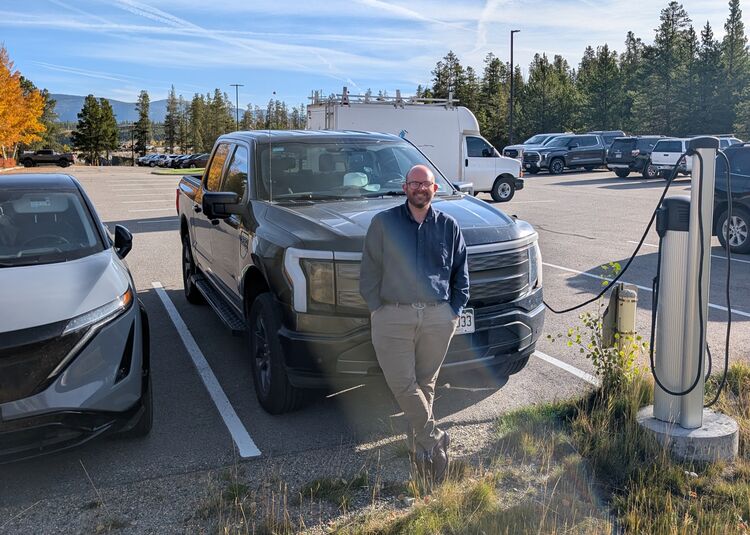
Chase Norris, a county planner in Colorado ski country, recently ditched his gas F-150 for a used Lightning. At $40,000, he considered the vehicle both a major upgrade and a bargain.
“It’s better for the environment and it happens to be faster than some Mustangs,” Norris said. “And I go camping a lot; if it gets cold at night I can just plug my electric blanket into the outlet.”
Part of the appeal for customers like Norris, however, is they won’t notice much of a difference. The exterior of the Lightning is pretty much identical to the gas-powered version — so is the cabin, right down to the massive gear selector, which folds down into the center console. The only apparent EV exception is the yawning front trunk where the spark plugs and cylinders used to be. In a pinch, the truck can also power a house.
Ford’s straightforward bet with the Lightning was that EV buyers were simply drivers who wanted a vehicle that was quieter, easier on the environment and cheaper to fuel and maintain. “One of the best things Ford could have done,” Douglas said, “is making the F-150 Lightning look like an F-150.”
The problem, according to analysts, is that Ford never really delivered on its promise to sell its battery-powered pickup at prices in line with its gas trucks. The $40,000 window sticker trumpeted at the vehicle launch was quickly scrubbed off and replaced by $50,000. Even that number was seldom evident on dealership lots. In its first year of sales, the average transaction price on an F-150 Lightning — what buyers actually paid — was $79,000, because Ford made a greater share of fancier, higher-priced iterations of the vehicle, according to Edmunds.com. Meanwhile, gas F-150s were going for $19,000 less on average. Even at those levels, Ford was losing heaps of money on its EVs, at one point more than $100,000 for each unit sold.
On the used market, however, Lightning prices are comparable to those of gas-powered F-150s. At parity, it appears customers like the EV version as much or more than the traditional machine, at least when gas prices are dear.
The EV Group, which sells pre-owned battery-powered vehicles nationwide from three dealerships, has seen a lot of customers buying Ford Lightnings as a second truck. They drive the electric rig during the weekly commute and fire up the gas model on weekends, according to EV Group CEO and cofounder Alex Lawrence.
“When you do the math on how much they’re going to save,” Lawrence said, “sometimes the used EV is free, if that makes sense.”
At the moment, though, Lawrence’s lots are Lightning free. Even though his stores are selling about 300 vehicles a month, he can’t get his hands on any used electric F-150s — at least not at the right price.
Ultimately, Ford’s decision to kill the Lightning was part of an aggressive retooling of its entire EV strategy. The company set up a new skunkworks in California to make an affordable electric truck — and to do so efficiently enough to also turn a profit.
Next year, Ford promises an all-new electric pickup, dubbed Fathom, with a starting sticker price around $28,000. Although Lightning sales never topped 34,000 a year, Ford hopes to sell 100,000 of the new pickups annually. Kevin Roberts, director of market intelligence at CarGurus Inc., a digital sales platform, said recent demand for used Lightnings bodes well for Fathom sales.
“Used EV demand has shown customers are willing to consider electric when the value proposition is right,” Roberts said. “Ford’s announced [sticker price] puts the Fathom directly into that affordability conversation.”
Ford declined to comment, but has acknowledged that getting EV economics tuned for both profit and low prices remains a tough exercise. At a conference last week, Ford CEO Jim Farley said the company “hasn’t landed the plane yet” on mass production of its new EV platform.
“It’s going to be a heck of an effort,” he explained, “to launch this at scale, at cost, on time.”