Hedge funds are stepping up purchases of legal claims tied to the 2025 Los Angeles wildfires, after political opposition to the deals lost steam.
In some cases, funds are paying as little as 3 cents on the dollar, according to details of transactions shared with Bloomberg. The most expensive are going for around 60 cents on the dollar.
California lawmakers had sought to rein in investor purchases of subrogation claims, as such deals are called, criticizing efforts to reap financial gain from the human and environmental cost of wildfires. But an impasse in the state legislature has now reassured investors that there’s still room to chase lucrative transactions.
Cherokee Acquisition Director Bradley Max, who spoke last year of “ a chill ” in the market for subrogation deals, says he now sees optimism returning.
“There’s plenty of appetite for buyers and sellers,” said Max, who acts as a broker between hedge funds and insurers looking to pass on subrogation claims.
“Insurance companies know that there is liquidity available and the market has become more mainstream,” Max said, declining to identify individual insurers or hedge funds by name.
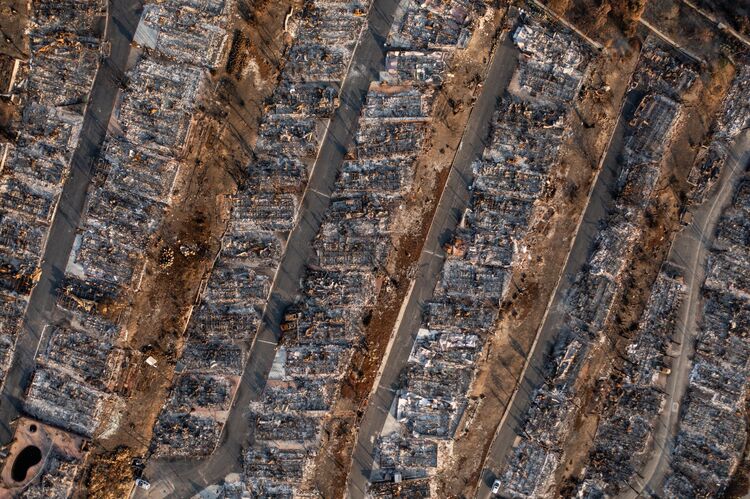
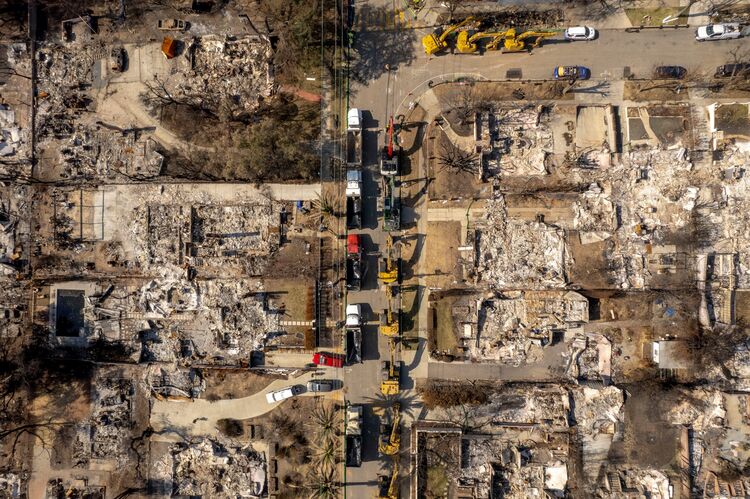
The blazes that swept through LA’s Eaton and Palisades neighborhoods in early 2025 caused about $40 billion in insured losses , by some estimates. Today, roughly 20 months after the event, disputes over who should foot that bill have yet to be resolved. Verisk, a risk assessment firm, describes the LA fires as a “historical loss event” whose ongoing claims management challenge carries “a multiyear development tail.”
Key to that process is subrogation. The legal mechanism allows an insurer to pursue claim-related losses from a third party such as a power company if, for example, there’s a suspicion that downed transmission lines started a fire. Instead of waiting years for the legal process to play out, insurers can offload their risk by selling subrogation rights to investors at a discount in exchange for immediate cash. Investors bet that the eventual reward will exceed the price they paid.
“Most hedge funds are looking for returns in the low-to-mid teens and are happy with that,” said Max of Cherokee, which specializes in trading distressed financial assets, bankruptcy claims, and subrogation rights.
The New York-based firm recently acquired insurance claims related to the Palisades fire for roughly $100 million, paying less than 10 cents on the dollar, Max said, while declining to name the insurer.
Claims for the Eaton fire are currently being acquired for 55-60 cents on the dollar, while those for the Palisades blaze — which are seen as riskier because of the challenge in establishing liability — are trading at 3-5 cents on the dollar, according to Cherokee.
“These transactions don’t take a whole lot of time,” Max said. “They are typically funded within just a couple of weeks.”
Such trades represent a secretive corner of alternative investing, in which the details of deals aren’t publicly disclosed and buyers generally seek anonymity. That’s in part due to the politically sensitive nature of the subrogation investment market.
Last year, the California Earthquake Authority, which is the administrator of the California Wildfire Fund, described investments in subrogation claims as an “ opportunistic ” bid by Wall Street to profit against a backdrop of social and environmental disaster.
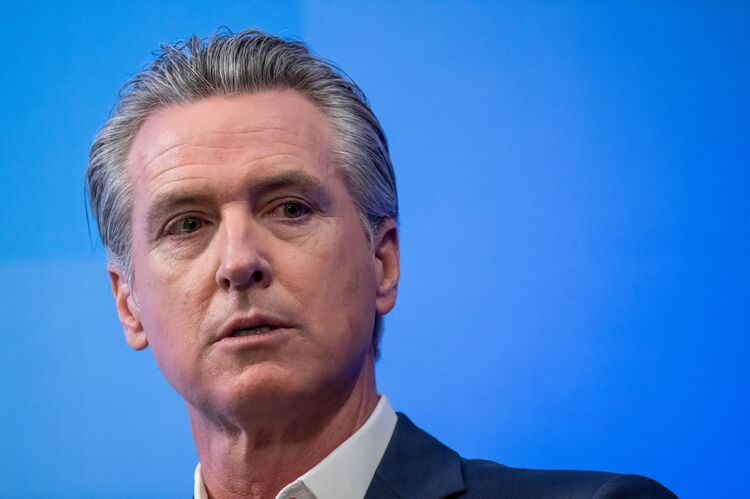
California Governor Gavin Newsom has sought to prevent hedge funds and other alternative asset managers from inserting themselves in such transactions. In a bid to reduce costs and discourage third-party speculation, the state in 2025 adopted a law requiring insurers to give utilities the right of first refusal before selling claims to investors. But the legislation stopped short of banning hedge fund purchases.
“From a hedge fund manager’s perspective, it would be reassuring that the concept of taking subrogation entirely off the table did not materialize,” said Willis Hon, an attorney at Nossaman LLP specializing in public utilities regulation and environmental law.
For California’s insurers, it’s business as usual, according to Denni Ritter, vice president of state government relations at industry group American Property Casualty Insurance Association.
“Nothing from the insurer’s perspective has changed,” she said. “They’re going to continue to cover claims and they’re going to continue to subrogate against utilities who caused wildfires.”
Max of Cherokee adds that the “right of first refusal” law has so far had little impact on investor appetite.
“I’d be surprised if utilities or government entities had the means to acquire claims,” he said. “I’ve not lost any transactions as a result of that.”
California stands out as a state in which trading subrogation claims has played a key role in the market, against a backdrop of huge insurance losses tied to increasingly intense wildfires. What’s more, plaintiffs aren’t required to prove negligence or fault under the state’s doctrine of “inverse condemnation,” which also applies to investor-owned utilities. That’s led to a protracted battle between utilities and insurers: utilities want to avoid passing on the cost of claims to ratepayers, while insurers want to recoup policyholder losses and to have the freedom to sell subrogation claims.
“It’s an enormously complex process that keeps a lot of people employed,” said Hon.
Max of Cherokee says casting hedge funds as villains mischaracterizes their role in a market that needs the liquidity they provide.
“It makes for great press for a politician to say they’re going after the big hedge funds,” he said. “But whether it goes to an insurer or an investor, it’s the same amount of money.”
Tensions are set to continue. Southern California Edison, a large investor-owned utility, said that as of July it was aware of some 2,000 lawsuits related to the Eaton fire, representing about 32,000 individual plaintiffs as well as suits by subrogation plaintiffs and public entity plaintiffs. A “bellwether” jury trial in the Eaton fire litigation has been set for January 2027, it said.
“Billions of dollars are in play now,” said Hon. “Unfortunately, the reality is that wildfires will continue happening in California and the claims are going to be massive for the foreseeable future.”