Leaders of India’s youth-led protest movement - Cockroach Janta Party - vowed to press ahead with their demand for the resignation of the country’s top election official after being released from a temporary detention on Sunday.
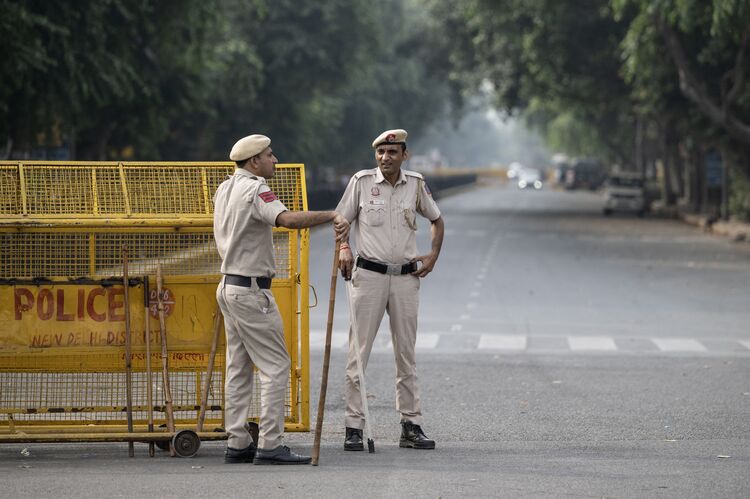
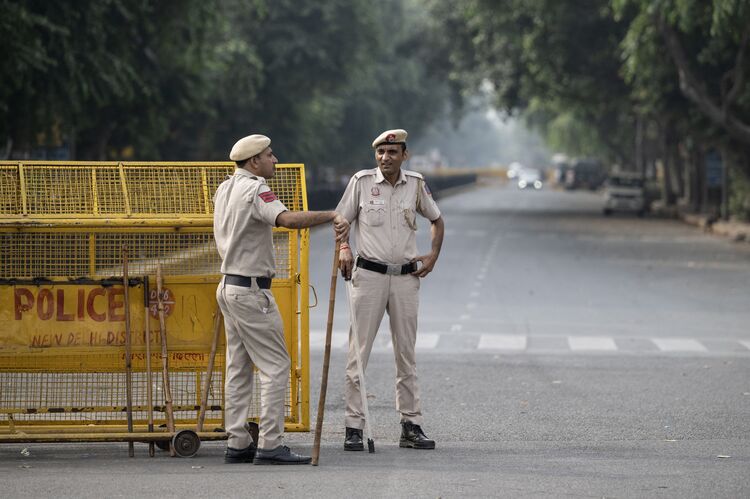
Parts of New Delhi remained under tight security for a second straight day, after thousands of protesters were reportedly detained on Saturday. Despite the security crackdown, there were sporadic protests led by student organizations in central Delhi on Sunday but they were quickly thwarted by the police. There were also reports of demonstrations in other parts of India.
Most protesters were released Saturday evening, while a court ordered the same for the three CJP leaders - Abhijit Dipke, Ashutosh Ranka and Saurav Das - on Sunday. Opposition parties led by the Indian National Congress, which spearheaded a march to the Election Commission headquarters last week, plan to resume demonstrations on Monday.
“The state is at war with its own citizens,” Das said at a press conference after he and the other CJP leaders were released. “We won’t back down.”
The Supreme Court held a special hearing Sunday to consider petitions challenging sweeping prohibitory orders, detentions and internet shutdowns in the capital. A two-judge bench ruled that peaceful, unarmed people cannot be detained in areas where prohibitory orders are not in force. The court directed the government to ensure that internet services remain uninterrupted, the movement of people and traffic is allowed subject to traffic regulations, and metro and railway services operate normally.
The scale of the detentions and sweeping security restrictions underscore the tensions facing Prime Minister Narendra Modi’s government as it confronts a rare, sustained wave of youth-led dissent. The protests have also raised questions about how authorities handle demonstrations and protect the right to peaceful assembly after the United Nations human rights office expressed concern over the mass detentions.
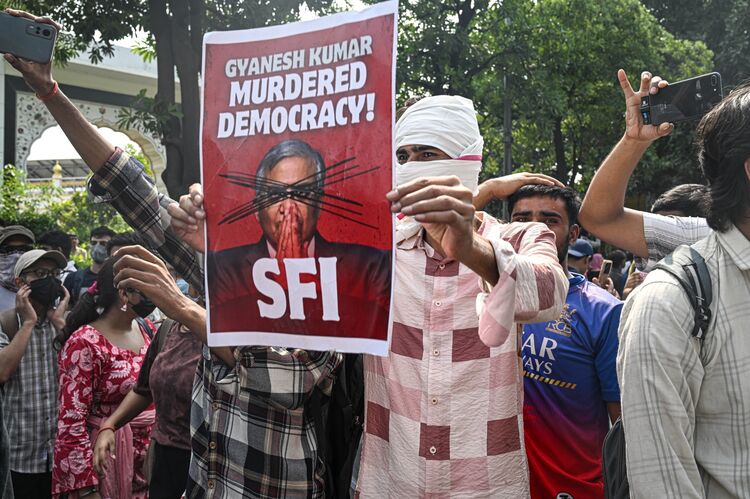
India’s foreign ministry rejected the criticism as “unwarranted interference in the internal affairs of India,” saying authorities had acted in accordance with the law. Delhi Police said Friday that CJP had not been granted permission to protest and that any gathering would therefore be illegal, warning of legal action against those who defied the restrictions.
The tensions were triggered by an investigation in a local newspaper in late September accusing Chief Election Commissioner Gyanesh Kumar of ignoring concerns raised by two election officials over a contentious revision of voter rolls that resulted in more than 130 million names being removed. The body has denied the claims, saying its decisions were unanimous and that differing views are part of the decision-making process.
The demand for Kumar’s resignation comes ahead of key state elections including next year’s vote in India’s most populous state of Uttar Pradesh, raising the political stakes for Modi’s ruling party and its opponents.
On Sunday, traffic police warned of possible disruptions across dozens of major roads and intersections in the capital, advising commuters to avoid non-essential travel and allow extra time for journeys. Train services resumed normal operations, while metro stations reopened following Saturday’s shutdown.
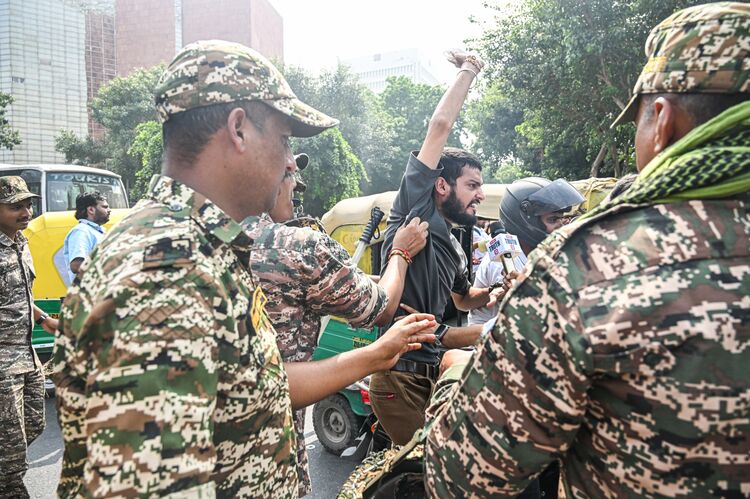
About 30,000 police personnel, backed by paramilitary forces, remained deployed across the capital as protesters sought to gather for a second consecutive day, according to local media reports.
“The police deployment is unprecedented but understandable in terms of the lack of comprehension about where and how to deal with this crisis,” said Ramu Manivannan, professor and former head of department of politics & public administration at the University of Madras. Unlike conventional political demonstrations, where authorities can anticipate marches and gathering points, today’s movements rely on less predictable forms of mobilization.
Manivannan warned that attempts to suppress the demonstrations through arrests and restrictions could instead spread the protests to other parts of the country. He said authorities needed to seek a political resolution rather than respond with increasingly stringent security measures.
| Read more about India’s Election Commission controversy: |
|---|
| Why India’s Voter Roll Overhaul Is So Controversial: Explainer |
| India Police Detain Protesters, Lock Down Delhi Over Voter Rolls |
| Indian Opposition Leader Detained After Voter Roll Standoff |
The protests are the latest challenge for Modi’s government after thousands of angry students took to the streets in July over exam irregularities, forcing the education minister to resign. The police faced criticism at the time for their heavy-handed methods in breaking up the student demonstrations.
Several shopping districts remained shut over the weekend in central New Delhi. The new wave of protests also comes at a difficult moment for the economy, with the government seeking to bolster investor confidence and boost growth. Indian equities have slumped, while the rupee is one of the worst-performing currencies in Asia this year.
On Saturday, the Reserve Bank of India broadened its defenses · to steady the rupee, taking some of its strongest measures since the 2013 taper tantrum. However, questions remain over how far the central bank is willing to go as external pressures mount.