Chinese automakers led by BYD Co. will show off a wealth of new plug-in hybrid models at the Paris car show this week, underscoring how entrenched they’ve become in the lucrative European market.
That won’t change even as the European Union moves to limit imports of hybrid cars, a measure analysts say will slow but not stop China’s expansion in the region. In fact, the likes of BYD and Zhejiang Leapmotor Technology Co. are expected to hasten plans for setting up EU production capacity instead, cementing their role in a market meant to help them sidestep near-ruinous pricing competition at home.
A cap on hybrid imports “will speed up Chinese carmakers’ localization of manufacturing in Europe for sure,” said Li Yanwei, who advises the China Automobile Dealers Association. Many of their top-selling models in Europe are larger SUVs that offer attractive margins, he added.
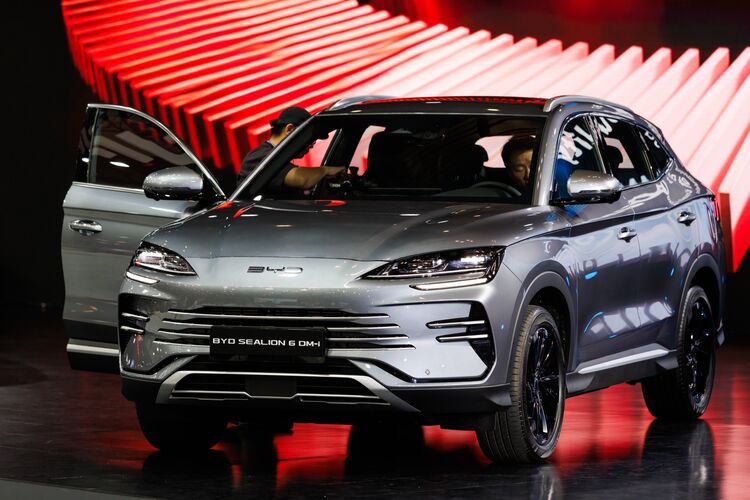
Much remains uncertain about the new hybrid quota, including if the EU and China have agreed on a hard cap of 350,000 units or one that would prompt tariffs if that barrier is breached. What’s clear, however, is that none of Europe’s past efforts have stopped the Chinese expansion.
Read More: China Says Hybrid-Car Quota Deal Avoids EU Trade Escalation
In 2024, Brussels slapped tariffs on fully electric cars from China. While the growth of Chinese EV sales in Europe has since slowed, many of the companies’ battery-powered models remain competitive despite the duties.
Chinese brands also pivoted quickly to hybrids that weren’t affected by the levies. They captured around 26% of Western Europe’s plug-in-hybrid market in the second quarter, up from just 2.2% two years earlier, according to Schmidt Automotive Research .
Some companies have a head start on local production. Leapmotor is due to start shipping cars from a Stellantis factory in Spain this month. BYD plans to start output at its new plant in Hungary this year. Volkswagen AG has said it’s open to sharing underused factories with the Chinese as it fights to whittle down production costs and reduce complexities.
Read More: VW Open to Chinese Partners Sharing Underused EU Plants
The Chinese winners from the new trade policy “will be the ones with the deepest operating footprint in Europe,” Jefferies analysts including Xiaoyi Lei said in a note, adding that manufacturing is just the first step.
“Suppliers, channels, financing and regulatory compliance matter just as much,” the analysts said.
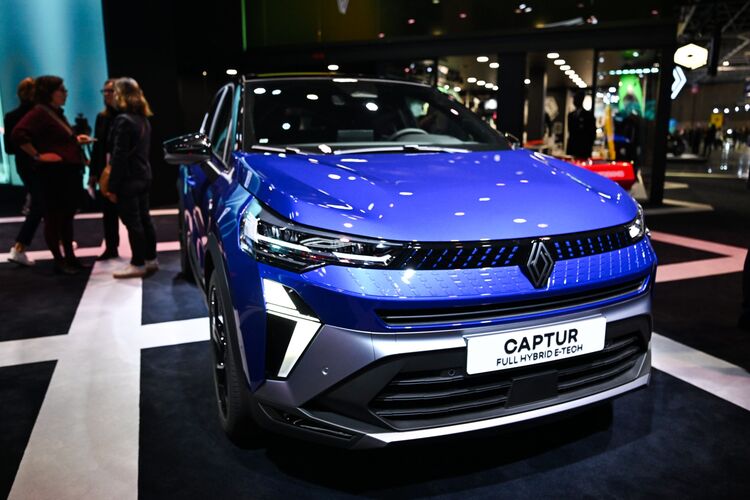
Most industry experts expect the import cap to slow the sales growth of the Chinese in the EU in the short term, and intensifying competition in the hybrid segment, which accounts for nearly half of the bloc’s car sales.
Chinese hybrid sales in the EU will jump to an estimated 435,000 units this year, Bernstein analysts said Sunday. That’s well above the reported cap and based on their roughly 290,000 sales through August.
But over a longer time span, Chinese automakers are likely to bet that they can remain competitive even with the trade barriers. They’ve already poured resources into setting up extensive dealer networks and redesigning models for the needs of European customers.
In Paris, BYD is showcasing the Dolphin G DM-i, a compact car developed for Europe’s narrow city streets and small parking spaces. Stellantis NV’s Chinese partner Zhejiang Leapmotor Technology Co. is unveiling its D19 range-extender model that offers over 300 kilometers (186 miles) of electric-only driving and a suspension and handling mimicking that of a European luxury car.
The region’s domestic manufacturers are nevertheless optimistic that the hybrid cap can help level the playing field in Europe, where personnel, energy and supply-chain costs are much higher than in China.
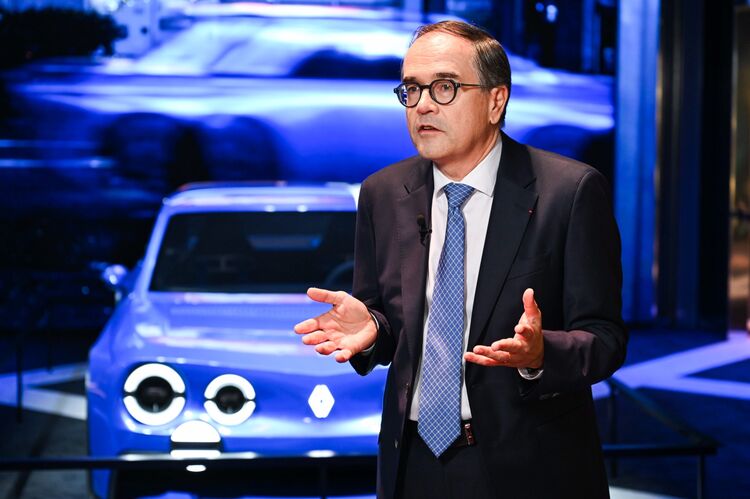
The EU-China agreement is “good news,” Renault SA Chief Executive Officer Francois Provost said in an interview with Bloomberg Television on Monday. “They’re allowed to come in Europe, to invest deeply in the value chain, to create jobs.”