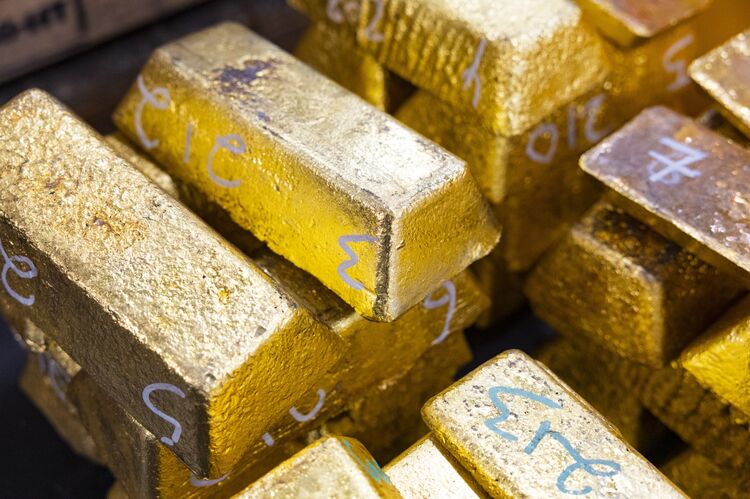
Kazakhstan’s central bank is switching from being one of the world’s biggest buyers of gold to a seller, as high Treasury yields reinforce the need to rebalance its reserves.
Heavy central-bank buying has helped drive gold sharply higher in recent years, but the rally has stumbled as surging bond yields erode the appeal of the non-yielding metal. Ten-year Treasury yields climbed to a 24-year high last week.
“We haven’t seen levels like this in a long time,” Kazakh central bank Deputy Governor Aliya Moldabekova said in interview. “This makes the dollar an attractive option, thereby reducing the appeal of gold as an investment asset.”
The central bank wants to lower gold’s share of total foreign exchange reserves by about 3 percentage points by the end of the year, she added.
Central banks have been steadily accumulating gold for years. But the assumption that the monetary institutions’ buying was a one-way street was challenged by the outbreak of the Iran war, which triggered a worldwide dash for US dollars to pay for costlier energy imports. Turkey and Russia were among those who offloaded some gold earlier in the year.
Overall, central banks have continued to pull in metal this year, led by Poland, China and Uzbekistan, according to World Gold Council figures.

Kazakhstan’s National Bank has the right to buy all the gold produced in the world’s eighth-largest miner of the precious metal. After halting sales in February last year, the central bank’s gold hoard has climbed to 386 tons, according to the deputy governor. That means gold represents about 78% of total reserves, which is uncomfortably high, she added.
“With such a share of gold, our holdings are starting to resemble a single-asset portfolio,” Moldabekova said. Foreign currency reserves, which stood at $66.4 billion at the end of September, must remain liquid, she added.
Now the central bank is aiming for a 75% share for gold by the end of this year, according to Moldabekova. Half of the downsizing will come from selling options and half from the sale of physical gold, she said. But if the price of bullion drops below $4,000 an ounce, gold may automatically fall toward the target level, the deputy governor added.
Gold is down by about a fifth since the US-Iran war started in late February, as disruptions to energy supplies from the Middle East fuel inflation and put upward pressure on bond yields.
The precious metal has smashed through multiple price records in recent years, rising to a peak of $5,600 an ounce in January as the second Trump administration’s radical policy agenda reverberated through financial markets. Central banks — a key pillar of the rally — began rebuilding their gold reserves in the aftermath of the global financial crisis, before purchases surged after Western governments froze much of Russia’s foreign-exchange reserves in 2022.
The National Bank of Kazakhstan — the No. 4 buyer in WGC data for the first eight months of 2026 — will continue to monitor the situation after meeting its initial goal.
“Market forecasts indicate that the price of gold will continue to rise,” Moldabekova said. “Therefore, we would prefer not to plan too far ahead; rather, we would achieve the 75% level and then continue to monitor the situation from there.”
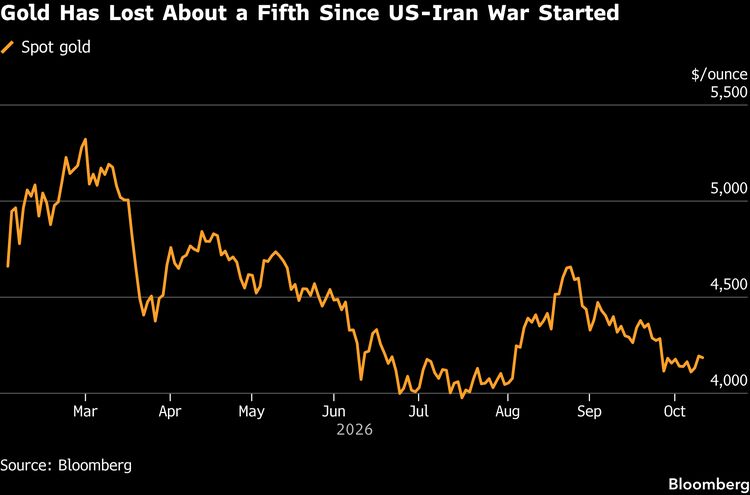
Gold edged lower to $4,172.35 an ounce as of 3:12 p.m. in London. Prices have stabilized since June, with bullion trading within a fairly narrow range of roughly $4,000 to $4,300, but the deputy governor still sees upward pressure.
“Given that significant uncertainty persists, we nevertheless expect a slight rise in the price of gold,” Moldabekova said.