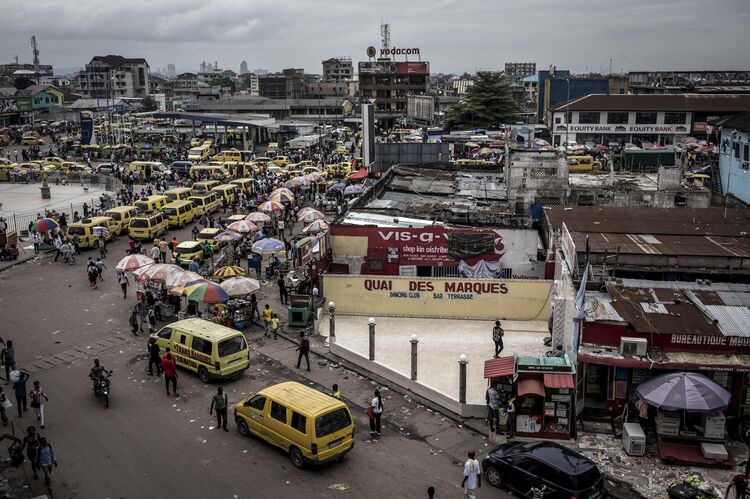
Democratic Republic of Congo’s central bank will soon require a range of payments to be made in francs instead of dollars — including to mining subcontractors — to strengthen the local currency and encourage domestic investment, Governor Andre Wameso said.
Miners, who are already required to repatriate 60% of their export revenues to Congo, will also be asked to sell up to 30% of their repatriated dollars to the central bank in exchange for Congolese francs, according to the proposed regulations.
“We have a major problem, which is that we have a growing mining industry that allows for very high value exports,” Wameso told Bloomberg Friday in Kolwezi, the capital of copper-rich Lualaba province. “Yet, this isn’t translating into domestic accumulation of the foreign currency needed to finance the transformation of our economy.”
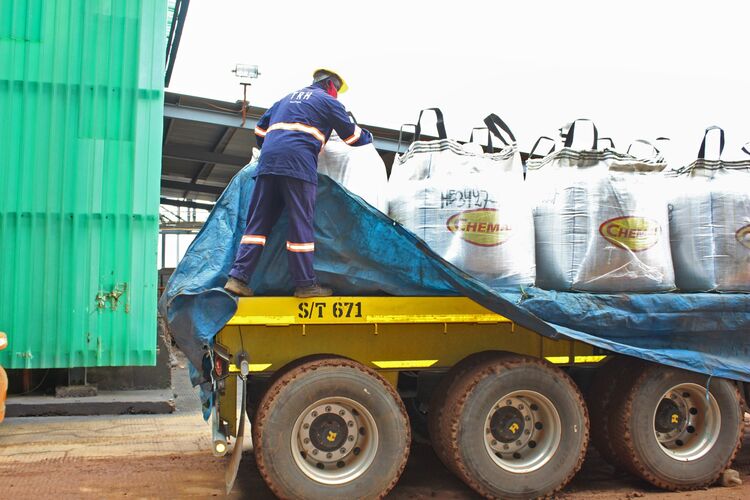
Congo is the world’s biggest source of battery mineral cobalt and the second largest producer of copper, whose price is around all-time highs. The mining industry accounted for 40% of its gross domestic product in 2024 and nearly half the government budget in 2023, according to central bank figures.
Wameso said the country needed to take advantage of high copper prices to accumulate more reserves and prepare for an inevitable downturn.
“I don’t see why this law would slow down investments, especially now, with the price of copper at around $14,500 per ton,” he said. “The economy functions in cycles and during these moments when we have copper at this level we need to take such important measures.”
Between 2023 and 2025, Congo’s miners exported $93 billion worth of minerals and repatriated $54 billion in accordance with the country’s mining code, but only $3.8 billion stayed in Congo’s banks, Wameso said.
About 90% of Congolese bank deposits and over 97% of loans are in dollars, according to the International Monetary Fund, showing the extent to which the economy relies on the dollar.
Read: Congo to Halt Cash Dollar Use to Curb Money Laundering
Requiring more payments in francs should increase the amount of money that stays in Congo, encouraging investments, improving foreign reserves and keeping the franc stable, said Wameso.
The franc was one of the world’s best performers against the dollar last year, appreciating 27%, according to Bloomberg data.
The exchange rate has remained stable this year, despite an uptick in inflation due to high global fuel and food prices and domestic pressure from conflict in eastern Congo and an outbreak of Ebola, he said.
The central bank plans to require school fees, medical care, utilities and rent to be paid in Congolese francs instead of dollars. Earlier this year the bank announced that dollar payments can only be made by card or digital transfer as of April 2027.
The bank is also proposing that all payments to mining subcontractors be made in francs. In 2018 the government passed a law requiring mining subcontractors to be registered in Congo and majority owned by Congolese, but regulators have struggled to enforce the rules.
Congo’s biggest miners include Glencore Plc, Ivanhoe Mines Ltd., and China’s CMOC Group Ltd. and Zijin Mining Group Co.
Read: Glencore’s Congo Copper Mines Told to Cut Ties With Suppliers
The central bank is still discussing the new regulations with miners, banks and the country’s chamber of commerce before finalizing the details, Wameso said. Proper implementation could require the creation of more francs, including larger-denomination notes, he said.
The central bank also plans to keep building the country’s gold holdings. Having begun purchases earlier this year, it already has 3 tons of gold and should have 5 tons by the end of December, he said. International reserves stood around $7.8 billion at the end of last month.
Economic stability should also help with the transition, Wameso said. While inflation is on track to reach 8.9% this year — above the bank’s 7% target and well beyond the 2.3% rate in 2025 — the governor expects it to calm to 6.7% next year.
If not, the bank will step in.
“If the situation continues, persists and worsens, we would need to tighten our monetary policy, and — if necessary — we can intervene using our reserves to assist our importers,” he said.