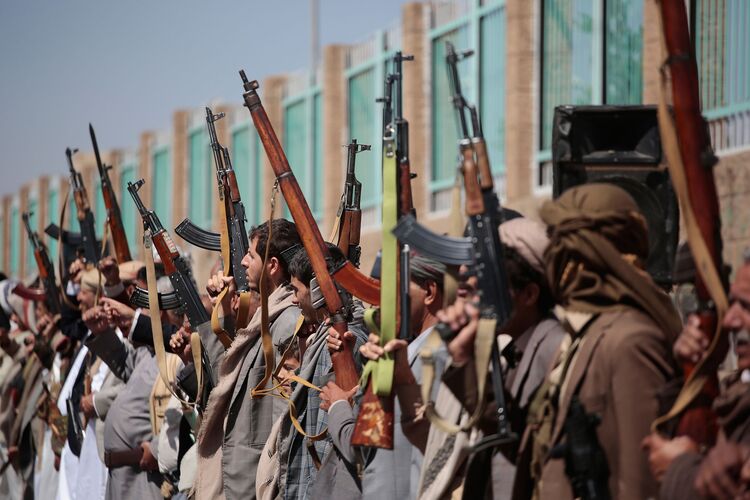
The Saudi-led military coalition fighting the Houthis said it intercepted missiles and drones aimed at the kingdom overnight, including areas that are home to some of Saudi Arabia’s key oil and gas facilities.
Over the weekend, Saudi Arabia suffered its deadliest strikes since the Iran war began as Houthi militants repeatedly targeted airports across the kingdom, killing at least 14 people and wounding hundreds. The casualties came in two separate incidents at King Khalid International Airport in the capital, Riyadh, where more than 300 people were injured, many critically. King Fahd International Airport in Dammam was targeted separately.
As the violence stretched into Monday, the coalition vowed a “decisive” response. Against that backdrop, Energy Minister Prince Abdulaziz bin Salman, one of the most senior Saudi officials to speak publicly in the wake of the strikes, sought to project resilience, telling oil industry executives on Sunday that the kingdom remained committed to providing energy security.
“There is no way that somebody will break our back. We are like a phoenix. We come out of the ashes all the time and every time,” Prince Abdulaziz said at an event marking the opening of the World Petroleum Congress in Riyadh.
Read More: Deadly Attacks on Saudi Arabia Risk Wider War That Draws In US ·
The gathering itself has been disrupted by the hostilities, with some executives who had been scheduled to attend, including the chief executives of BP Plc and Shell Plc, withdrawing.
Riyadh has been in conflict with Houthi militants ever since they took control over the Yemeni capital, Sanaa, in 2014 and forced the internationally recognized government backed by Saudi Arabia to resign the following year. US President Donald Trump said over the weekend he was considering joining in the fight against the Iran-backed militant group, while a senior official of the United Arab Emirates urged a revival of regional security arrangements.
“It has become evident that we are all targets and that our security is indivisible,” Anwar Gargash, senior adviser to the UAE president, said in post on X.
“Riyadh will want direct US strikes against the Houthis, air defense capabilities, increased intelligence sharing, and political cover for an intensified campaign in Yemen,” said William Usher, a former senior Middle East analyst at the Central Intelligence Agency.
Brent crude dropped to about $104 a barrel in London after earlier climbing to as high as $105.63 in early trade following the weekend strikes. Traders weighed resilient Middle East flows against rising regional tensions and a US claim that Russia and Ukraine had agreed to a so-called energy ceasefire · .
The Saudi civil aviation authority said one person was killed and 11 others injured after an unknown projectile hit the main airport in Riyadh late on Sunday.
That followed a strike on King Khalid airport on Saturday that left at least 13 people dead and more than 300 others wounded, marking the deadliest single event in Saudi Arabia since the US-Israeli war against Iran began in February.
The attacks brought travel at the Riyadh airport to a near-standstill. It also forced the capital’s financial hub to shift to remote work until further notice and schools in the city switched to distance learning.
The UK government warned Sunday against all but essential travel to Jeddah and Dammam, as well as to all Saudi airports except for Medina. It suggested British citizens consider departing Saudi Arabia via land to neighboring countries.
The FAA on Sunday issued a warning to all US airlines to exercise caution flying to or over parts of Saudi Arabia “at all altitudes.”
Authorities have indicated the 25th World Petroleum Congress and associated events, scheduled to run from Sunday through Oct. 15, will go ahead.
The city is also scheduled to host the Future Investment Initiative, Riyadh’s flagship investor gathering, later this month.
The two events are set to draw industry heavyweights, including Wall Street titans such as Goldman Sachs’ David Solomon and BlackRock’s Larry Fink.
The FII’s organizers on Sunday said they were preparing to “welcome thousands of delegates to Riyadh” for the event starting Oct. 26.
“Comprehensive security measures will be in place at Riyadh’s airports, our conference venues and official hotels, with coordinated arrangements for participants’ transportation and movements,” the group’s chief executive officer, Maha Al Saud, said in a statement.
The weekend strikes came less than a week after Saudi-backed forces in Yemen launched a campaign to retake Houthi-held areas and “eliminate” the group.
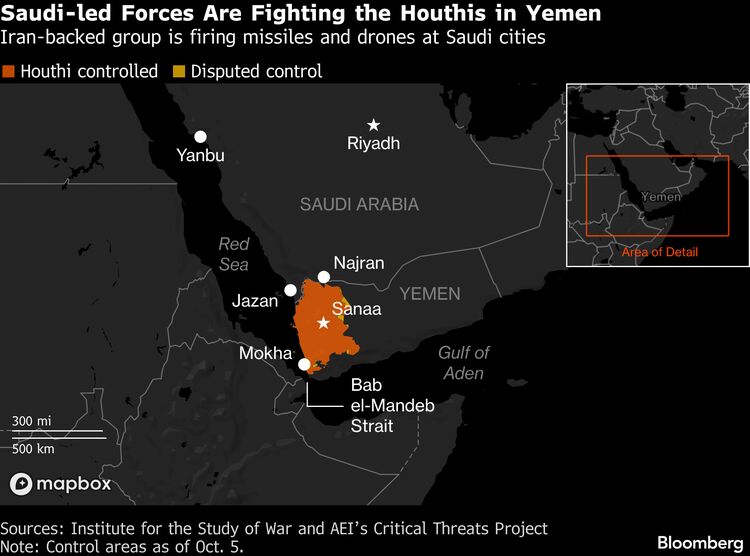
The militants, who frequently claim attacks on Saudi oil facilities, had recently seized more Yemeni territory and bolstered their control over the Bab el-Mandeb, a global shipping choke-point.
The Saudi-led coalition called “the cowardly terrorist attack” on the airport on Saturday “a full-fledged war crime” by the Houthis.
The victims included four Saudis, a Palestinian, two Bangladeshis and one person each from the US, Egypt, India, Jordan, Syria and Sudan, according to authorities.