
Investors fled US mortgage bond funds at historic levels over the past three weeks, with outflows ranking among the seven worst since the start of 2021, as surging interest rates spur a flight from volatility.
The Bloomberg US Mortgage Backed Securities Index marked its second worst performance on record in September. The selling follows a spike in Treasury yields to multi-decade highs, fueled by surging oil prices, inflation concerns, and expectations of Federal Reserve interest rate hikes.
Mortgage-backed securities are highly sensitive to sudden fluctuations in bond yields, which serve as the benchmarks for borrowing costs throughout the economy. When interest rates rise, homeowners tend to stop refinancing their home loans, keeping investors locked into lower-yielding securities for longer than they may had previously expected.
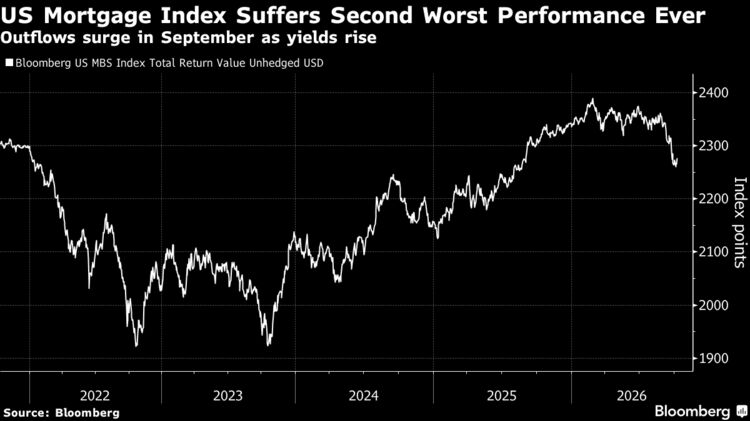
“Fed policy tightening and a flatter curve may reduce demand from banks, a key source of MBS demand,” Erica Adelberg, senior MBS strategist at Bloomberg Intelligence, wrote. “On the positive side, MBS supply should trend lower into year-end, with the highest mortgage rates since 2023 reducing refinancing and home-purchase demand and potentially slowing home-price and loan-size appreciation.”
The Treasuries selloff in September sent yields on long-dated bonds to 24-year highs. Coupled with the underperformance in mortgage-backed securities on an excess return basis, the MBS index logged the second-most negative year-to-date total return in its 50-year history, Adelberg said.