By Salma El Wardany, Anthony Di Paola and Grant Smith | Updated on Oct 12, 2026 at 01:05 PM
Saudi Arabia is planning to ramp up pipeline capacity by 40% to avoid the Strait of Hormuz, after the kingdom leaned heavily on an existing cross-country conduit to export oil during the Iran war.
As the kingdom struggles to fend off almost daily attacks on its energy and civilian infrastructure, Energy Minister Prince Abdulaziz bin Salman said it aims to boost pipeline capacity away from the Persian Gulf to 10 million barrels of crude a day within two to three years. The main cross-country conduit, crucial in helping maintain supply to market during the regional war, can currently pump as much as 7 million barrels daily.
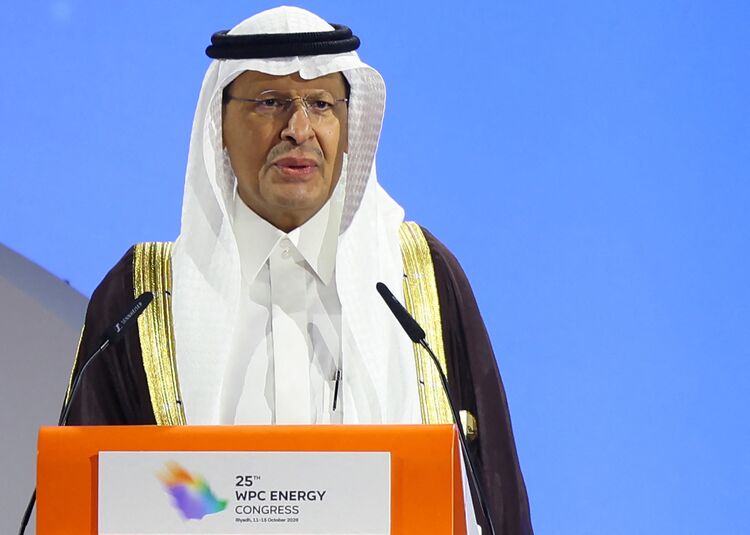
Within seven to eight weeks, state producer Saudi Aramco could add 1.2 million barrels a day of extra capacity by using an existing natural gas pipelines to carry crude, Prince Abdulaziz said at the WPC Energy Congress in Riyadh on Monday. The longer-term plans include improvements to pumping stations on the East-West pipeline, he said.
The Saudis are working on potential international partnerships when looking to add other routes for export, Prince Abdulaziz said, adding that the country was in talks with countries like Kuwait.
Saudi Arabia and its Gulf neighbors are caught up in a Middle East war that’s pushed crude prices above $100 a barrel and damaged infrastructure and tankers. With the conflict in its eighth month, the kingdom has suffered more than a dozen fatalities in attacks on its airports over the past several days.
“The essence of responding to a crisis is that you have to focus on your resilience and creating options,” Prince Abdulaziz said. “You don’t sit on your hands, you create options to maneuver as these things happen.”
The minister highlighted the value of the East-West pipeline during the crisis, saying its use had more than recovered its cost. The route connects Saudi Arabia’s eastern oil-producing region with the Red Sea, providing an alternative to shipping crude through the Strait of Hormuz.
Aramco Chief Executive Officer Amin Nasser reiterated in a separate speech that the company is looking at alternate export routes and boosting international storage. He has previously said the company will boost export capacity at Red Sea ports.
Neighboring Oman, the only country on the Arabian Peninsula with most of its ports outside Hormuz, has proffered itself as a potential pipeline end point. The state’s energy investment firm is developing storage at the port of Duqm, on the Arabian Sea, which would allow for loading crude without being reliant on risky ship transits through Hormuz.
The East-West pipeline allowed the Saudis to keep as much as 70% of their normal flows to market earlier in the war during the near-closure of Hormuz. An attack temporarily knocked the pipeline out of service last month, but Aramco rushed to make repairs and it was carrying 5.8 million barrels a day as of Oct. 6, the minister said last week.
Using the gas pipeline to carry crude would be temporary, Prince Abdulaziz said. He told Nasser that the pipeline could transport oil until May, after which it would need to be cleaned and returned to service for domestic gas supplies during the summer.
The kingdom is working with Aramco on dual-use capability, installing pumping stations and compressors so the pipeline can carry oil or gas depending on the circumstances, he said.