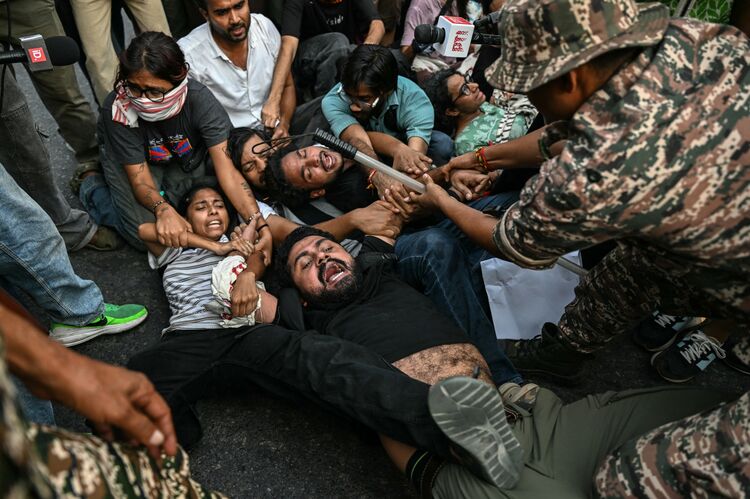
Authorities in New Delhi announced plans to move protests away from Jantar Mantar, the capital’s main demonstration site, drawing anger from groups that have taken to the streets for three straight days over India’s contentious overhaul of voter rolls.
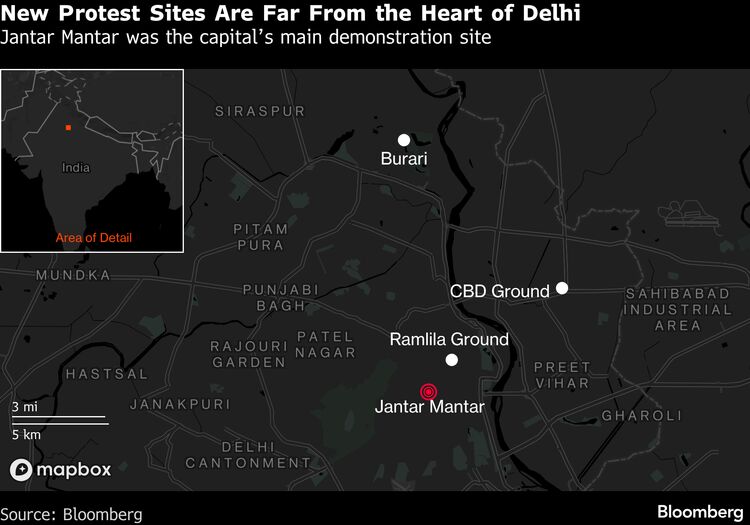
The historic venue in central Delhi has long given demonstrators a highly visible platform close to the parliament and key government ministries. Authorities have instead designated three protest sites farther away.
The announcement by the Delhi Police was met with anger from protest leaders, who said the decision undermined their rights to demonstrate.
“Unacceptable,” said Saurav Das, one of the group’s leaders. “We do not accept this arbitrary decision. It is an assault on people’s fundamental right to protest and peaceful assembly.”
The change comes as India’s capital remains under tight security, with restrictions across dozens of major roads and several metro stations remaining shut . On Monday, hundreds of opposition supporters led by the main Indian National Congress marched to the Supreme Court to demand action against the Election Commission.
“By moving the protest venue, they hope to make the protests less visible to the general public, but given the mood in the streets, I don’t know if that is going to work,” said Ramachandra Guha, a historian who has written several best-selling books on the history of modern India. He compared Jantar Mantar to Trafalgar Square in London or the National Mall in Washington in its public significance.
The protesters are demanding the resignation of Chief Election Commissioner Gyanesh Kumar after an investigation by a local newspaper last month alleged that he ignored concerns raised by two election officials over the voter roll revisions. More than 130 million names were excluded from draft rolls as a result of the overhaul.
The Election Commission has denied the claims, saying its decisions were unanimous. It later also eased some voter-verification procedures, but the changes have done little to quell political pressure on the commission.