If you have any art at home, you probably own a print. Prints — created by pressing one surface onto another to transfer a design in a repeatable manner — are the unsung work horses of the art world. Because they’re usually on paper, they’re generally more fragile than an oil on canvas, but they more than make up for that by being cheaper, more abundant and therefore more accessible than unique works.
For more than 1,000 years, artists have worked closely with specialist printmakers. In doing so, they’ve discovered new ways of making art and pushed the boundaries of what it can be and do. As the Ethiopian American artist Julie Mehretu has said, it’s “in the printmaking that new things are invented.”
Holly EJ Black’s new book, The Story of Printmaking , is full of examples of how printmaking has driven innovation, but the most obvious is Andy Warhol, whose most valuable paintings are all silkscreens — which is to say, screenprints. (Printing techniques have never been confined to paper, and indeed the earliest prints were all on textiles.) Pablo Picasso’s 1904 Le repas frugal , an etching that sold for £6 million ($8 million) at Christie’s in London in 2022, might hold the auction record for a work on paper that’s part of a limited edition, but it’s not even close to being the most expensive print ever sold at auction. That would be Warhol’s 1964 painting Shot Sage Blue Marilyn , which sold for $195 million at Christie’s two months later.
In the world of contemporary art, prints regularly generate real money. In 2014, Mehretu, working with the printing house Gemini GEL , started creating massive aquatint prints, using an 18th century technique that involves etching metal plates with acid. The result was 30 copies of Myriads, Only by Dark , a four-part work that sold for $175,000. That pencils out to a total value of $5.25 million for the edition as a whole—more than her prior auction record for a painting, of $4.6 million. The buyers probably got a bargain: In 2025 one of the copies sold at Phillips in New York for $450,000, implying an edition valuation of $13.5 million. That’s much more than the $5 million Goldman Sachs Group Inc. paid for her enormous mural in its downtown Manhattan lobby, a work that took two years to create, and more even than the $10.7 million to which her auction record has grown.
At the highest echelons of the art world, printmakers — including Crown Point Press in San Francisco; Tamarind in Albuquerque, New Mexico; and Edition Copenhagen in Denmark — work very closely with artists, often for months or even years. In New York, there’s ULAE , Two Palms and Pace Prints , which recently acquired storied screenprint shop Brand X Editions . At Pace Prints, a woodcut Chuck Close print took three years to create, as proofs were cut and recut in an elaborate trial-and-error process involving dozens of overlaid colors.
Most art lovers can only dream of owning an original painting by Picasso or Jasper Johns, but prints can be within reach. Picasso editions can sell for less than $2,000 , while a classic Johns numbers print recently sold for $8,255 . Jacob Lewis, chief executive officer of Pace Prints, explains that editions can multiply a contemporary artist’s audience: “Some of these artists have massive fan bases, but they can’t spend $250,000 or $500,000,” he says. “But maybe they can spend $5,000, and they want to collect something that’s handmade and touched by that artist and have the same emotional experience that you would have if you were able to buy a painting.”
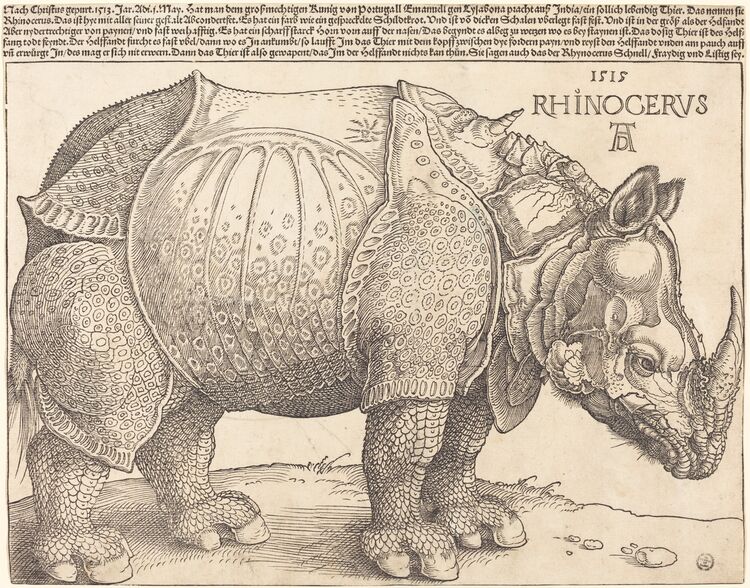
The history of printmaking, going back at least as far as the German master Albrecht Dürer (1471-1528), is the history of the democratization of art: Prints have for centuries been the way artists can sell work to a broad public rather than just a handful of deep-pocketed patrons. Indeed, before the days of motorized travel, prints were the only way most people saw great art at all. Dürer’s magnificent woodcut The Rhinoceros , made in 1515 and featuring an animal he’d never actually seen, was so popular that some 15,000 prints were taken from the original block. (Even so, a high-quality early edition can sell for more than $850,000 .)
Printmaking became big business after The Rhinoceros . Black describes 16th century demand for prints in the Netherlands as “insatiable,” and Dutch publishers including Aux Quatre Vents, which worked with Pieter Bruegel the Elder, used sales agents in Paris and London to broaden their customer base. By the 18th century, English master William Hogarth had set up a direct-to-consumer operation complete with different price points for different papers and preorder incentives that helped him gauge demand. (A set of A Rake’s Progress cost 1 ½ guineas in advance of completion, or 2 guineas after it was actually printed.)
In the 20th century, Warhol told journalist Gretchen Berg, “Mechanical means are today, and using them I can get more art to more people. Art should be for everyone.” And in the 21st century, Shepard Fairey printed more than 300,000 of his HOPE posters featuring then-US presidential candidate Barack Obama before closing the edition . These prints weren’t sold by high-end galleries touting art as an asset class; they were made for people who wanted to buy and live with something beautiful and meaningful.
The most fascinating new player in the world of prints is Avant Arte Ltd., a web-native company that prints at a 30,000-square-foot facility in London and sells almost exclusively online. Its prices are generally low: It sold one Ai Weiwei edition, Middle Finger in Red , a fundraiser for the Design Museum in London, for $535 to all 1,285 buyers who signed up to buy it within a 24-hour period. Such time-limited editions, as they’re known, expand to meet demand, a great way of weeding out would-be speculative flippers—and providing significant income for artists and nonprofits.
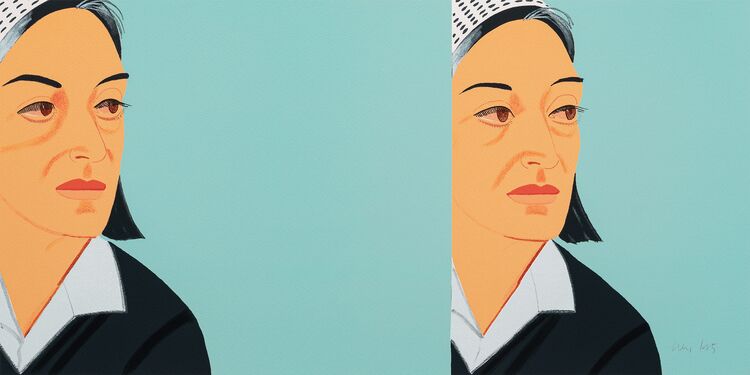
Avant Arte editions for museums can easily break the $1 million barrier: Ed Ruscha and Tom Sachs both made editions to benefit Lacma that grossed into seven figures, and Alex Katz managed the same feat for the Guggenheim. A series of editions by George Condo and Lee Ufan to support Dia, which runs a collection of museums and other art spaces, grossed $10.3 million; the nonprofit not only netted about $5.5 million from the prints but also created valuable relationships. Dia’s senior deputy director, David Morehouse, says he connected with “several serious donors” after they participated in the Avant Arte fundraising collaborations.
After all, even the wealthy need an on-ramp when it comes to art, and prints provide just that. Many significant collectors today, says Avant Arte CEO Mazdak Sanii, are people who had “the means and the taste and the inclination to collect,” but who can still get intimidated by high-end galleries. E-commerce is much more accessible, which is one reason Avant Arte will make — and sell — an eye-popping 40,000 works this year. Most cost around $5,000, but the time-limited editions, including most museum fundraisers, start under $1,000. Some bigger pieces can sell for as much as $39,000 , meaning the company has found a pretty wide, and pretty lucrative, gap in the market. Two sculptures by Jeff Koons (produced in 3D editions) were priced at $3,917 each in an edition size of 999, which works out to $7.8 million in total; a set of 10 Mickalene Thomas prints, if you add them all up, sold for $4.3 million. (Her auction record for a painting is $1.8 million.)
For the time being, old-school printmakers still have a tendency to think of Avant Arte and its fellow web shop Heni as producers of “merch” or “posters,” and it’s true that they do sometimes sell limited-edition reproductions of previously created paintings. These complaints are nothing new: Legendary printmaker Tatyana Grosman was enraged when Jasper Johns started working in offset lithography, because she considered the process to be too automated. But Johns himself loved the medium, and reproductions aren’t always to be sneered at: The instantly recognizable Robert Indiana LOVE image started life not as a painting or sculpture but as a 1965 MoMA Christmas card. High-touch galleries aren’t set up to sell art in large quantities, but artists have been jumping at the chance for centuries. Everybody likes to be popular.