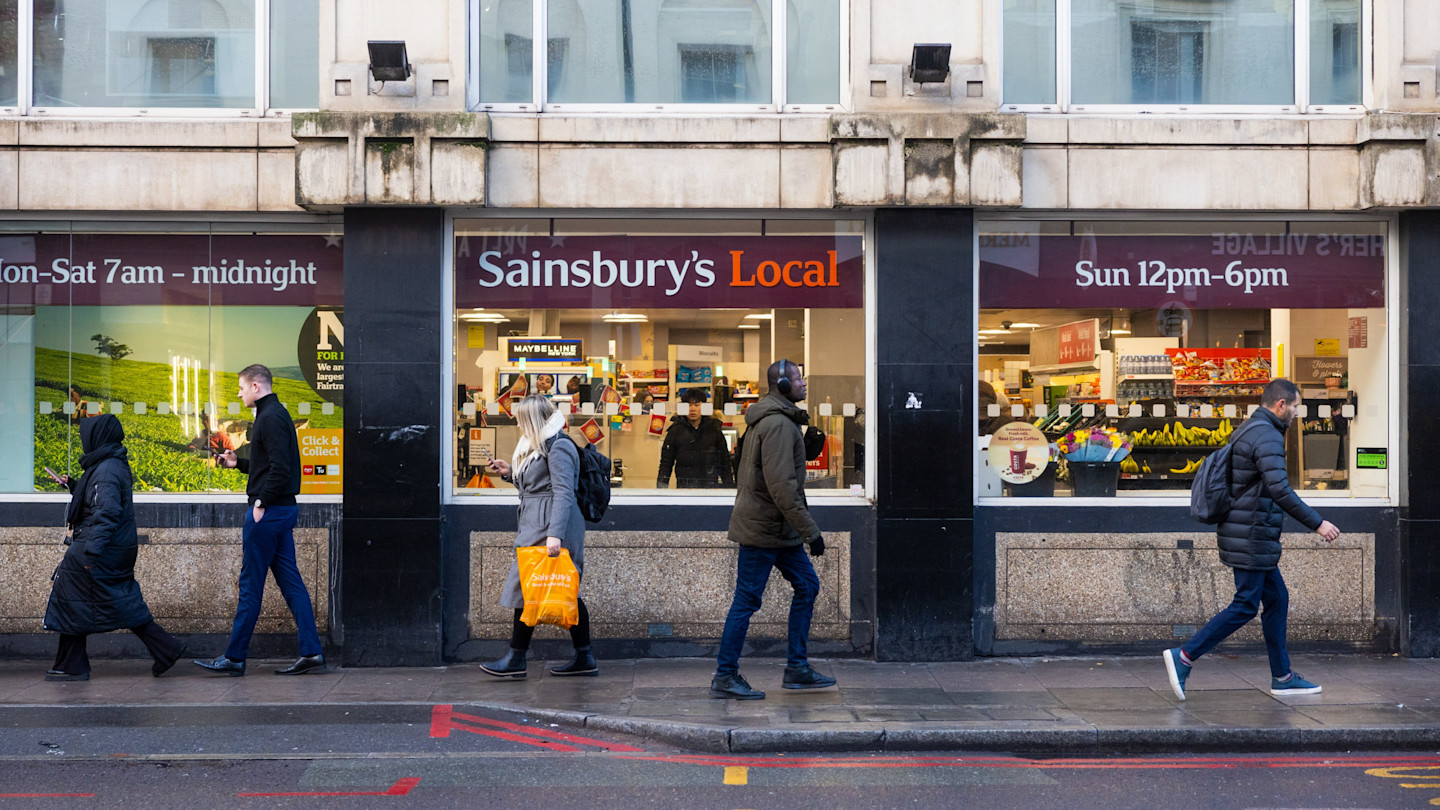
Eight years ago, Sainsbury’s bold ambitions to merge with a rival began to unravel. On the day the company unveiled its plan to buy Asda, its chief executive at the time, Mike Coupe, was caught on live TV singing “we’re in the money”.
After months of wrangling, the proposed £7.3bn deal — which would have created a new market leader — was blocked by competition regulators.
This year the UK’s second biggest supermarket chain considered another multibillion-pound combination — this time with private equity-owned Morrisons.
The talks collapsed in February after a failure to agree on price, according to people familiar with the matter.
The deal under discussion was an ambitious one. It would have redrawn the UK food retail market while stoking many of the competition law concerns that had doomed the Sainsbury’s-Asda deal.

It was also being attempted against a backdrop of persistent rises in the price of everyday groceries and a government under pressure to alleviate a squeeze on the nation’s disposable income.
A sale of Morrisons would provide an exit for buyout group Clayton Dubilier & Rice, which paid £10bn for the Bradford-based retailer in 2021, including debt. Sainsbury’s has a market capitalisation of just over £7bn and carries £5.7bn of net debt, including lease liabilities.
Though the talks are no longer active, they signal that dealmaking is back on the agenda for UK supermarket executives.
Negotiations — spearheaded by Sainsbury’s chief Simon Roberts and Morrisons’ chair Sir Terry Leahy — lasted from November 2025 to February, becoming serious around Christmas, according to people close to the process.
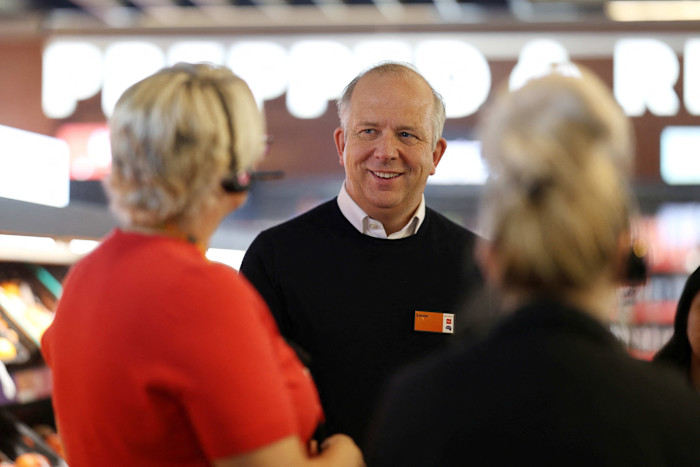
Roberts had meanwhile been making headway with separate talks to offload Argos to a trio of retail veterans including two former Morrisons executives, Trevor Strain and Richard Pennycook.
Selling the general merchandise retailer, which Sainsbury’s bought a decade ago, was consistent with Roberts’ strategy of refocusing on food. But even as Sainsbury’s sought to sell unwanted assets, a move to acquire a major grocery rival still appealed.
Putting together two of the UK’s biggest supermarket chains would boost buying power with suppliers. Acquiring Morrisons, which is also one of the UK’s largest fresh food producers, would have further underlined Roberts’ strategy of refocusing on food. Furthermore, it remains an asset-rich business that owns about 80 per cent of the freeholds to its supermarkets.
Bernstein analyst Richard Trainor said “a deal makes complete sense”.
“Scale really matters and the best way to sustainable returns and winning in the market is to have a market share advantage,” he said, while adding that investors would still be relieved talks had not progressed because of the risk of distraction for Sainsbury’s management.
To devise a deal, Sainsbury’s turned to its advisers at Robey Warshaw, now part of Evercore, and tasked a group of lawyers and competition experts to consider which stores may need to be sold to satisfy regulators that a combination would not be harmful to consumers.
Before talks hit trouble, the two sides had got comfortable with the idea that a deal would not be thwarted by the Competition and Markets Authority. One reason for that confidence, according to people familiar with the matter, was the change in the UK supermarket landscape since the watchdog blocked the Sainsbury’s-Asda deal in 2019.
In that time, Aldi and Lidl have increased their market share; together they now account for 19.3 per cent of UK retail food sales, according to industry data by Worldpanel Numerator.
“It would be more difficult to argue [now] that there’s a ‘Big Four’ that doesn’t include Lidl and Aldi,” said Tom Smith, a lawyer at Geradin Partners who worked on the Sainsbury’s-Asda deal as a legal director at the CMA.
Since Labour came to power in 2024, the CMA has been pushed to adopt a pro-growth mindset. The shift has given companies hope that the regulator, now chaired by former Amazon UK boss Doug Gurr, will be more willing to wave through mergers that reduce the number of leading players in an industry from four to three.
Another cause for optimism for Morrisons and Sainsbury’s, according to people familiar with their thinking, was that a combination would not create a new market leader.
The Sainsbury’s-Asda deal would have brought together the number two and three players in the market to form a company that leapfrogged Tesco. However, Morrisons has slipped from being the fourth-largest supermarket in 2018 to sixth today, behind Lidl and Aldi.
Regulators may still have required store divestments in “some local areas”, said Smith, “but you’d have to think the deal [would be] more likely to be approved than the Asda deal”. The CMA has restricted Sainsbury’s from exploring another deal with Asda until July 2029 without its prior approval.
News of the talks with Morrisons has refocused attention on the future of Britain’s private equity-owned supermarkets, which were bought in highly leveraged deals towards the end of the low-interest-rate era. The acquisition of Morrisons by CD&R followed the £7bn purchase of Asda by TDR Capital and the Issa brothers in 2020.
A subsequent rise in interest rates has restricted the ability of both supermarkets to compete with the superior financial firepower of Tesco, Sainsbury’s and the discounters, which have all gained market share.
The UK’s highly competitive supermarket industry is something of an anomaly. The ownership structures of several smaller players — including employee-owned Waitrose and member-owned convenience chain the Co-op — have impeded the consolidation seen in overseas grocery markets.
Some industry advisers questioned whether Sainsbury’s would win the backing of major investors — an eclectic group including Czech billionaire Daniel Křetínský, Qatar’s sovereign wealth fund and the retail to banking conglomerate Bestway — to pursue a high-profile deal with significant antitrust risk.
If Sainsbury’s ultimately decides not to return to the negotiating table with Morrisons, the UK’s private-equity-owned supermarkets could turn to each other. One senior industry figure said that a “combination between Morrisons and Asda should not be written off”.
Morrisons could potentially make greater savings by combining head offices, distribution networks and other central functions with Asda, headquartered 12 miles away in Leeds, than it could through a deal with Sainsbury’s, which is more focused on the south of England.
While a combination of the two companies would not give their owners a straightforward exit, it would create a larger business that could eventually be a more attractive IPO candidate.
But a deal would not be straightforward. A closer overlap of their store portfolios could result in the CMA demanding more substantial disposals to approve the deal. Meanwhile, one senior retailer warned that combining two leveraged supermarkets would be akin to “two drunks propping each other up”.
While Sainsbury’s has stepped away from deal talks for now, news of their existence may fire the starting gun for a long-anticipated industry consolidation.
“We’re now in a situation where everyone is looking at everyone else,” said a person close to the failed talks. “No one wants to be left behind.”
Additional reporting by Suzi Ring