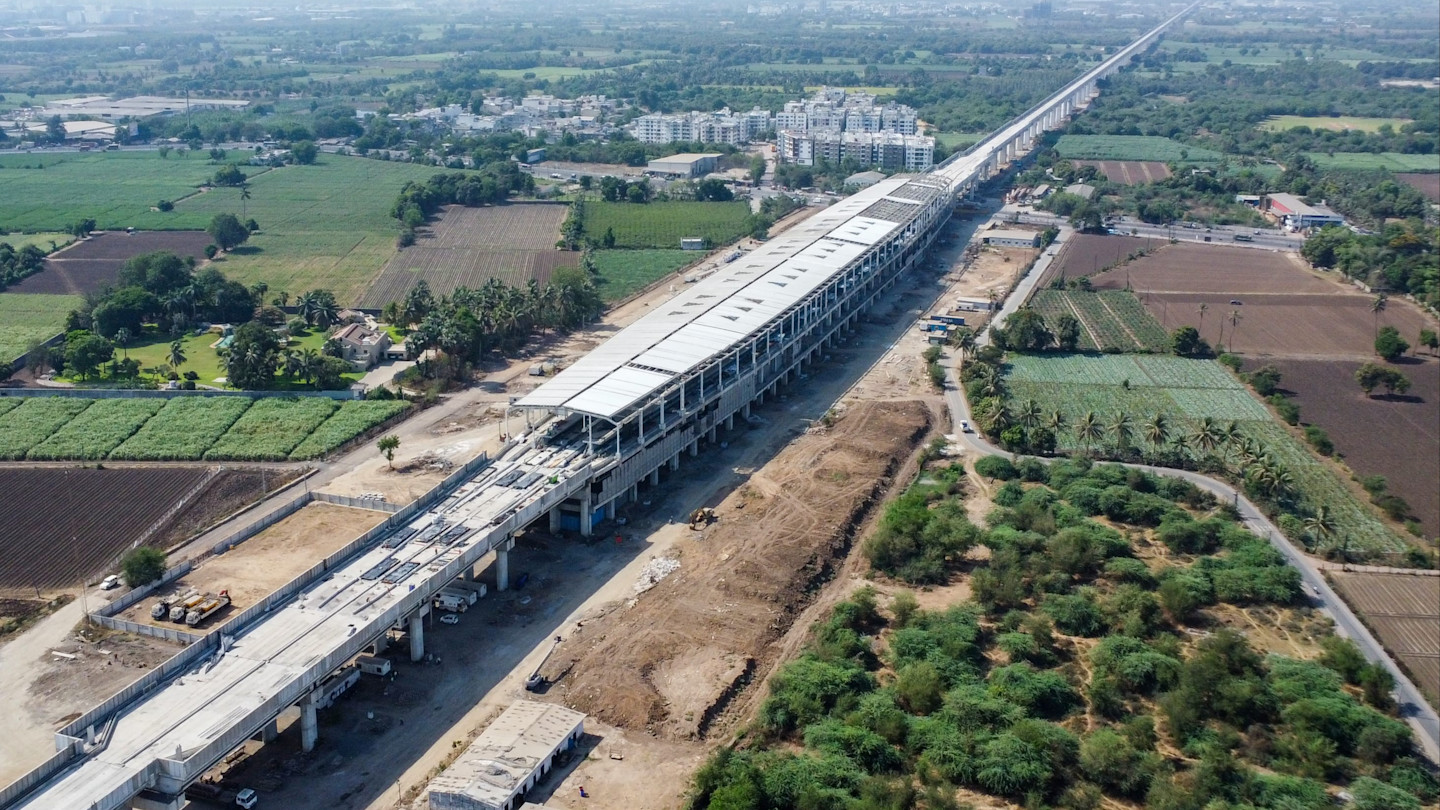
When India decided to build its first bullet train, it was no surprise it turned to Japan, the inventor of high-speed rail and a willing supplier of cheap funding, for help.
But more than a decade later, the railway has yet to carry a passenger. An acrimonious dispute has burst into the open over delays, ballooning costs and procurement that has exposed inherent tensions between two countries whose infrastructure ambitions have appeared to be on different tracks.
The 508km line connecting Mumbai and Ahmedabad was envisioned as part of Prime Minister Narendra Modi’s efforts to modernise India’s rail network, the world’s fourth largest.
New Delhi contracted Japan, whose bullet trains are a global envy for their speed, reliability and efficiency. The countries agreed in 2015 to a Rs980bn ($15bn at the time) deal, underpinned by a 50-year loan from Japan at 0.1 per cent interest.
But the start of operations has fallen well behind an initial target of 2023, delayed by lengthy land acquisition procedures. The estimated price tag has rocketed to at least Rs1.87tn ($19.5bn), according to official estimates.
Tensions have boiled over in recent months. “The failure to make progress is 100 per cent the fault of the Indian side,” Hideki Makihara, a former Japanese justice minister, wrote on X in July. “They never keep their promises,” he added.
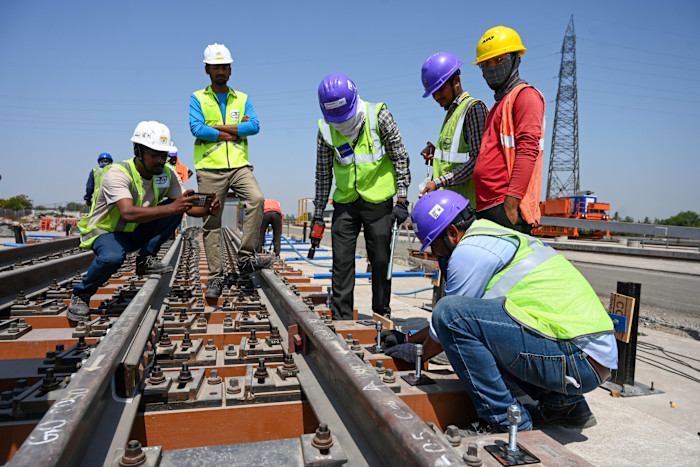
Japanese officials have accused New Delhi of violating the pact by handing a key contract for the signalling system to German industrial group Siemens, an international competitor. Negotiators said the move dismayed Japanese project companies led by JR East.
The Japanese side argued that an integrated system upholds the reliability, safety and punctuality of Japan’s bullet trains, while a hybrid system of Japanese rail track, European signalling systems and Indian trains was untested.
“It’s such a mess,” said one project participant in Japan, adding that negotiations were deadlocked. JR East declined to comment on specifics.
Tokyo also created a new position within the foreign ministry dedicated to supervising the project, an indication of the seriousness of its concerns. India, meanwhile, has suggested that it could develop domestic high-speed trains, which would match the capacity of the desired Japanese stock.
A top India railway ministry official, speaking on condition of anonymity because of the sensitivity of the matter, insisted that the two sides were “fully aligned” and that decisions were made after detailed discussion and agreement.
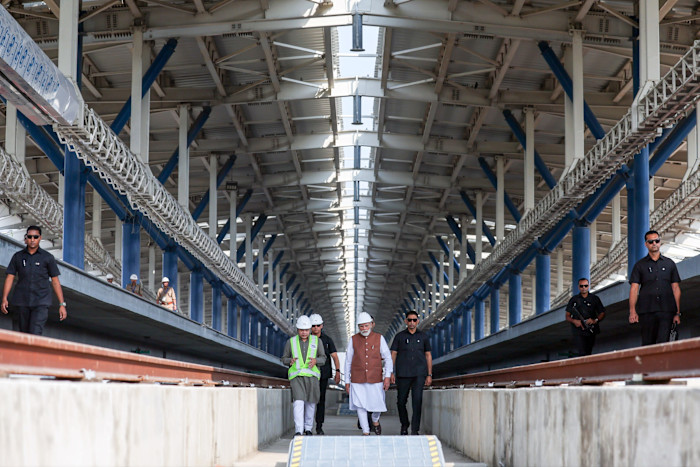
For Modi, revamping India’s rail system, which was largely built under British rule, is an important part of his modernising image. It is also expected to contribute to his “Make in India” plans to expand domestic technology manufacturing. The country has already electrified 99.6 per cent of its broad-gauge rail, a much higher proportion than many European countries.
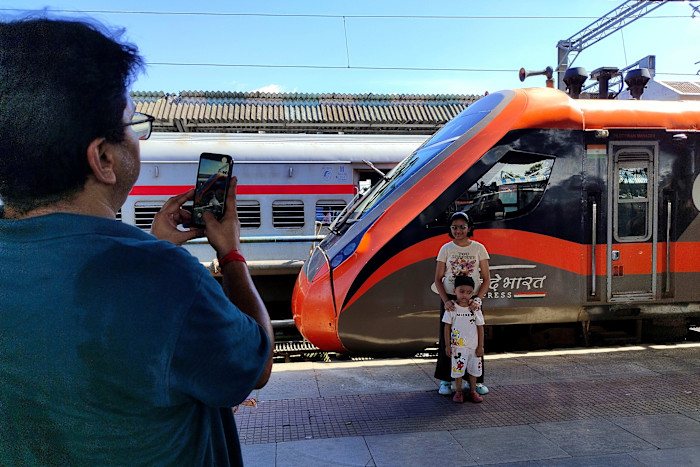
On top of the Ahmedabad-Mumbai route — which is already served by the “semi-high-speed”, India-made Vande Bharat line — the railways ministry has earmarked seven high-speed rail corridors covering nearly 4,000km for development. It expects to attract Rs16tn ($167bn) of investment.
India has said the high-speed route will open next summer, but only along a 100km stretch and using slower, Indian-built trains. Japanese diplomats said the first phase would cover just 50km and expressed doubts about the timeline.
Delays to high-speed rail projects are not uncommon: HS2 in the UK and the Hokkaido bullet train extension in Japan both ran over budget.
For the Ahmedabad-Mumbai line, officials said Indian negotiators aggressively sought to maximise future flexibility, indigenise technology and bring costs down, while Japan fought to maintain exporting infrastructure as a comprehensive package and riled counterparts with a perceived attitude of Japanese exceptionalism.
In Japan, diplomats conceded that an inward corporate mindset and failure to promote internationally minded talent were widening the gap. Negotiators also pointed to cultural differences, including tolerance for delays.
“The Japanese set the goals at realistic levels and we implement them very well,” said a senior Japanese diplomat involved in negotiations. “The Indians set the goals high and don’t implement them to the full, but do it quite well.”
The Indian railway official acknowledged that there would be a “considerable gap” between the completion of construction on the first section, which is slated for early 2027, and potential delivery of Japan’s next-generation E10 trains in the early 2030s that could reach speeds of 320km/h.
But the strategic importance of maintaining good relations in the face of an increasingly assertive China may outweigh any damage from the dispute.
During a summit in New Delhi in July, Japan’s Prime Minister Sanae Takaichi said the countries should develop their relationship “as brother and sister”. A joint statement said Japan “fully understands” India’s goal to commence limited high-speed rail operations next year.
“The velocity of the bilateral relation is faster than the velocity of the high-speed rail project,” said a senior Indian diplomat.
India Business Briefing
The Indian professional’s must-read on business and policy in the world’s fastest-growing big economy. Sign up for the newsletter here