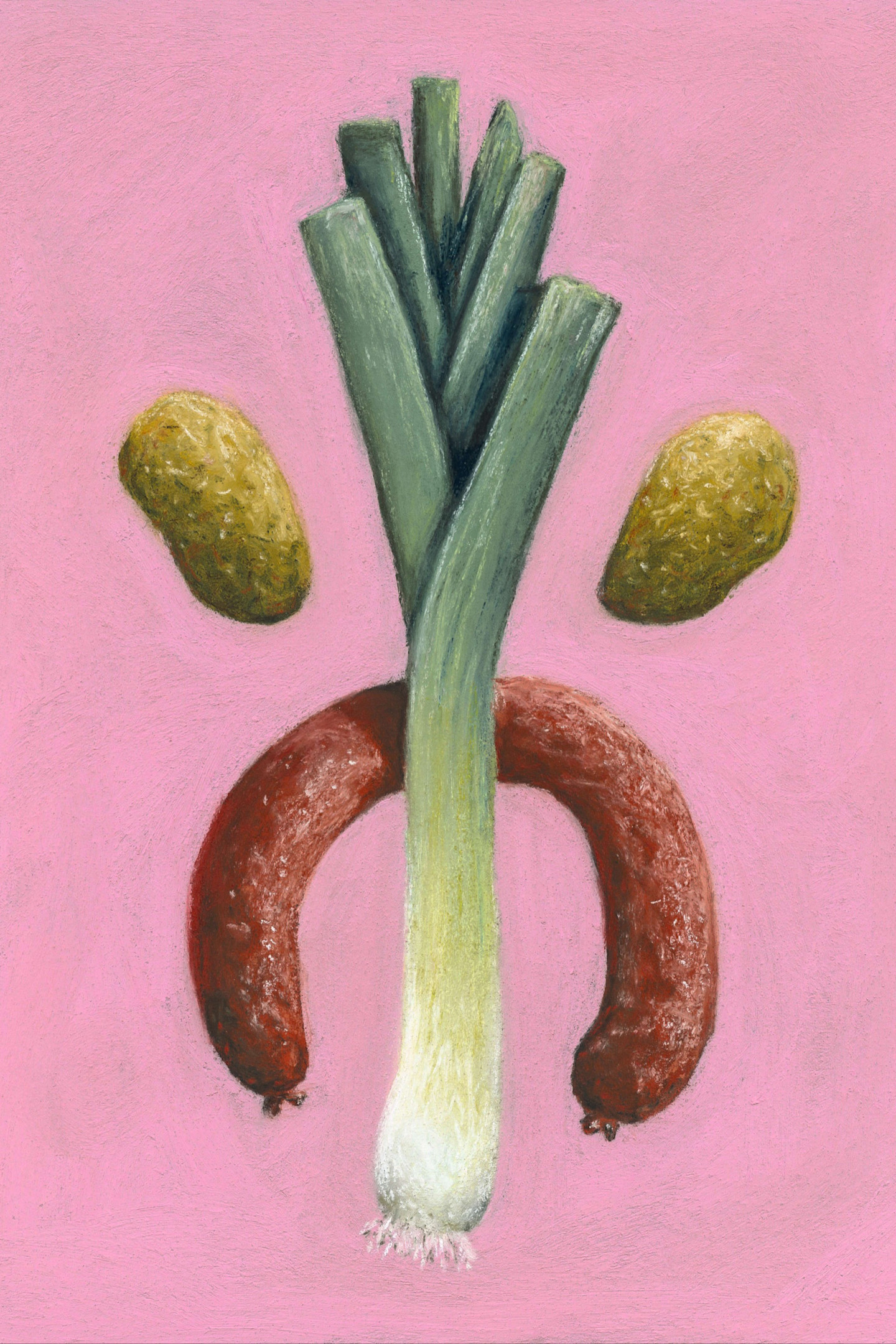
There’s a funny dichotomy at the heart of A Cookbook for Iwan. Created by the glitzy art dealers Hauser & Wirth — with all the high glam of the glossiest coffee-table publications and featuring multimillionaires and celebrity chefs — it is also one of the homeliest cookbooks you’ll have read in a while.
Originally collated by Manuela Wirth for her husband Iwan’s 50th birthday, the book is a strange combination of high-flying names, family and friends, plus one-off art pieces, and recipes that range widely from proper yorkshire puddings and Swiss snakebread to red grouse yakitori. Tom Parker Bowles writes the introduction.
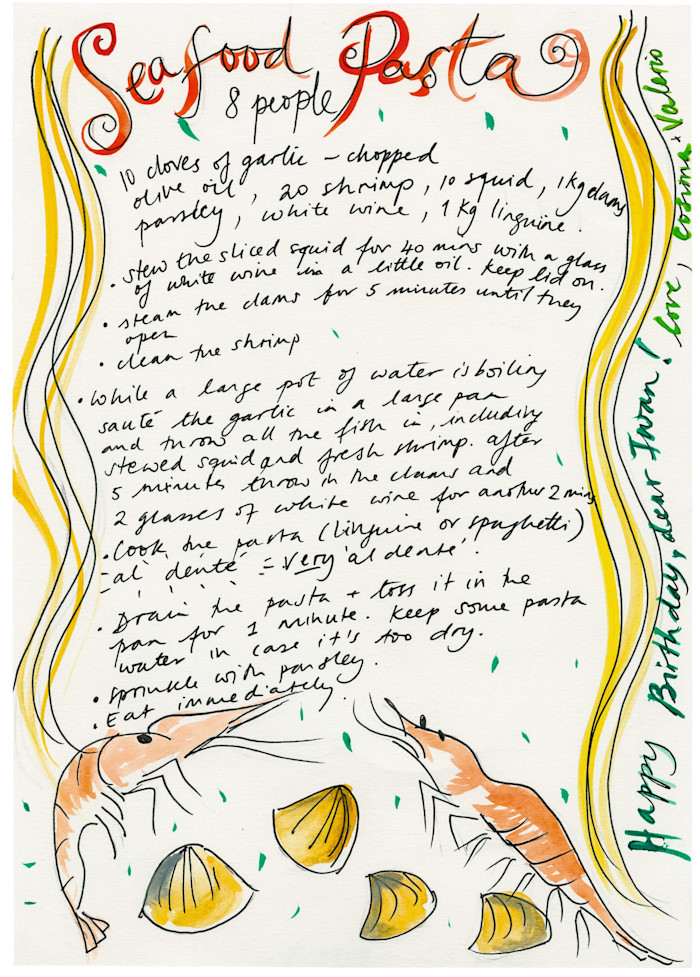
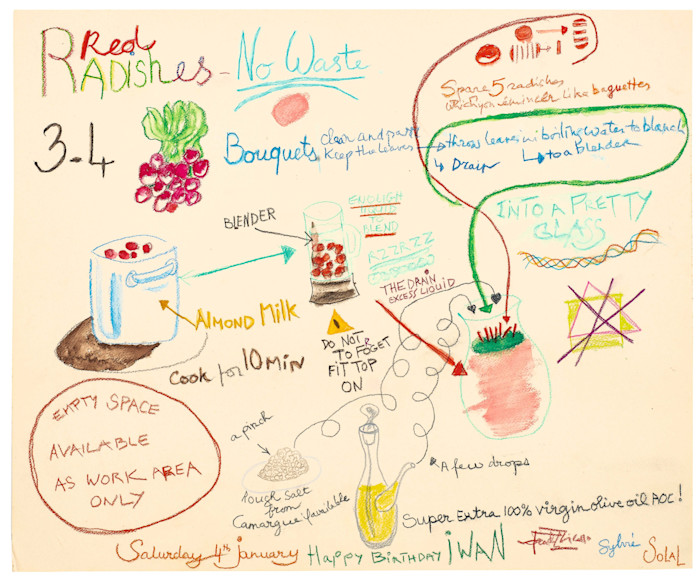
It is more like a zine than a traditional cookbook: recipes are revealed in photocopies, Polaroids, Notes app screenshots, and scruffy blunt-crayon diagrams of platings. Exquisite paintings sit next to crumpled scans of A4 printer paper. There’s also a variety of handwriting — and, somehow even more touching, many fonts. The design is artfully done to appear almost artless, with spacing all over the place and even the occasional typo.
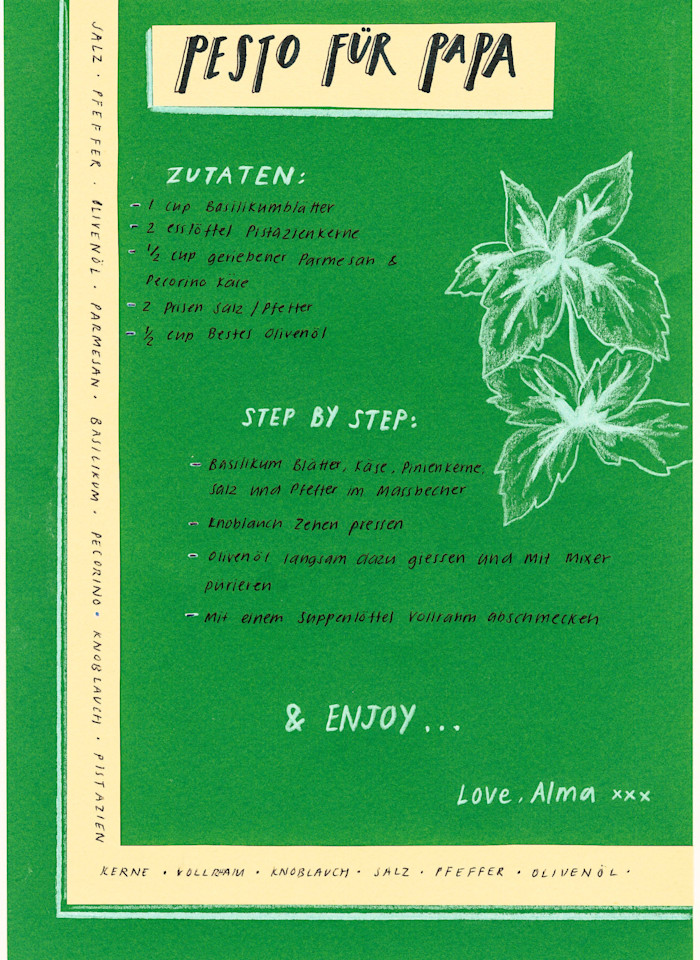
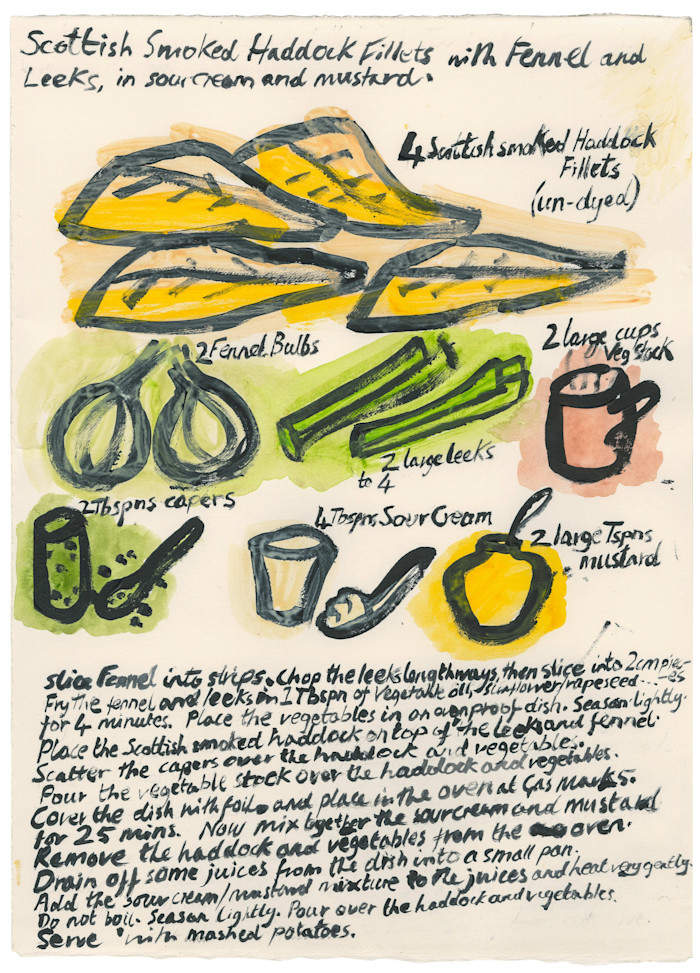
Recipes turn out to be poems (“Stir with birds till transparent”), and, more surprisingly, recipes proper. Cindy Sherman may be one of the most decorated photographers of her generation, but it’s her six-sentence recipe for “garlic and bread soup” that takes centre stage here. It seems like an interesting and comforting dish: garlic toast with chicken stock poured over, and a poached egg and coriander. I made it. It was good.
There are a lot of things in A Cookbook for Iwan that look good. There are also a lot of things that look terrible. In this, it has achieved the true function of all community-sourced cookbooks. For this £60 high-art tome has more in common with, to take an example at random, the Café Connect Cookbook than it does with most glossy hardbacks. I have many cookbooks, but anything spiral-bound and made by committee, preferably to raise funds for some village or local endeavour, is my personal treasure. The Café Connect Cookbook — from a village café in Ipstones, Staffordshire — is a perfect example of the genre. The cardamom, almond and pear cake sounds stupendous. I am charmed by David’s beef curry, an adaptation of one eaten in the 1970s at Tsing Yi power station staff canteen in Hong Kong; I am delighted to meet the wonderfully named Hollis Boon Chuck, a former US Navy man, who scales down his Texas chilli — originally “to feed 400-600 hungry sailors” — for family dining. (I am a little more wary, it must be said, of the savoury oat flan.)
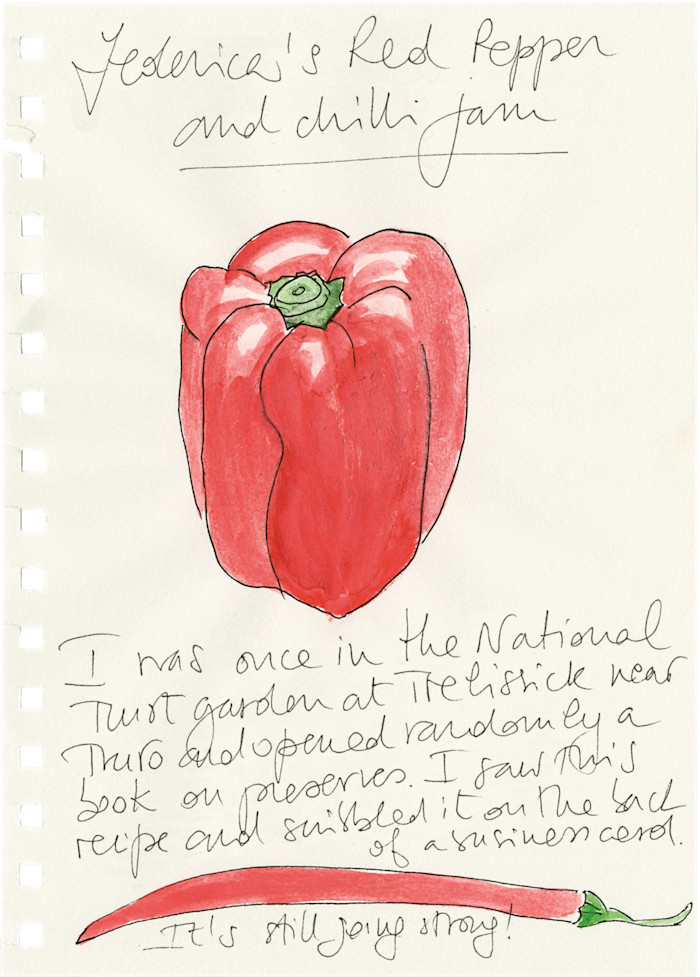
I am a sucker for such homemade cookbooks. A church one from the 1990s, containing many ecumenical jokes, or those school ones written mostly by overconfident children. My aunt Fi’s Sixty at Sixty: a Cookbook by Fiona (pictures by my uncle Nick; design by my cousin Paddy) contains a lifetime of family recipes, invented and adapted: “Delia’s recipe describes creating caramelised onions: I no longer try and the world doesn’t end.” And perhaps the ugliest and least prepossessing of my whole collection — yet the one I would save first — is a battered blue notebook with a water-splodged cover consisting of an ancient photocopy of a candle-topped heap of fudgy-looking chocolate treats.
These — as we will learn in a few pages — are of course “Queen Nigella’s Best Ever Brownies — really you have to hand it to the woman!” The date I left home is in the top-right corner of the first page. “Chosen by all of us, gorgeous girl!” it reads underneath, in my mother’s handwriting. “Space at end to add your own!” Photocopied pages from cookbooks are stuck in, but only when the Biro amendments on the original are particularly extensive. “You’ll laugh when you see how easy this is to make,” Jamie Oliver claims of a quick tomato macaroni; down the side, my mother scrawls “08/01/09. Didn’t laugh. Liked it though.”
On the spare pages at the end, I am moved, and sort of surprised, to find I followed my mother’s advice. I am even more surprised to discover traces of all my own cookbooks here. My teenage handwriting marks out the fruit-and-cream “bomb” of my childhood; the vague shapes of a chicken curry that I haven’t made in well over a decade; the cheese scone recipe scrawled by an old boyfriend, all of which have emerged as something more formal in the books that came after; the cookie formula of my au pair days that finally made it into The Kitchen Book this May, a full 15 years later.
In his introduction to A Cookbook for Iwan, Parker Bowles quotes from the great gastronome Brillat-Savarin: “Tell me what you eat, and I’ll tell you who you are.” True: tell me what you eat, and I’ll tell you who you were; tell me what you eat, and I’ll tell you where you’ve been, and who you’ve known, and what you’ve loved.
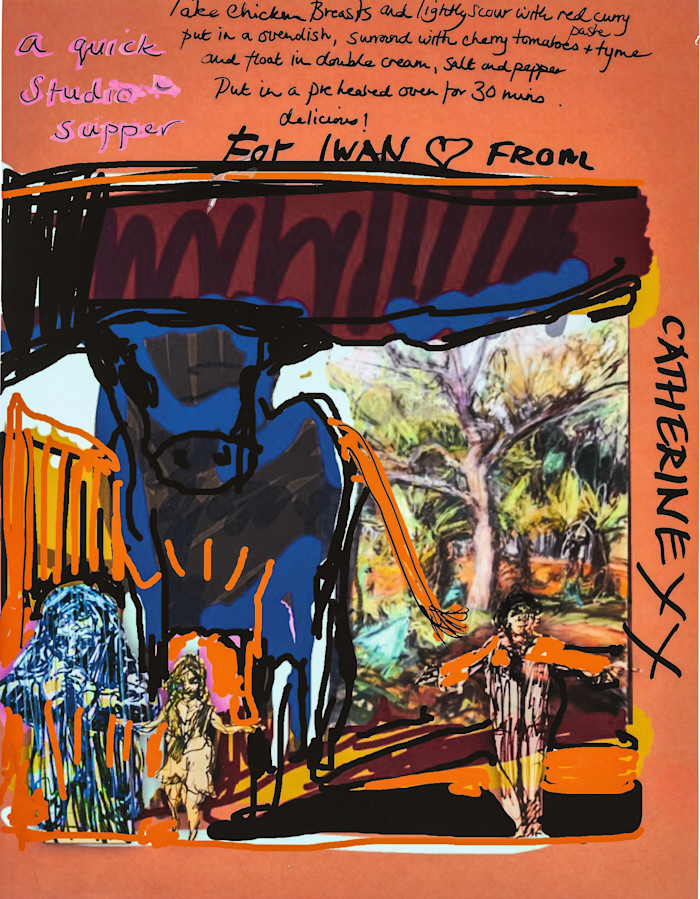
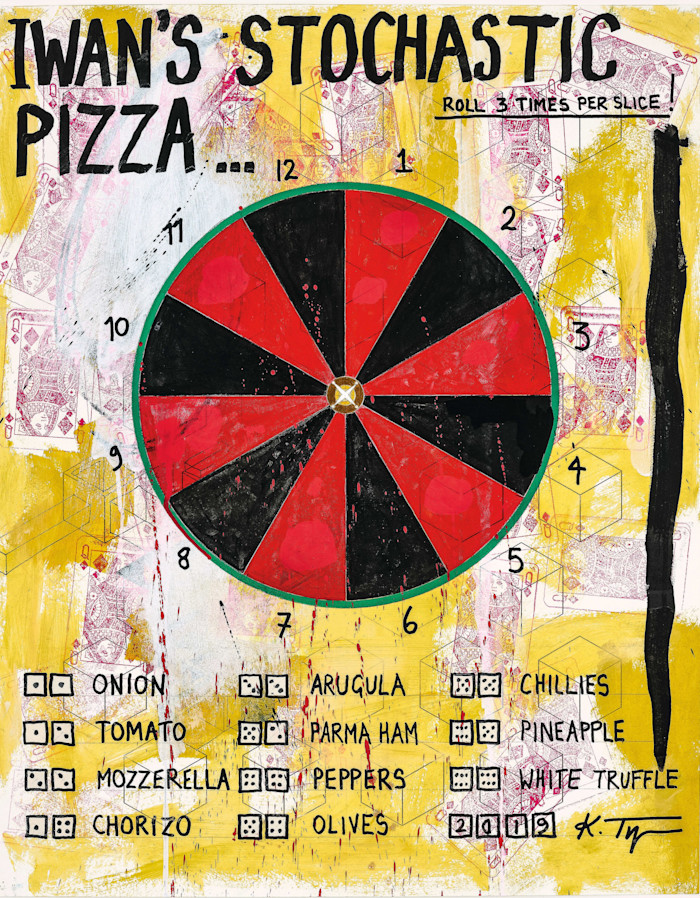
There is, perhaps, a sense that this book is more important than ordinary community cookbooks. And that is, it must be said, kind of compelling. (Google them! Their crazy millionaire lives!) But what is really important about A Cookbook for Iwan is in the title. This is a book for and about Iwan, and about what and who he loves. The story of this book is in making something for someone you love: a dinner, a picture, a book. The only reason to make anything is to make it for someone.
In an age of curated Instagram pictures, high-dopamine TikTok cooking shows, and the smoothed-out polish of ChatGPT, Claude and the rest, tinting everything in an identically tasteful shade of beige, there is something extra appealing about these dishes made by and for people. Let A Cookbook for Iwan be more than a guide to chickpea dumplings and ceviche. Ask the people you love what they love. Ask yourself what you love. Make something of it.
‘A Cookbook for Iwan: from Studio to Stove’, hauserwirth.com/publishers
Hauser & Wirth Publishers Pop-Up, 62 South Audley Street, London W1, October 12-17
Find out about our latest stories first — follow FT Weekend on Instagram, Bluesky and X, and sign up to receive the FT Weekend newsletter every Saturday morning