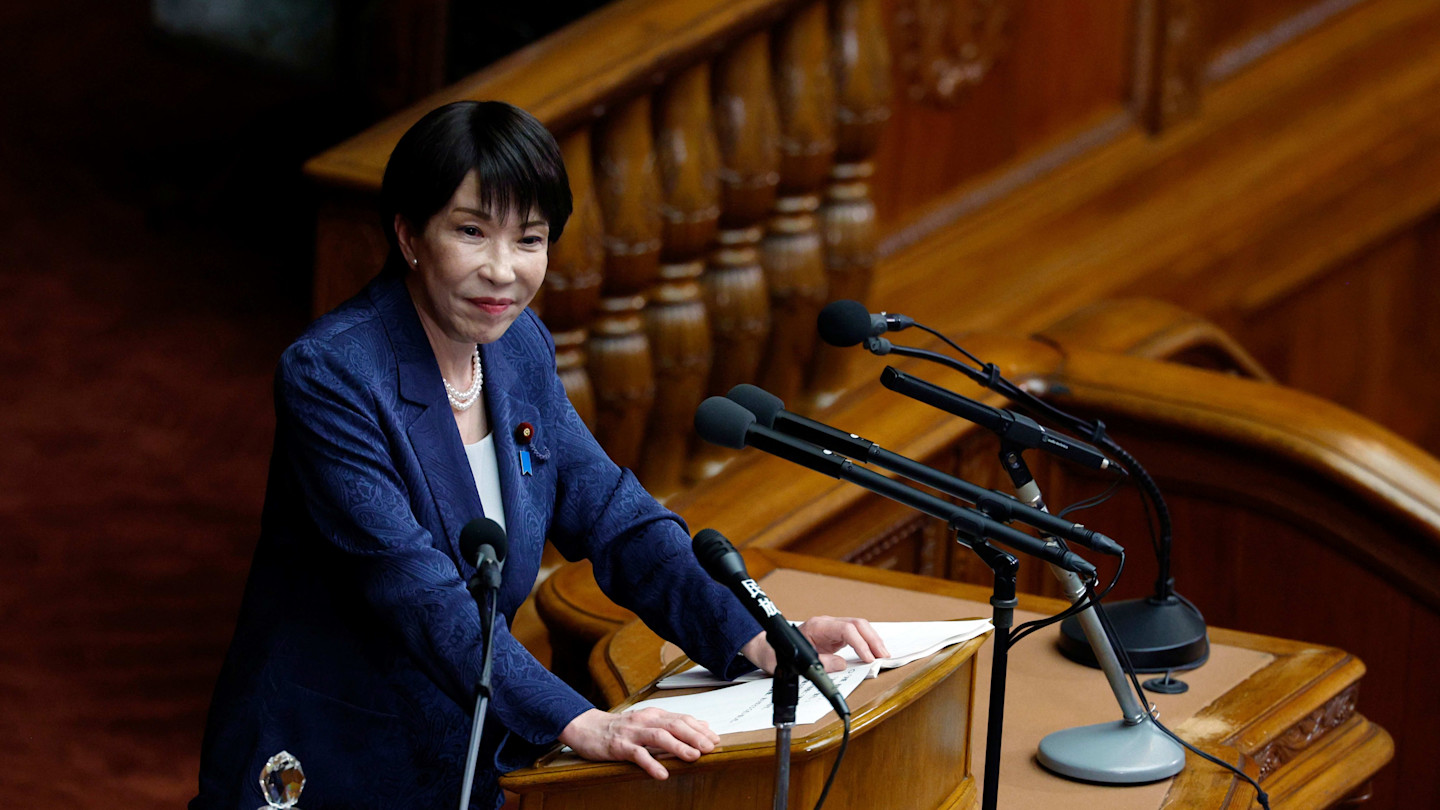
Japan’s Prime Minister Sanae Takaichi has told investors to “rest assured” about her plans to fund massive spending and tax cuts as yields on the 30-year government bond jumped to an all-time high.
Opening an extraordinary session of parliament on Monday, Takaichi promised to “control” new bond issuance.
“To ensure market confidence, we will secure funds without relying on [issuance of] deficit-covering bonds, so please rest assured,” Takaichi said in comments that followed market turbulence and intensifying US pressure on Tokyo amid concern over how she would fund her spending plans.
“Fiscal sustainability is obviously a prerequisite in pursuing our ‘responsible and proactive’ fiscal policy,” she added, pledging to enhance market trust in her policies.
As well as aggressive spending to drive growth, Takaichi’s plans include cutting the consumption tax (VAT) on food from 8 per cent to 1 per cent for two years starting in April — a measure intended to protect households from sharply rising food prices.
Shortly before the speech, yields on the 30-year Japanese government bond, which reflect investor concerns around the effect of spending plans on the country’s longer-term fiscal strength, rose to an all-time high of 4.23 per cent. The yield on the 10-year note traded close to a 31-year high.
The yen traded roughly flat on the day, around a rate of ¥157.7 versus the dollar.
Analysts said Takaichi’s speech appeared to reflect the rising pressure on the prime minister, as the government prepares to debate her plans for a massive programme of shared public and private investment in sectors including AI, semiconductors and shipbuilding.
Since becoming prime minister almost a year ago, Takaichi has enjoyed high approval ratings, which political analysts say are partly because she has managed to convince the public that she has big plans for an economy where wage growth and consumption have been sluggish for decades.
But the yen has fallen on concerns that Japan cannot afford huge government spending. Its debt-to-GDP ratio is already the highest among G7 countries.
Added to that are comments from senior members of the US administration, including Treasury secretary Scott Bessent, seeking to convince Japan that it does not need a major reflationary programme in a time of rising prices.
Osamu Takashima, foreign exchange analyst at Citi in Tokyo, said the prime minister wanted to “advance her economic policy known as Takaichinomics”.
“It includes some reflationary policies but due to some political pressure from the US, she needs to find a balance between what she really wants to do and the US. So in a sense her speech today was about finding that balance,” said Takashima.
Takaichi “wants to promote big investment through public and private investment . . . so a stable bond yield is very important”.
Stefan Angrick, economist at Moody’s Analytics in Tokyo, said Monday’s speech should be seen as a “course correction” on messaging aimed at global markets.
“Looking at the substance, Takaichi’s approach to fiscal policy isn’t all that different from her predecessors. Where Takaichi has differed is in the rhetoric. She has de-emphasised fiscal targets and dialled back traditional language around tax hikes, spending restraint and fiscal consolidation that previous administrations have tended to follow,” said Angrick.