Donald Trump has temporarily eased limits on the use of tax-exempt red diesel as midterm elections approach and his administration tries to contain a fuel price crisis triggered by the US president’s Iran war.
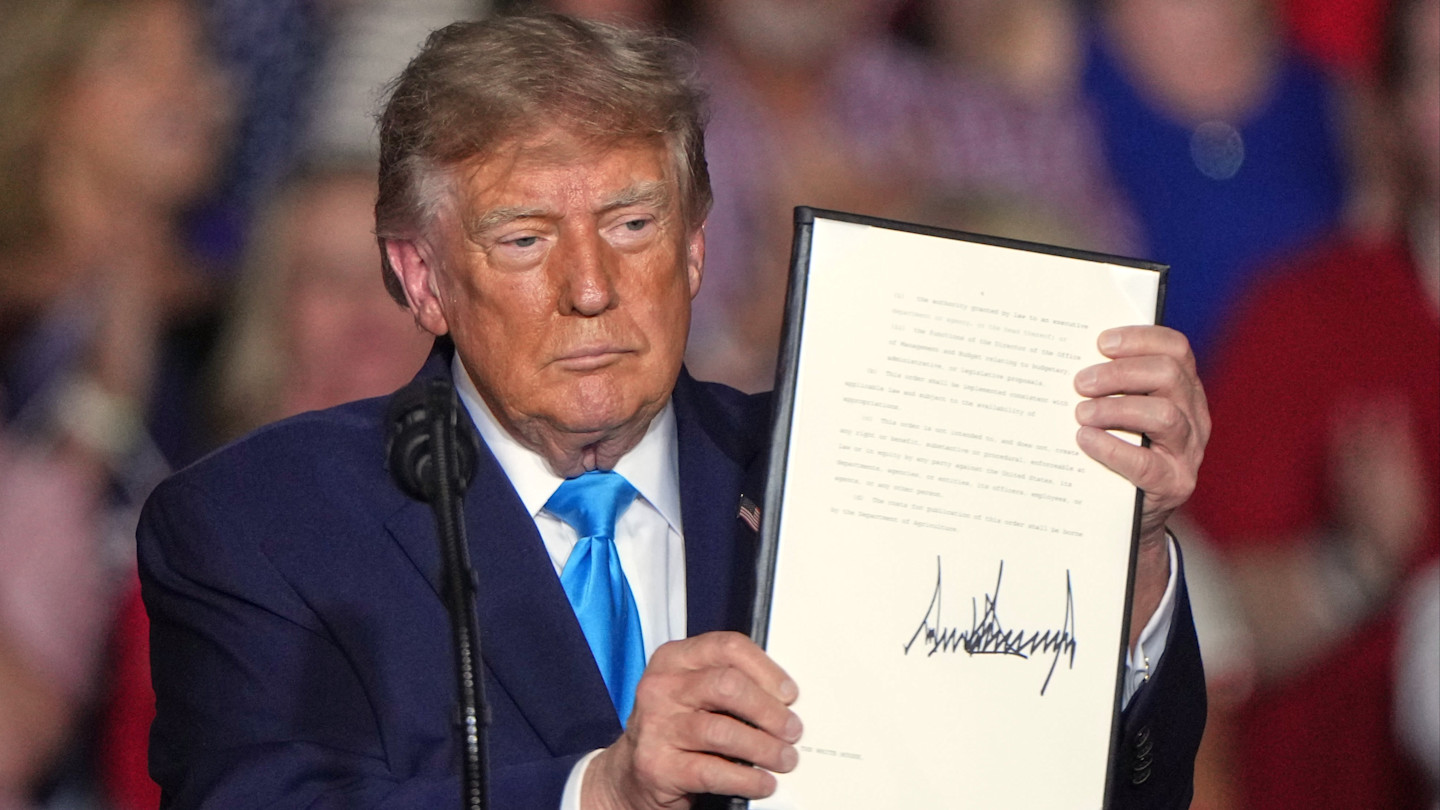
Trump signed an executive order on Monday night allowing dyed fuel to be used on public roads and highways with federal excise taxes deferred for the rest of the year.
Dyed diesel is exempt from the 24-cent-a-gallon federal diesel tax and is generally reserved for off-road use on farms and construction sites. Allowing it to be used more widely could help alleviate the shortage that has pushed up other costs across the US economy.
The president announced the move during a rally in Grand Island, Nebraska, a state that is in America’s agricultural heartlands, where the diesel price surge this year has brought pain for farmers.
To cheers from the crowd, he said the executive order would “allow anyone to purchase tax-free red diesel for any reason”, cutting costs for truckers, farmers and regular Americans “substantially”.
Trump has been under intense pressure to take steps to ease the price of diesel, which hit a record level of $6.53 in recent weeks. On Monday, its average price was $6.32, according to the AAA motoring group, still historically high.
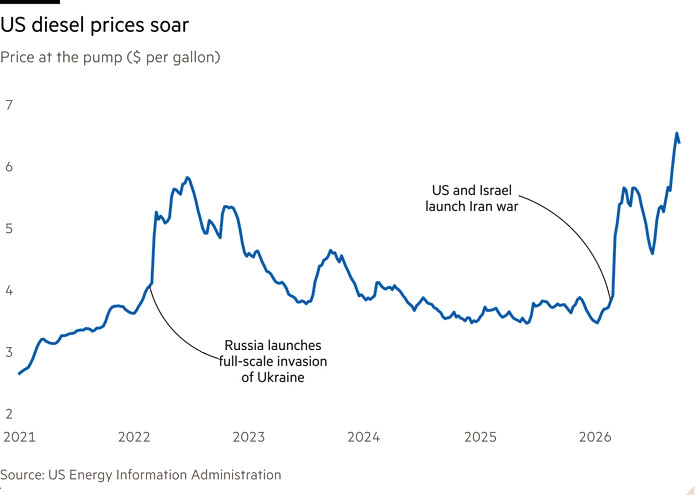
The fuel crisis since the US and Israel launched their war on Iran in February has squeezed American farmers and truckers in particular, undermining Trump’s popularity and denting the prospects of Republicans running for Congress in next month’s midterm elections.
Ukrainian attacks on Russian refineries in response to Moscow’s full-scale invasion have also cut international fuel supplies, supporting diesel prices.
Monday’s executive order directs the secretaries of Treasury and defence to suspend federal excise tax on dyed diesel used on highways for the rest of the year and “explore pathways” to scrap any obligations to pay the deferred taxes.
It also instructs the transportation and agriculture secretaries to co-ordinate access to dyed diesel, in particular by farmers, and encourage states to take similar steps to suspend their own duties.
The president held crisis meetings in recent weeks to consider potential steps to alleviate the crunch, including a ban on US diesel exports.
But he ruled out a ban on Friday after European allies agreed to release large volumes of the fuel from stockpiles as part of a G7 effort to combat high prices.
The US oil industry had also lobbied hard against the ban, with executives placing calls to the White House, warning the move could backfire and hurt parts of the country that rely on imports.
Texas took similar measures last week, with Governor Greg Abbott signing an order to allow the use of dyed diesel on public roads for a 30-day period.