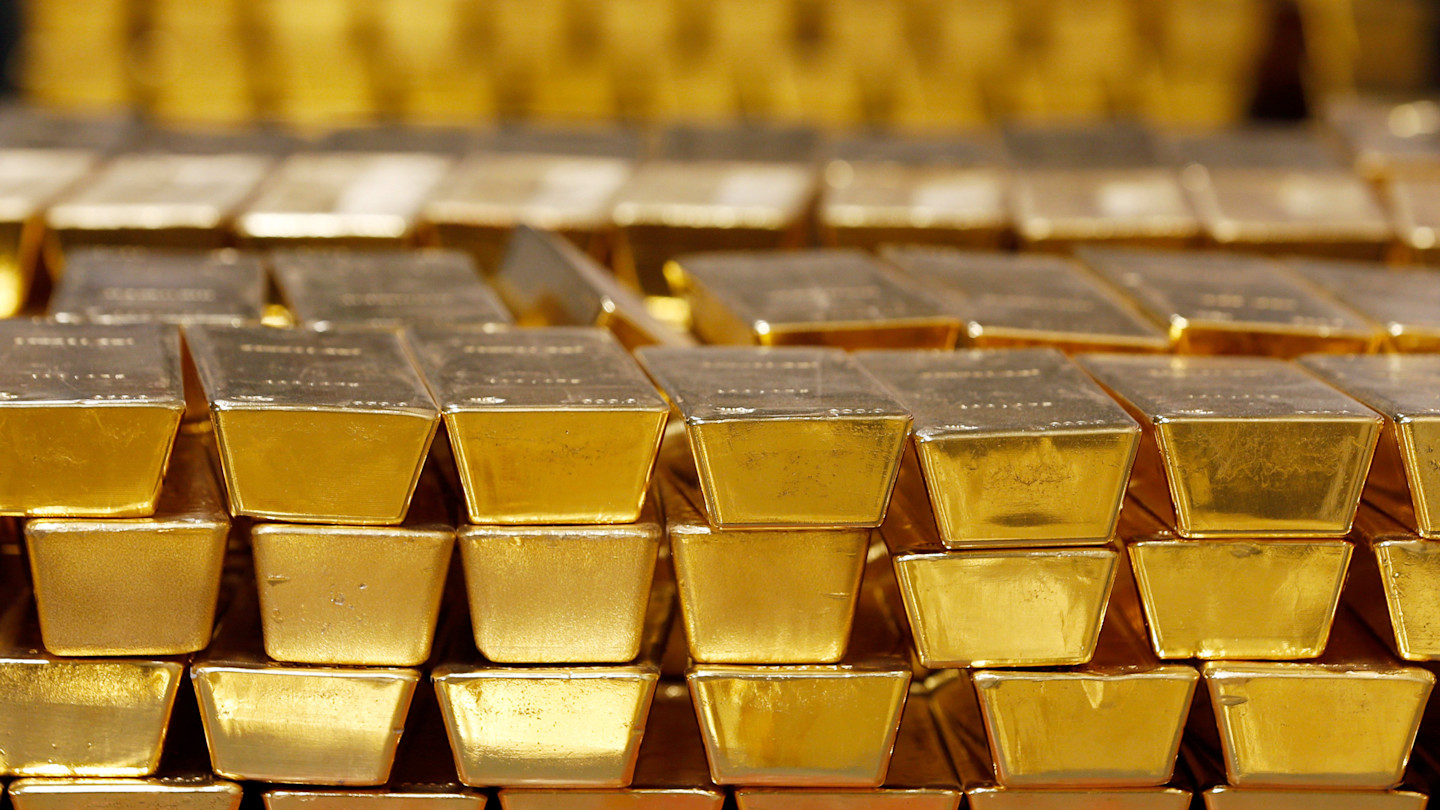
US derivatives group Intercontinental Exchange has begun offering trading in gold futures in London, in the latest attempt to introduce precious metals derivatives in the world’s centre of physical bullion trading.
The New York Stock Exchange owner this week debuted precious metals contracts tied to daily auction prices set in London. As well as gold, it has launched contracts on silver, platinum and palladium.
London is the world’s largest market for trading physical gold, handling “over-the-counter” deals worth nearly $190bn a day, while it has physical gold worth about $1.4tn in its vaults. Its benchmarks are widely used by industry and stock market vehicles that track the metal.
However, unlike New York, London has not offered a gold futures contract in recent years and previous attempts to establish one have failed. The London Metal Exchange closed its gold futures contract in 2022 after five years because of low volumes, while the London Gold Futures Market failed to make headway in the mid-1980s.
ICE’s focus on London comes as the global gold market, which has historically relied heavily on the UK for storage and setting prices, comes under sustained strain from several years of geopolitical conflict, sanctions and tariff threats.
Following US President Donald Trump’s trade blitz in April last year, traders shipped large quantities of gold to the US to avoid the risk of tariffs, as futures prices in New York rose above physical prices in London. A futures market operating alongside the UK capital’s physical market could make such price dislocations less of a risk.
“Derivatives markets generally are there to support the physical market,” said Chris Rhodes, president of ICE Futures Europe. “The physical market is in London. We believe that if you were to enable people to manage their risk in a different way . . . that could be an attractive prospect, particularly if it’s linked into the auction price.”
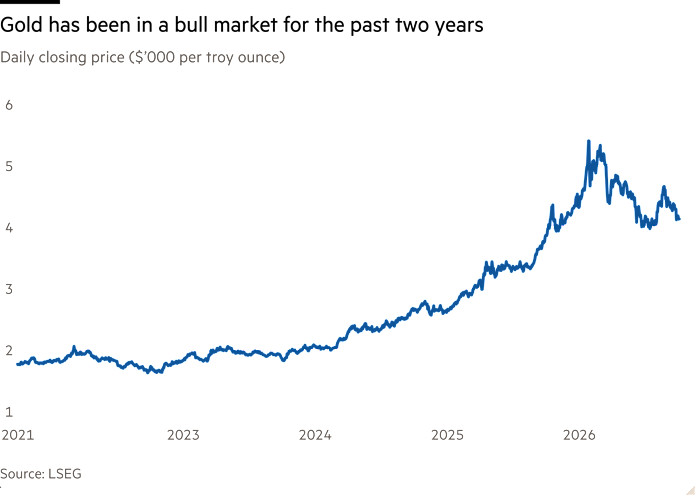
The rise in global uncertainty has helped to create a bull market for the metal in the past two years, pushing gold to a record price of more than $5,500 a troy ounce in January.
Global central banks are becoming skittish about where they store their reserves, fearing a potential loss of access.
Last month, the Dutch central bank moved more than 78 tonnes of gold from New York to London, citing “increasing geopolitical unrest” after lobbyists and politicians warned that an unreliable US government under Trump might otherwise seize them.
Hong Kong and Singapore are increasing their capacity to store gold, while France and India’s central banks have repatriated their holdings from around the world. Venezuela is close to reaching an agreement to transfer to New York about $4bn of disputed gold reserves held at the Bank of England.
Average daily trading volume in gold futures in New York at ICE’s rival CME Group rose to roughly $125bn in the first six months of the year. ICE’s own gold market in the US trails far behind the CME and a fast-growing market in Shanghai.
ICE said its London contracts would be based on the daily physical auctions it runs in the City to set the prices of gold, silver, platinum and palladium. The contracts are for a single day up to six months in advance and will clear through ICE’s London arm, which manages the Brent oil futures contract.
Last year, the London Bullion Market Association called for the revival of gold futures trading in Britain to help traders better exploit the differences between prices in the UK and New York.
Since ICE took over the gold benchmark a decade ago, its centralised auction has increased the number of participants from four to 20. Big trading firms Jane Street and DRW have joined the process, alongside banks such as Goldman Sachs and Citi. Average daily volumes in the auction have grown more than 30 per cent to more than 424,000 ounces since 2015.