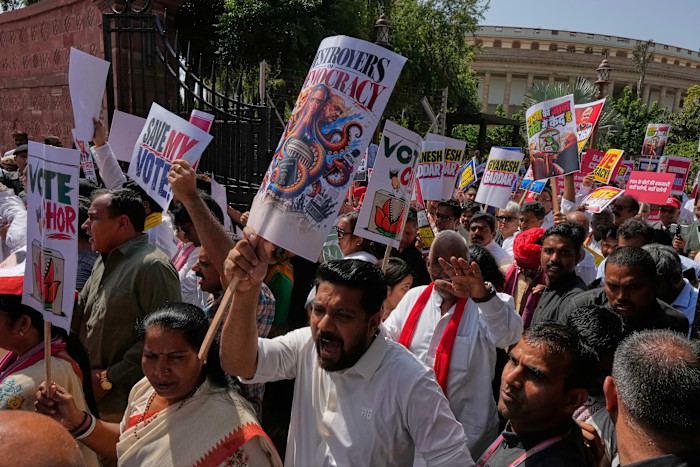
Hundreds of Indian opposition politicians marched on the country’s voting commission on Tuesday, alleging widespread vote theft and calling for the commissioner’s resignation to “save” the world’s largest democracy.
The furore over the election commissioner is the latest challenge to Prime Minister Narendra Modi’s government, which has endured a summer of unprecedented unrest. Widespread protests in July by the upstart Cockroach Janta Party forced the resignation of the education minister, marking the worst political crisis of the prime minister’s third term.
Those forces have found their next target in electoral commissioner Gyanesh Kumar, alleging vote chori, or theft, following a controversial overhaul of voter rolls that critics allege benefited Modi’s Bharatiya Janata Party.
Video description
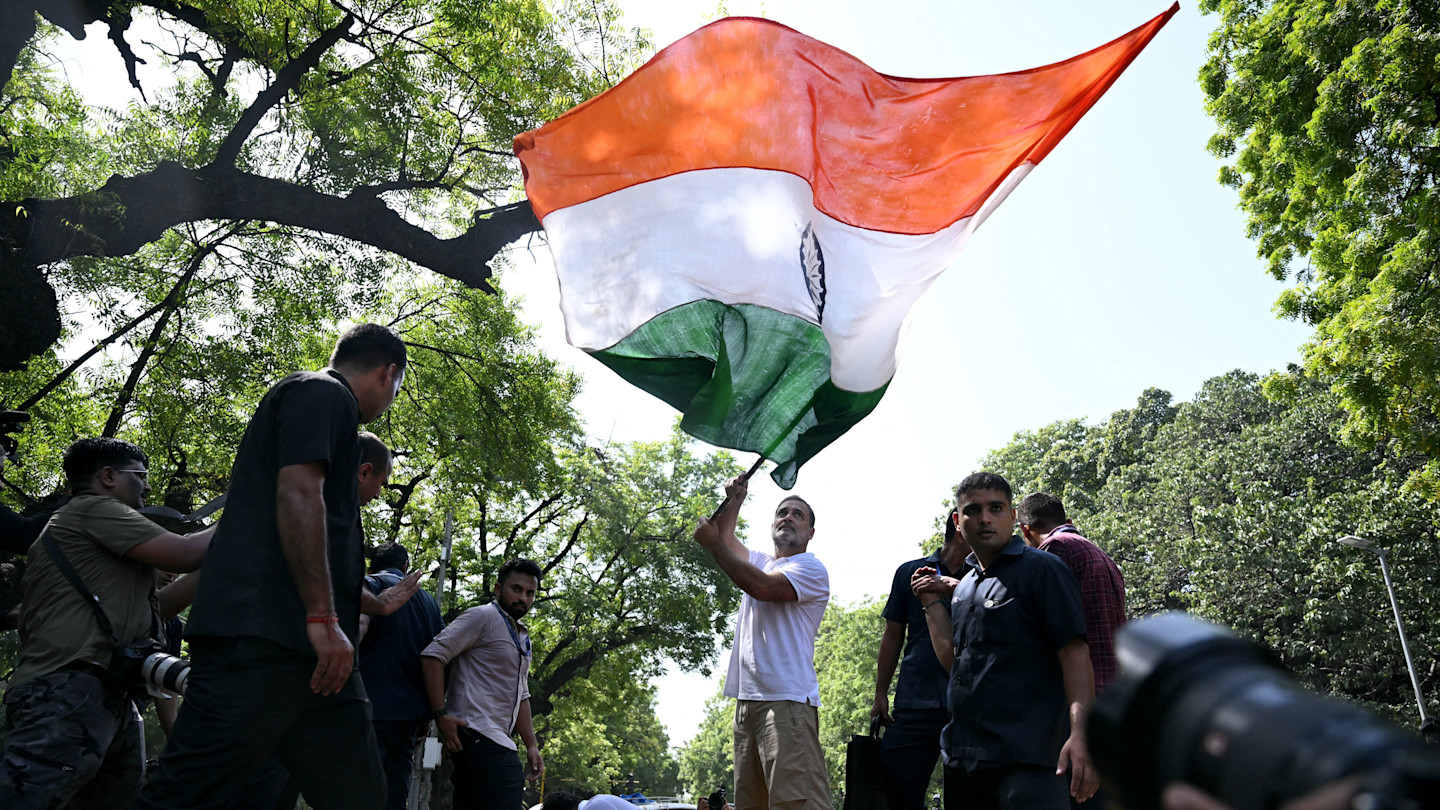
Rahul Gandhi carrying a placard reading “Gyanesh, it’s done bro” in New Delhi
About 300 lawmakers led by the Indian National Congress party marched 800 metres on Tuesday from parliament to the commission in central New Delhi, according to Rahul Gandhi, scion of the Nehru-Gandhi dynasty that controls Congress.
Gandhi, who was carrying a placard reading “Gyanesh, it’s done bro”, earlier accused the chief electoral commissioner of “abusing his position to help the BJP”.
“He and everyone else in this criminal assault on our democracy will be held accountable,” said Gandhi, who was later detained by police alongside his sister Priyanka Gandhi Vadra, also a lawmaker, at a protest sit-in. The Congress leader has repeatedly been detained at demonstrations, including at a protest against education failures in July.
The overhaul of the voter rolls, known as a special intensive revision, began last year in the northern state of Bihar, where the BJP won a comfortable victory, before extending across the country. Some 130mn names, or some 13 per cent of the total electorate, are estimated to have been removed from the rolls.
The commission has defended the exercise, saying the names were duplicates, deceased or immigrants. But critics allege the commission wrongly deleted tens of millions of voters, particularly Muslims, at the behest of Modi’s government.
The BJP has over the past year won a string of state victories, including the opposition-held West Bengal, and the party and its allies now control territory covering more than 70 per cent of the population — comparable to the dominance of Congress under Indira Gandhi in the 1970s.
It is also looking to maintain its control in February in Uttar Pradesh, India’s most populous state, which has a large Muslim minority.
Anger about alleged voter disenfranchisement has simmered for months, but outrage erupted after a report last month in the Indian Express newspaper alleged irregularities in the revision process and dozens of internal objections from the body’s two other commissioners.
The commission said such differences were part of the “normal deliberation” in the “decision-making process” and that its final decisions were “unanimous”. On Friday, it directed officials to restore eligible voters who were erroneously omitted from the rolls.
S Y Quraishi, a former chief election commissioner, dismissed those explanations as “absolute rubbish”. He accused Kumar of “playing havoc with the country”.
India’s Supreme Court this week demanded an explanation from the commission and government on the voter-list deletions.
Modi’s government has rejected accusations that the revision was politically motivated, and officials have defended the effort as necessary to prevent voting by “infiltrators” — a pejorative term largely used to refer to Muslim immigrants from neighbouring Bangladesh or Rohingya refugees from Myanmar.
“The government really is not part of the election commission’s decision-making,” said Kanchan Gupta, a senior adviser at the information ministry.
Kumar, who is due to step down in 2029, has not responded to calls for his resignation and has defended the commission’s independence. He received praise from US President Donald Trump last month for insisting that Indian voters prove their identity.
The opposition has not provided evidence of political manipulation or that the revision affected electoral results.
BJP MP and national party spokesperson Sudhanshu Trivedi challenged the opposition on Tuesday to identify who would “benefit by giving voting rights to the absent, shifted, dead and duplicate voters without any investigation”.
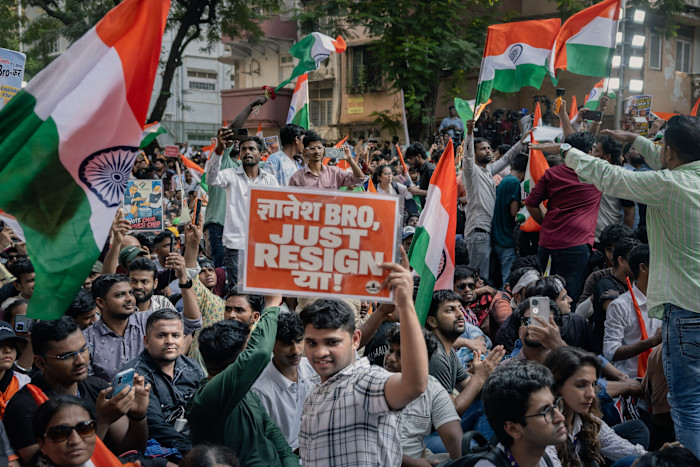
But demonstrations have spread in recent days. Thousands of CJP protesters assembled in Mumbai last week, with Abhijeet Dipke, leader of the viral youth movement, calling Kumar “a traitor to India”. Scores of opposition protesters were arrested in Delhi over the weekend.
The protests were approaching “a turning point”, said Neerja Chowdhury, a political analyst and author of How Prime Ministers Decide, who suggested that Kumar’s resignation could trigger calls for the nullification of polls held after the revision. “They would taste blood,” she said.
For the ruling party, the escalating unrest has become an increasing political risk.
“They already forced the government to get rid of the education minister; now they want to get rid of the election commissioner,” said a senior BJP lawmaker. “Who would they want to get rid of next — the prime minister?”