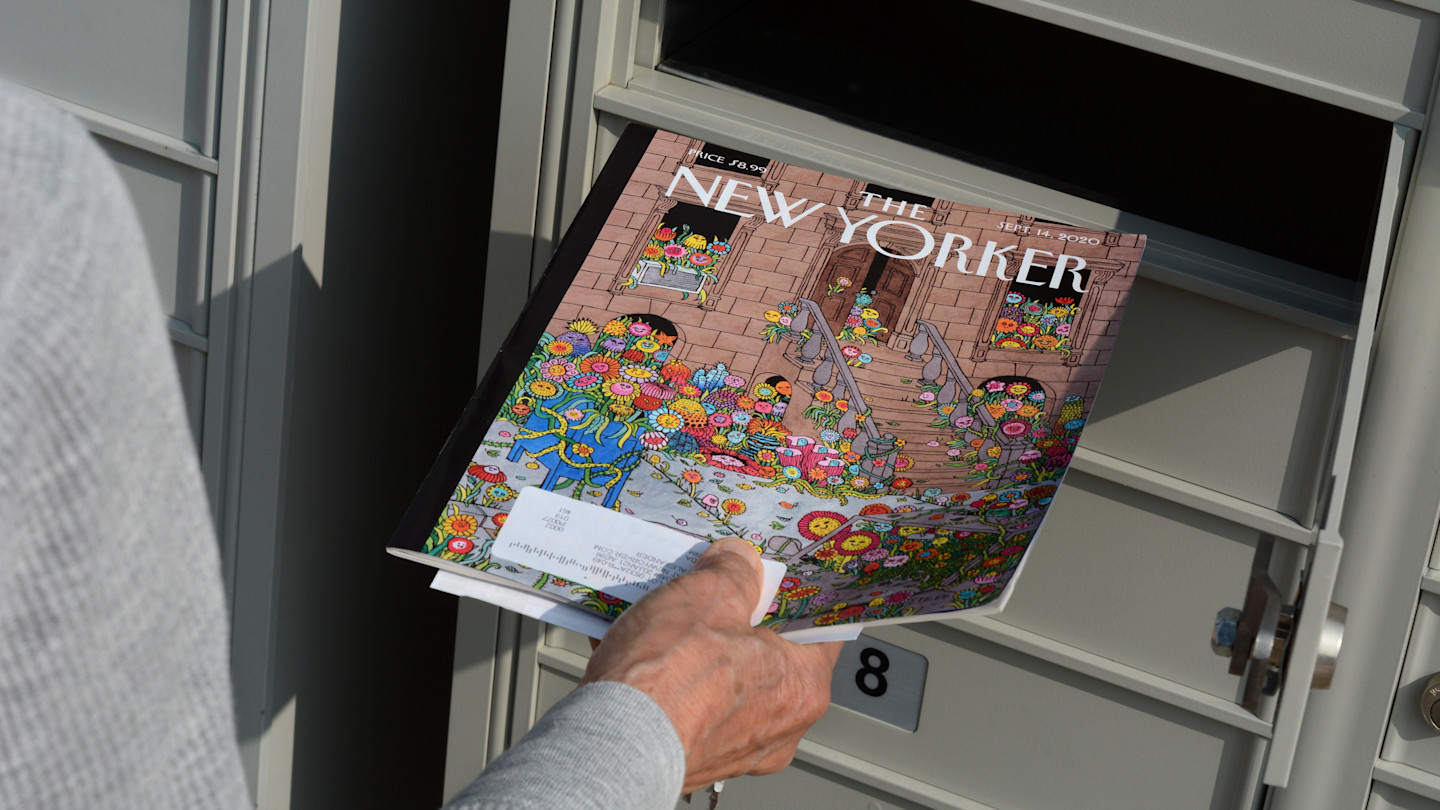
The Newhouse family has ruled out selling Condé Nast, rejecting longstanding speculation over the future ownership of the publisher as it begins the search for a new chief executive following the abrupt departure of Roger Lynch.
Steven Newhouse, chair of family holding company Advance, gave a categorical “no” when asked by the FT whether the family would consider selling Condé Nast, the owner of magazines including Vogue, The New Yorker and Vanity Fair.
Puck News wrote in May about longstanding speculation in fashion circles that Amazon founder Jeff Bezos could buy Condé Nast, while saying the rumours had no substantive basis.
Newhouse said his family regarded Condé Nast as a business investment rather than a trophy asset.
“Maybe for a certain class of non-media owner, there’s a prestige to owning media properties,” he said. “But we’ve been a media owner for 100 years. So we’re not in it for the glamour.”
The comments come at a turning point for Condé Nast after Lynch, who was hired by the billionaire Newhouse family in 2019 to revive the publisher, agreed last week to leave to become chief executive of toymaker Mattel.
Lynch spent seven years overhauling Condé Nast, combining its previously separate US and international operations, cutting jobs and focusing resources on its biggest brands.
Newhouse said Lynch was leaving the company in “far, far better shape” than when he arrived, describing the creation of a global company as his greatest accomplishment.
Lynch told the FT earlier this year that revenue in 2025 was roughly back to 2021 levels, when it was reported to be nearly $2bn. He added that the company was “far more profitable now”.
The restructuring has brought repeated rounds of lay-offs and unrest among employees.
Asked whether anything had been lost as Condé Nast became more financially disciplined, Newhouse said: “I just don’t see it that way.”
“The challenges to print advertising forced us to make choices,” he said. He also pointed to “the monopoly tech companies . . . stealing our content” and the loss of Condé Nast’s profitable Russian business.
Newhouse said Lynch told him last Monday that he planned to leave the company and that Condé Nast’s board had not yet discussed what it wanted in a successor.
“Roger assures me, and I believe it, that he wasn’t looking for anything, but this came to him,” Newhouse said. “So now we’re all . . . kind of regrouping.”
Mike Perlis, a longtime Condé Nast board member, will serve as interim chief executive.
Newhouse declined to say whether Condé Nast would seek another executive with a technology background like Lynch or someone from the publishing industry. He said Lynch’s “most important accomplishment was leading the company with integrity and supporting our journalism and our editors”.
“While that might sound like a platitude, if you look around at media companies, it’s a quality that is really, really important,” he added.
Asked why his family wanted to continue owning Condé Nast, Newhouse said it was “a successful company” with “great brands that are irreplaceable”.
He said it was “of course” primarily a business investment. But when asked why the family would therefore never sell it, Newhouse declined to elaborate.
“You can answer that question yourself,” he said. “I’m not gonna answer.”