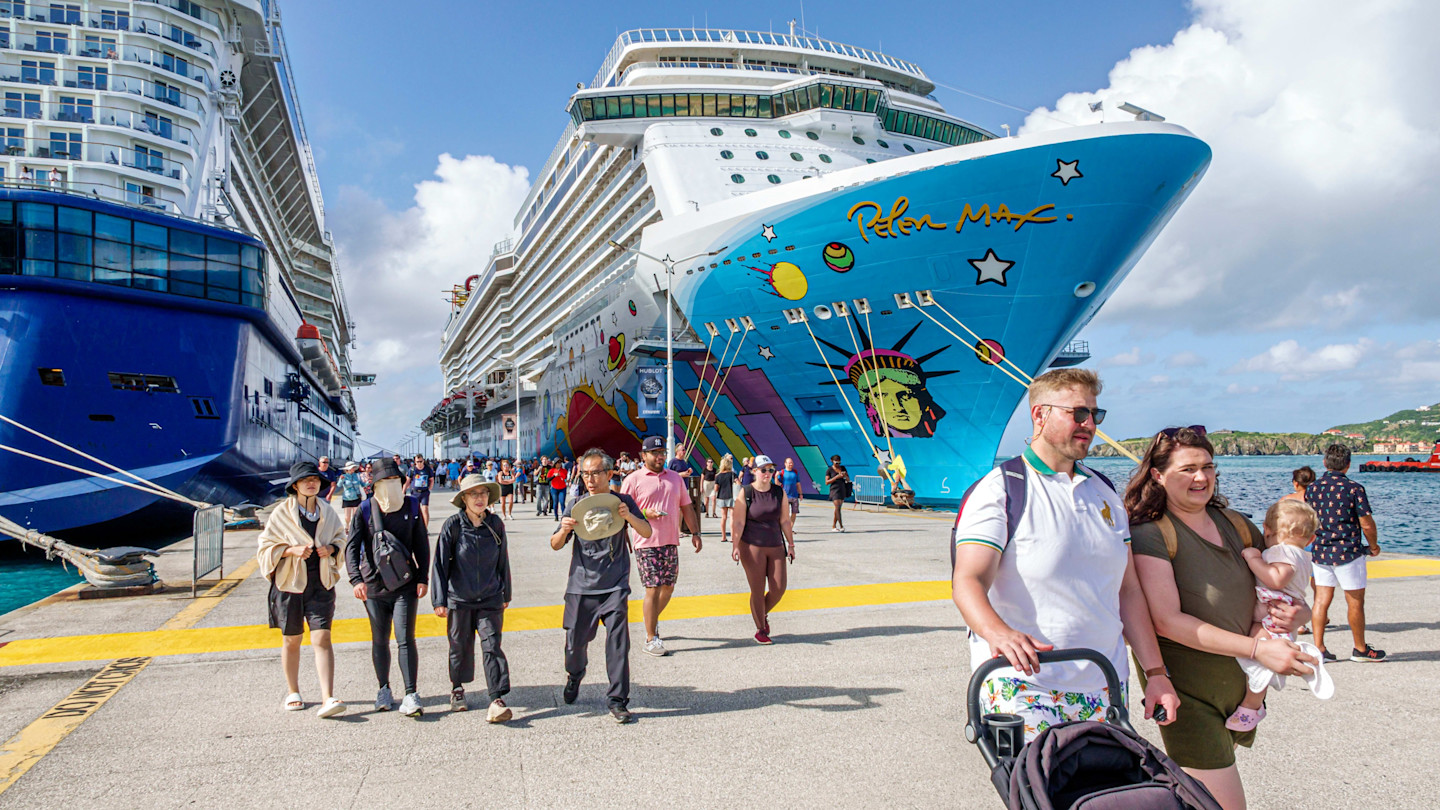
Cruise operators are cutting fares in the Caribbean in a battle to fill ships, as vessels rerouted from the Middle East add to excess capacity.
The average starting price in September for an inside cabin on a five-to-seven-night January cruise was $748, according to figures collated by CruiseCritic, down from $846 a year earlier.
“It’s a buyer’s market right now in the Caribbean,” said Steve Witt, co-founder of travel agency Not Just Travel.
Cruise lines have expanded in the region to tap year-round access to high-spending US travellers. Goldman Sachs estimates that passenger capacity has risen 11.5 per cent year-on-year in 2026 to a level almost 60 per cent higher than in 2019.
Operators have also invested in private beaches and islands, which CruiseCompete chief executive Bob Levinstein said could be “highly profitable” because operators can bypass port charges and capture their passengers’ onshore spending.
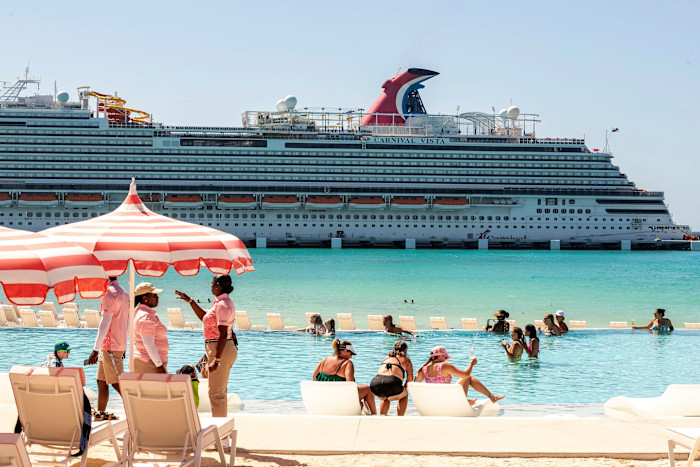
Some of the steepest discounting has been at Norwegian Cruise Line, which boosted its Caribbean capacity 40 per cent in the first quarter in a move chief financial officer Mark Kempa has since acknowledged was “premature.”
Its average ticket prices for Caribbean cruises in the first three months of 2027 were 21 per cent lower in September than at the same stage of the previous year’s booking cycle, according to Barclays Research.
Prices at rival Carnival were also 7 per cent lower year-on-year, although they increased from August, while Royal Caribbean’s prices were down 8 per cent.
Norwegian has redeployed ships from Europe and elsewhere to the region while renovating its private island in the Bahamas, Great Stirrup Cay. It has acknowledged “challenges” filling extra capacity that arrived before the upgrades were complete and warned that pricing pressure would persist into 2027.
The conflict in the Middle East has also weighed on consumer confidence as fuel prices have surged, while adding to Caribbean cruise capacity as ships are moved from the Gulf, including MSC World Europa, which can hold more than 6,700 passengers.
Operators are motivated to “fill their ships to the brim” even at a steep discount, according to Truist analyst Patrick Scholes, because much of their cost base is fixed.
“Whether you’re 80 per cent full or 100 per cent full,” he said, “your cost to carry those passengers is pretty much the same.”
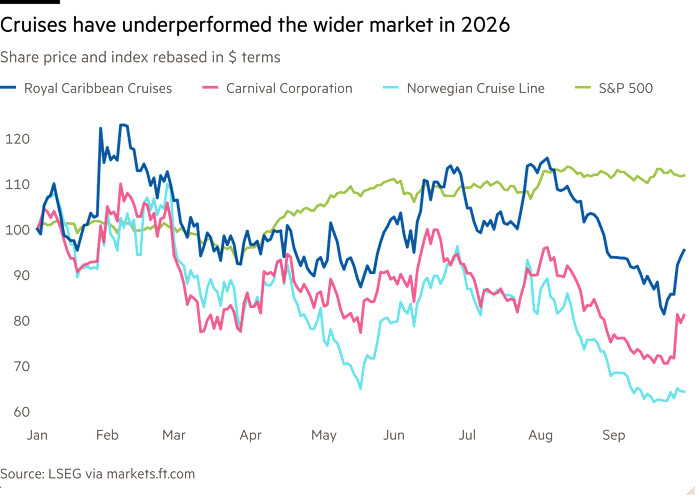
Cruise stocks have underperformed the wider market this year for the first time since the pandemic. Norwegian and Royal Caribbean have both cut growth expectations in earnings updates this year.
Some operators are shifting capacity elsewhere. Carnival said last week it would move ships towards northern Europe in 2027, citing demand for cooler destinations.
Operators are looking to “make up for lower ticket prices by charging more onboard”, according to Bernstein analyst Richard Clarke.
Carnival’s revenues from onboard and other spending rose 6.7 per cent year-on-year to $2.91bn in the three months to August, more than triple the growth rate for ticket sales, which hit $5.53bn.
Cruise lines have historically made about a third of their revenues from onboard spending.