The UK’s oil and gas industry risks being viewed as “uninvestable” if the government does not back two controversial North Sea projects, the chief executive of Norway’s Equinor has warned.
Anders Opedal said he expected both the Rosebank and Jackdaw projects to be approved after they had to reapply for development consent following a landmark court decision on fossil fuel emissions, but said it would be a “major setback” if not.
“We and others will, of course, then ask if the UK is investable,” he said at the Energy Intelligence Forum in London on Tuesday.
“The UK has probably one of the most rigorous approval processes for oil and gasfields in the world and we have done that twice,” he added.
Equinor is developing the two North Sea projects in a joint venture with Shell. Ithaca Energy has a 20 per cent stake in Rosebank.
The projects were both awarded development consent in 2022 and 2023 but these were quashed in early 2025 by the Court of Session in Scotland.
The Scottish court’s decision followed the landmark Finch ruling in the Supreme Court in 2024, which found that authorities needed to consider the carbon dioxide emissions from burning oil and gas, not just drilling for it.
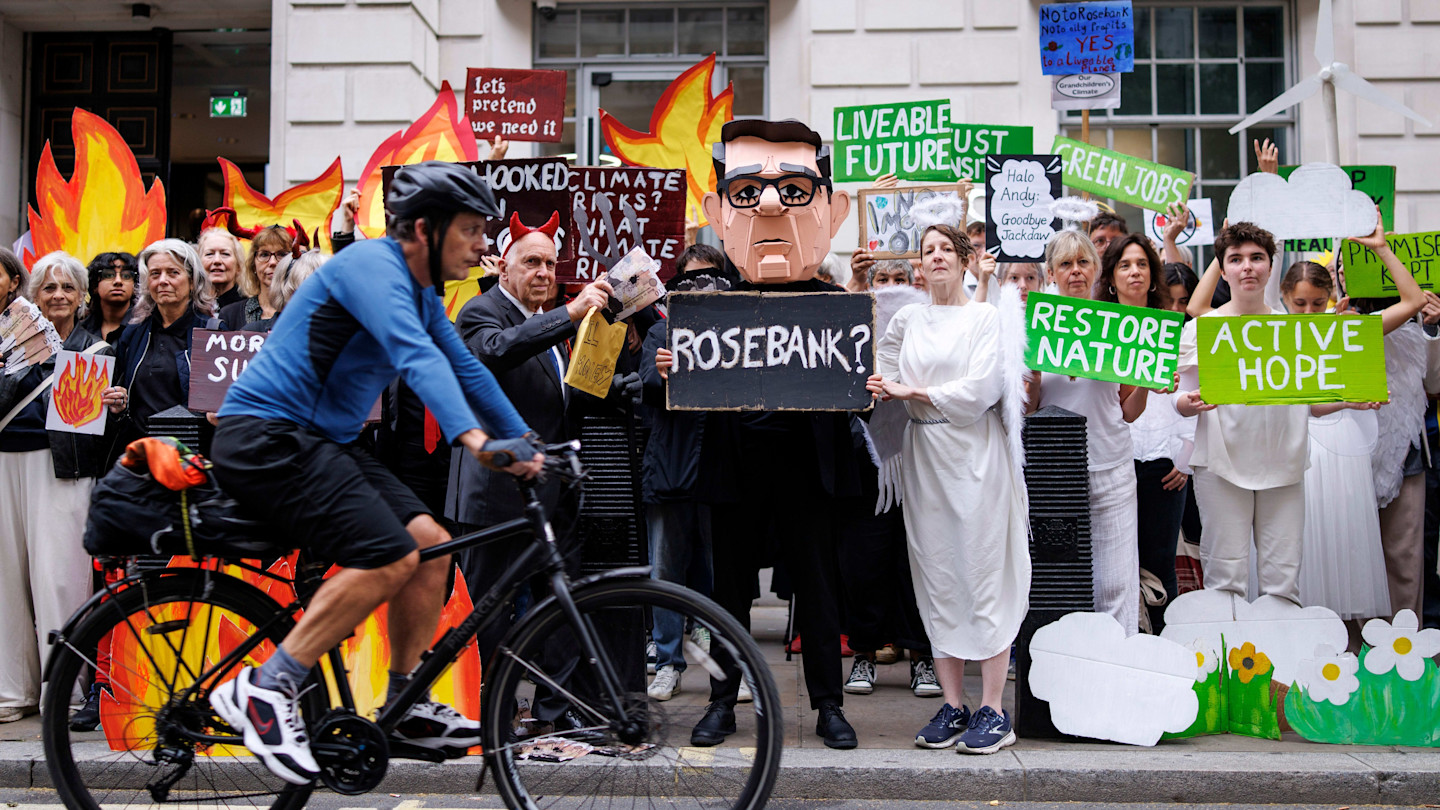
Whether to allow the projects to proceed is seen as a big test for Prime Minister Andy Burnham’s approach towards Britain’s fossil fuel industry and climate policy.
The FT reported last month that the Jackdaw gasfield was set to get the go-ahead this autumn but that it was not clear whether ministers would approve the Rosebank oilfield.
UK energy secretary Miatta Fahnbulleh said last month she was “going through all the evidence” on whether to approve the projects.
A decision on Jackdaw was expected to be announced in September, but it has been pushed back as the Labour Party fights a by-election in London’s Holborn and St Pancras seat, pitting it against the Green Party.
Jackdaw, which is 150 miles east of Aberdeen, could produce gas as soon as this winter, at a time when global gas supplies are constrained owing to the war in Iran, which has disrupted shipping through the Strait of Hormuz.
The UK relies heavily on gas for electricity and heating. It accounted for 35 per cent of the UK’s energy demand in 2025, according to official figures.
Proponents of the Jackdaw project argue that its gas will be much less carbon-intensive than overseas imports, which are transported as liquefied natural gas.
Rosebank oilfield, 80 miles north-west of the Shetland Islands, is a more complicated case for approval as most of the North Sea’s oil is exported because of insufficient domestic refining capacity.
Opedal said that not approving the development of the fields would contradict the Labour Party manifesto and the UK’s need to bolster its energy security, adding that they had been reassured the project would be approved.
In its 2024 manifesto, Labour said it would not issue oil and gas licences to explore new fields, but also that it would not revoke existing licences. The Jackdaw and Rosebank licences were awarded decades ago.
The Department for Energy Security and Net Zero said: “The North Sea remains a vital national asset and oil and gas will continue to play an important role in our energy system for decades to come — alongside transitioning to clean power to protect jobs and tackle the climate crisis.
“Any decision will take into account all relevant evidence, including environmental assessments and public representations received during the consultation process.”