Before setting out for my first day of grape-picking I smothered myself in sun cream and offered the bottle to my Italian partner, Francesco. He glanced pointedly into the inky darkness outside and raised a hand, fingertips gathered in disbelief. A gulp of thick coffee, a bite of ciambellone, and we were off to the vines before the sun could rise.
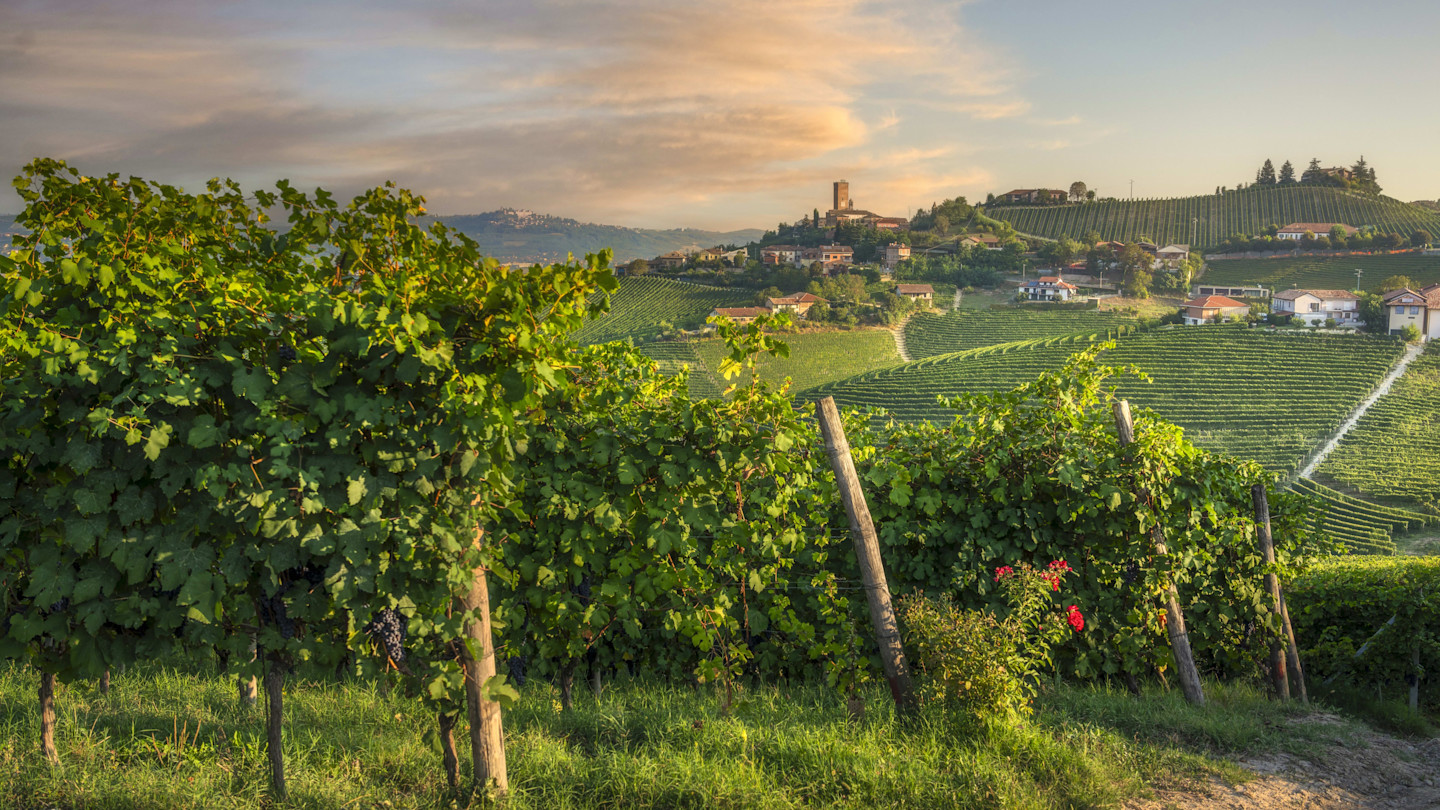
Francesco’s parents’ vineyard sits on a hillside in Agliano Terme, among the folds of the Piedmont countryside in north-west Italy, a region that is known for its red wines.
It was August 30. Francesco’s mother reckoned they were harvesting around a month earlier than most years. I had come on holiday and found myself helping with a harvest I might once have missed altogether.
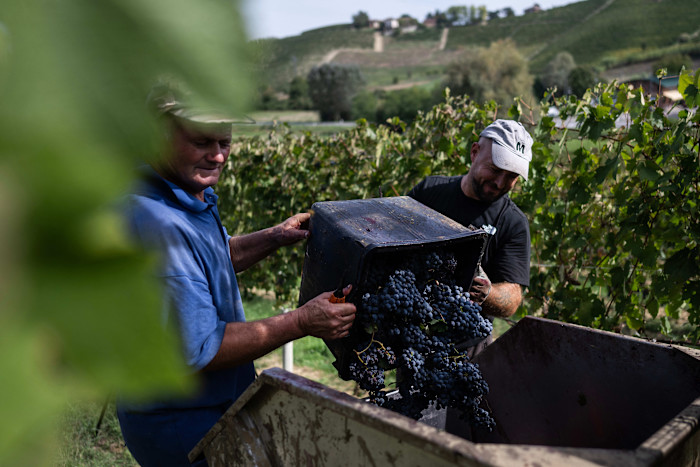
Blue-black bunches hung beneath the tangle of leaves. Here and there, whole bunches had shrivelled in the parching heat. Others had obligingly grown large and juicy at an easy-to-reach height. Smaller clusters nearer the dusty ground required more contortions. Before long, I had grape juice on my face and an ache in my back.
I glanced down the row to check everyone else’s progress. As a farmer’s daughter, I felt I ought to be making a better showing. Francesco, unaware he was in a race, was also losing. His mother, equally unaware, was comfortably winning, her deeply tanned arms darting among the leaves. His nine-year-old niece had switched to the more congenial task of team photographer.
Stefano Pesci, director-general of wine co-operative Terre del Barolo in nearby Castiglione Falletto, remembers harvests beginning in mid-September when he started his career some 20 years ago. Now they are largely finished by late September, he says. “The change was and is very, very fast.”
Although harvests have been creeping earlier for some time, this year’s has been “exceptional”, says Paolo Castelletti of Unione Italiana Vini. “Irrigation was once considered sacrilege when it came to wine quality,” he says. “Today, drought actually reduces quality.”
Extreme heat meant sugars rose and acidity fell, meaning growers had to pick earlier to prevent the fruit becoming too sweet and the resulting wines too alcoholic.
Accounts collected by trade publication Il Corriere Vinicolo put our region’s picking 15 to 25 days ahead of dates familiar in past decades.
Like Francesco’s family, grape pickers across Italy have also been slowed down by dehydrated grapes, which have forced them to pick more slowly and selectively.
The heat is also following the grapes into the cellar. Managing the temperature of the fruit and its fermentation requires cooling equipment and electricity. Pesci says they had to put this year’s Pinot Noir and Chardonnay grapes in the fridge before they were pressed.
There is no such cooling equipment at Francesco’s parents’ little vineyard. They leave the cellar work to their neighbour, who crushes and ferments the grapes and turns their small annual harvest into wine.
Our part was rather less technical. As our buckets filled with grapes, we lugged them down the row to the edge of the neighbour’s vineyard. While I caught my breath, I enviously watched his little tractor chug between the vines, doing the carrying for him and his workers. Grapes themselves, however, still have to be picked by hand.
This presents another problem. In Italy, August is holiday time. “The early start caught people somewhat by surprise,” Castelletti says. An industry already short of labour also faces heat that restricts working hours. Some growers harvest at night where the terrain permits. “Working at 30–35 degrees is extremely difficult.”
I can attest to this. Our early start was not early enough. Leaves that concealed whole bunches of fruit offered little shelter to the people gathering them and the sun caught us long before we finished. Soaked with sweat, some of us retreated for water and coffee. Francesco’s parents, both in their seventies, kept going.
Their efforts paid off. By the end of the day, the last grapes were off the vines. The next time we encounter them will be in a glass.