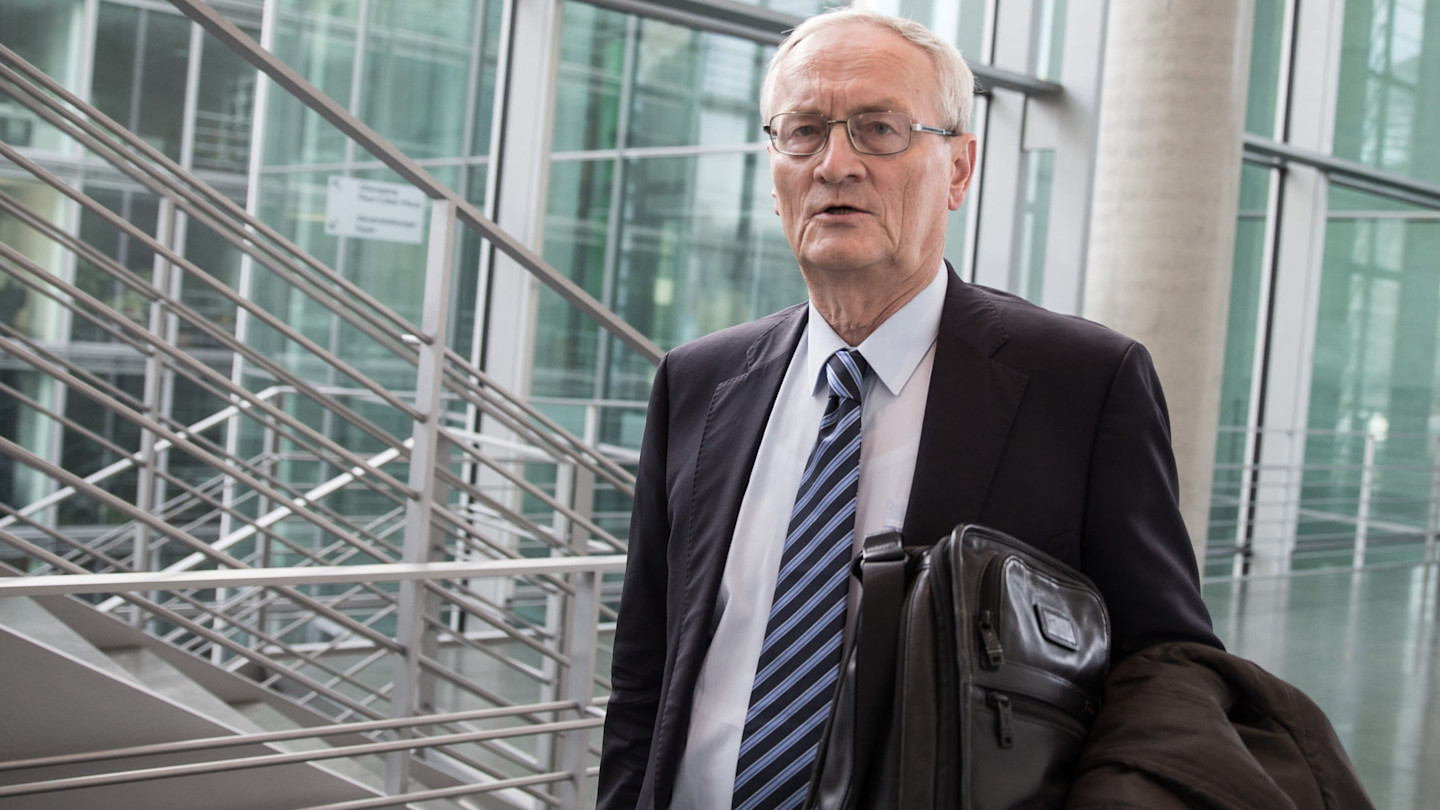
Germany’s former foreign intelligence chief, who was arrested on treason charges, has admitted possessing confidential information but denied paying for it or passing it to foreign powers.
August Hanning’s lawyer, Leon Kruse, on Thursday told the FT that his client was being “wrongfully prosecuted” and that the treason charges were “unfounded”, even as it was “true” that he had been “in possession of confidential documents”.
Hanning, 80, was detained on Tuesday in what appears to be one of the biggest national security breaches in modern German history, judging by information disclosed by prosecutors. The case has sent shockwaves throughout western intelligence services and raised questions over the largely unchecked commercial work former spies do after leaving public office.
Hanning, who retired in 2009 after having served as head of the German foreign intelligence service (BND) and as state secretary in the interior ministry, is accused of having purchased thousands of highly classified documents from a BND official over the past 16 years.
Much of it was compiled for the chancellor and senior ministers only. The arrangement continued up until earlier this year, prosecutors said. Under German law, selling and purchasing state secrets is illegal.
Kruse denied that his client had paid for the intelligence.
“Whilst it is true that he was in possession of confidential documents, the allegation that he passed on information contained therein to the detriment of the Federal Republic of Germany — let alone in return for payment — is unfounded. Further investigations will reveal the truth,” the lawyer said.
German prosecutors have said Hanning, who was arraigned before federal judges on Wednesday in Karlsruhe, had active contact with two foreign intelligence services. They have not specified whether those were from hostile or allied states, but officials familiar with the probe said there was no Russian dimension to the case.
After retiring from public office, Hanning worked as a private consultant for an array of corporate and wealthy clients.
He was a board member of the German-Azerbaijan forum, a lobbying group to promote the interests of Baku. His other clients included businesses, wealthy individuals and politically exposed people in Ukraine, Israel, Austria and Germany, according to the people familiar with the matter.
Hanning was in contact with senior European and US intelligence officials and diplomats on behalf of his clients, people who have received such messages told the FT. It was one such client whose case triggered the investigation against him — the German heiress of a steakhouse restaurateur who allegedly sent a team to Denmark to kidnap her children from their father.

In at least one instance, prosecutors said, Hanning used the secrets he obtained to prepare an analysis for a “foreign intelligence service” that hired him as a consultant. Prosecutors said it was unclear if the analysis, which had been found on Hanning’s personal devices, had ever been sent to its intended recipient.
Citing unnamed sources, Germany’s Der Spiegel magazine on Tuesday evening reported that an Azerbaijani intelligence agent may have been the intended recipient of a report prepared by Hanning containing classified German government information.
In a statement on Wednesday, Azerbaijan’s state media and broadcasting council said: “Information disseminated by a number of foreign media outlets linking Azerbaijan to the ongoing investigation concerning August Hanning . . . is fake and is considered part of an intensive smear campaign.”
Hanning was no stranger to controversy. During his tenure as BND president between 1998 and 2005, the agency spied on German investigative journalists critical of the agency, looking for dirt it could use to discredit them. The activity was exposed in a parliamentary probe and the BND was forced to apologise.
As a consultant for hire, Hanning took on clients from a variety of backgrounds and often contracted his services entirely because of the precarious, sensitive or ambiguous nature of their business or politics.
Many former intelligence officers leverage the contacts and experience taken from their government work in later private careers. Hostile intelligence actors often deliberately target former spies who seek to make money.
The case that ultimately led to Hanning started in Hamburg, where local prosecutors were investigating Christina Block, the heiress to the Block House steak restaurant chain.
According to the Hamburg prosecutor, Hanning helped introduce Block to an Israeli private intelligence firm, Cyber Cupula, which the prosecutor alleges had arranged the kidnapping of two of Block’s children on New Year’s Eve 2023 from her former husband in Denmark.
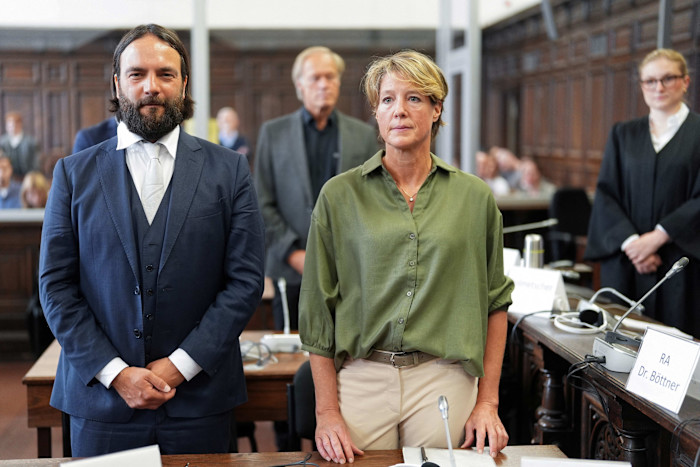
The mission, codenamed “Operation Golden Ice”, was carried out by former Israeli intelligence operatives, the prosecutor said.
Block was charged in April 2025 and went on trial in Hamburg three months later. The trial is still ongoing.
Cyber Cupula has not been charged. German police have detained and charged a former Mossad agent, Tal S, who has been in pre-trial detention for the past two years. Two other Israelis are wanted by German authorities but fled the country before they could be arrested.
Block denies having had knowledge of the kidnapping plot. She has been fighting an unsuccessful custody battle over her children since 2021. Danish courts have so far ruled in her husband’s favour.
The Hamburg court heard that Hanning was paid €100,000 for his services in helping to connect Block to the Israelis. He is alleged to have asked Yaakov Peri, the former head of Israel’s domestic intelligence agency, the Shin Bet, to help assemble a team to help Block.
Hanning’s home was raided by police and his phone was tapped on the orders of Hamburg prosecutors in connection with the case last September. It was during that investigation that classified and recent BND material was discovered. The evidence was passed to the federal prosecutor’s office, which opened the investigation into espionage and treason against Hanning this May.
The espionage case has triggered a fierce political debate in Germany, where parliament is debating a sweeping new intelligence law to govern the activities of the BND.
On Wednesday, leading members of the parliamentary committee overseeing the BND called for changes to the rules governing the commercial work of former spies. The existing rules were not enough, the committee’s chair, Marc Henrichmann, said on Tuesday.