This article is an on-site version of our FirstFT newsletter. Subscribers can sign up to our Asia, Europe/Africa or Americas edition to get the newsletter delivered every weekday morning. Explore all of our newsletters here
Good morning and welcome to FirstFT. In today’s newsletter:
The taxman comes for China’s offshore riches
Ships’ captains paid $100,000 a month to transit Strait of Hormuz
S&P 500 hits record high
Business Book of the Year Award shortlist
From October 22, Chinese authorities will begin collecting a 20 per cent tax on dividends and interest earned from offshore trusts, explicitly targeting the wealthy who shelter their assets overseas.
China’s strongman leader Xi Jinping wants those who benefited the most from China’s economic ascent to increase their contributions back to the state, embarking on what could be the most ambitious global tax hunt in history.
The sudden move announced this summer came as a shock to many of China’s wealthiest people. The shockwaves have been felt in financial, legal and property industries across Asia. Others, including New York bankers, spy an opportunity to shield Chinese customers from their country’s taxman.
The campaign has the potential to help Beijing fill a deepening fiscal hole in the central government’s coffers. Revenue collected by local authorities from land sales has plateaued or fallen, and the central government has been siphoning more funds to provinces in recent years to cover basic services such as education and health and to pay civil servants. It could also bring China’s tax system in line with the US and Europe.
“For China, wealth became international much faster than the tax system did,” says Lizzi Lee, a fellow at the Asia Society Policy Institute’s Center for China Analysis. “Now the tax system is just closing that gap.”
But the campaign also serves Xi’s long-term desire to redistribute wealth in China, tackle inequality and create a more egalitarian society.
It marks a further step along his journey of redrawing the social contract between the business elite who helped propel China’s rise and the ruling Communist Party. Read the full story.
More tax news: Brussels is considering taxing large US tech groups through a broad levy on large corporations in an effort to raise revenues, six officials with knowledge of the discussions told the FT.
Man City: UK tax authorities probed the Premier League football club in 2018 over whether it used complex arrangements to underpay tax.
Here’s what else we’re keeping tabs on today:
Monetary policy: The Federal Reserve publishes the minutes of last month’s rate-setting meeting when the US central bank increased borrowing costs for the first time in three years. Peru’s central bank will announce its latest rate decision.
Economic data: The Fed also releases August consumer credit data. In Latin America, Brazil updates its inflation index for September and publishes September auto sales figures. Argentina issues August industrial output figures.
Trump-Putin talks: Donald Trump said he was scheduled to speak with Vladimir Putin “very soon” about the suspected case of pneumonic plague in Siberia.
Israel commemorates October 7 attack: Memorial events are taking place across Israel to mark three years since the Hamas-led attack on October 7 2023 killed nearly 1,200 people and 251 others were taken hostage.
What is driving the global bond sell-off? Alphaville editor Robin Wigglesworth and senior markets correspondent Ian Smith will answer reader questions in a live Q&A on October 8 at 8am ET. Submit a question here.
Five more top stories
1. SpaceX is seeking to raise $40bn in a financing effort led by Apollo Global Management to buy Nvidia chips. The AI and rocket company is seeking to raise about $10bn in bank loans and $30bn in investment-grade debt to fund its blockbuster chip order, according to people familiar with the matter.
2. Clients of Goldman Sachs’ wealth management division and UK-listed hedge fund Man Group are among the victims of a major data breach at Big Four accounting firm EY, according to notifications sent out in recent weeks. The disclosures widen the circle of victims of a hacking incident in March and April that the accounting firm first disclosed in July.
3. Oil tanker captains in the Gulf are being paid rates equivalent to $100,000 a month for travelling through the Strait of Hormuz, along with a $50,000 bonus for each trip, as Iran steps up its assaults on vessels. Shipowners were offering the bumper “danger money” to persuade seafarers to stay on vessels as Gulf countries try to keep crude flowing through the waterway.
US fuel tax suspension: Donald Trump is considering suspending the federal tax on petrol as the White House races to tackle a fuel price crisis ahead of November’s midterm elections.
4. HSBC is planning sweeping job cuts in its UK wealth management business as part of a push to use AI to help serve clients. People familiar with the plans said about half the management and specialist roles are expected to go, while the reduction in the ranks of financial advisers will be closer to 70 per cent.
Lex: AI agents could cost banks $500bn — by winning savers better rates (premium subscribers only)
5. Frasers Group, the UK retailer controlled by tycoon Mike Ashley, has built an almost 10 per cent stake in struggling US sportswear maker Under Armour. The retail group last month raised its stake in Hugo Boss to 48 per cent and acquired UK department store Harvey Nichols earlier this year.
The FT’s stockpicking game returns this week. FT subscribers can register for season two by going to stockpickinggame.ft.com and compete for the £1,000 prize.
What comes next with the energy shock?

The Iran war is now in its eighth month, with no end in sight, yet the disruption to oil supply and prices as well as the world economy has been surprisingly manageable. But that cannot be taken for granted, writes Martin Wolf.
We’re also reading . . .
Jim Clyburn interview: Black voters should not be “fooled” a second time by Donald Trump, the Democratic Party power broker told the FT.
California’s wealth tax vote: America’s future will be deeply affected by the result of the “Prop 40” vote, argues Edward Luce.
German spy scandal: Yesterday’s arrest of a former chief of Germany’s intelligence service has shocked allies.
Tribology: The science of how surfaces move against each other plays a central role in making industry run more smoothly, writes Anjana Ahuja.
Chart of the day
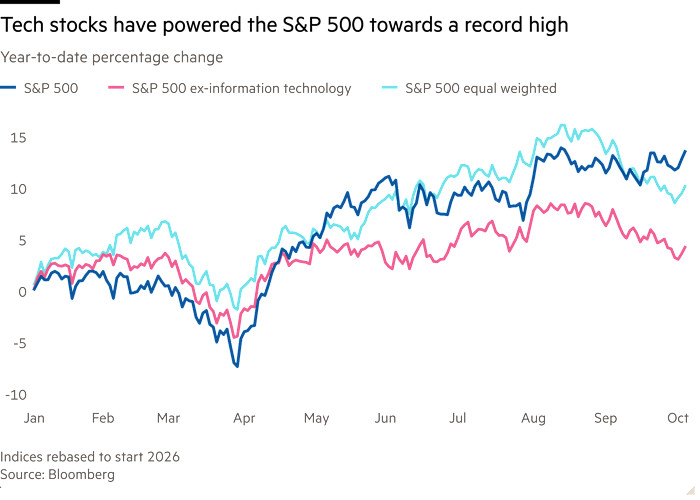
The S&P 500 closed at a record high yesterday as expectations of bumper earnings among AI-related companies helped stocks shrug off a brutal sell-off in government bonds. Investors and analysts said the rally was being powered by expectations of a stellar third-quarter earnings season for corporate America. George Steer and Ramsay Hodgson have written an earnings season preview.
Take a break from the news . . .
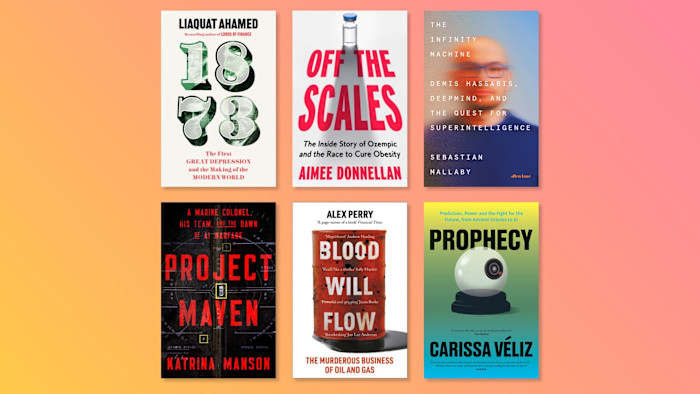
Contenders for this year’s FT and Standard Chartered Business Book of the Year Award include titles on weight-loss drugs, forecasting and energy exploration, but the profound disruptive challenges posed by AI dominate the shortlist. Here are the six finalists.
You can also listen to today’s top news stories in the FT News Briefing podcast.
Thank you for reading and remember you can add FirstFT to myFT. You can also elect to receive a FirstFT push notification every morning on the app. Send your recommendations and feedback to [email protected]
Recommended newsletters for you
The State of AI — A series of conversations between the FT and MIT Technology Review on the geopolitics of tech. Sign up here