Glassblowing is hot right now. TikTok is awash with #oddlysatisfying clips of people wrangling molten sand. The craft’s mesmerising mix of repetitive movements and just-one-slip jeopardy has even produced a Netflix reality show, Blown Away, a sleeper hit that’s now in its fourth season.
It’s one thing to watch glassblowing from the comfort of your sofa. It’s quite another to do it yourself – something I discovered recently when I signed up for a blow-your-own glass workshop at Gather in Woolwich, south-east London.
The UK used to be a glassblowing powerhouse. In the 19th century, Stourbridge in the West Midlands rivalled Murano and Bohemia for fine glass. But the advent of automation and price competition from overseas eventually chipped away at its dominance. Training opportunities have since declined dramatically, with Sunderland’s National Glass Centre, closed in June, being the latest casualty.
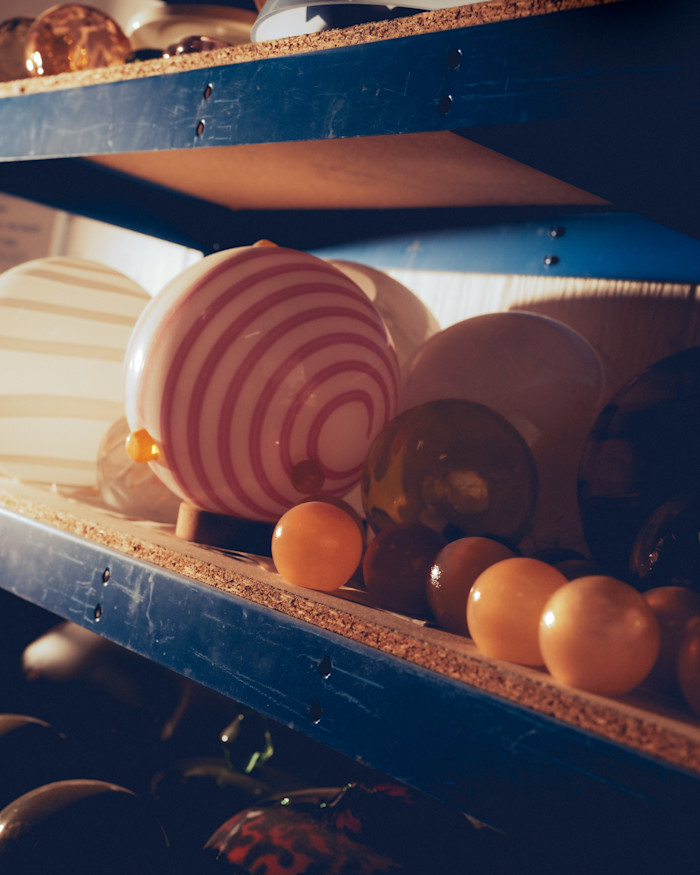
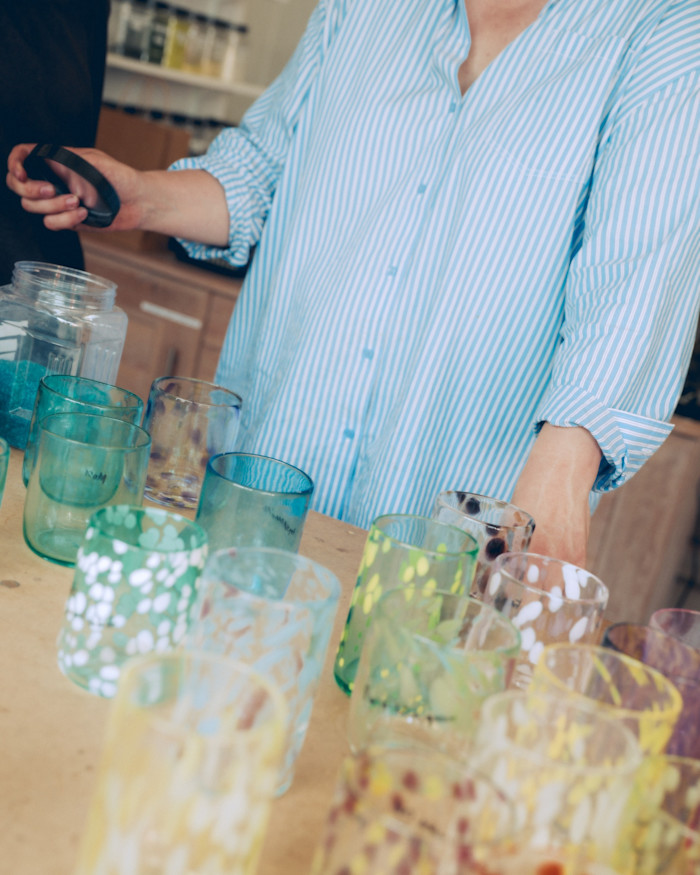
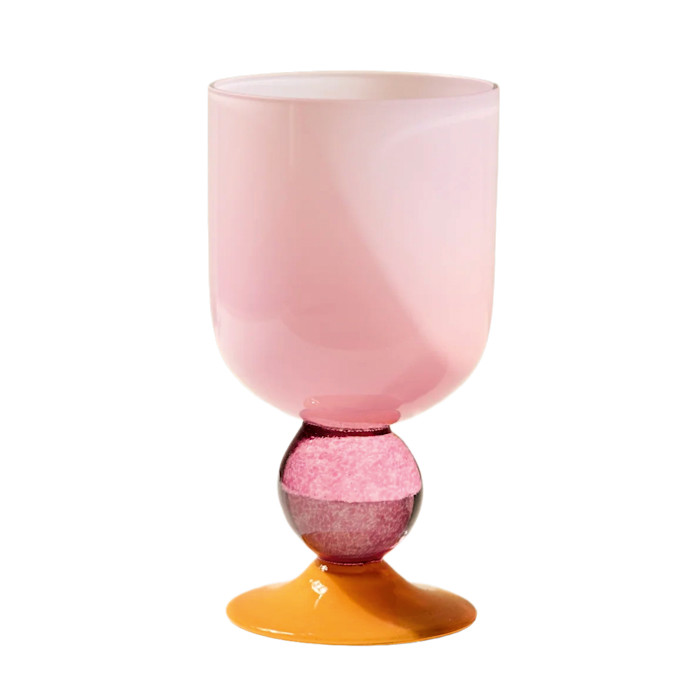
Gather glass studio has been keeping the flame alive since 2020. Its joyful, candy-coloured wares can be found in Selfridges, Bergdorf Goodman and online interiors boutique Abask. Pieces are often sold in mismatched collections that Gather founder Phoebe Stubbs calls “kaleidoscopes for the table”. Gather’s goods may be fragile, but the workshop itself is a sensory assault: a power clash of colour, hot metal, steam, glass and fire. On entering the industrial unit, I’m greeted by a wall of fearsome tools – long-bladed tongs, metal claws and snaggle-toothed shears. In sweet counterpoint to these instruments of torture are shelves and tables stacked with rainbow drinking vessels, lampshades, paperweights and vases that glisten, dapple and swirl.
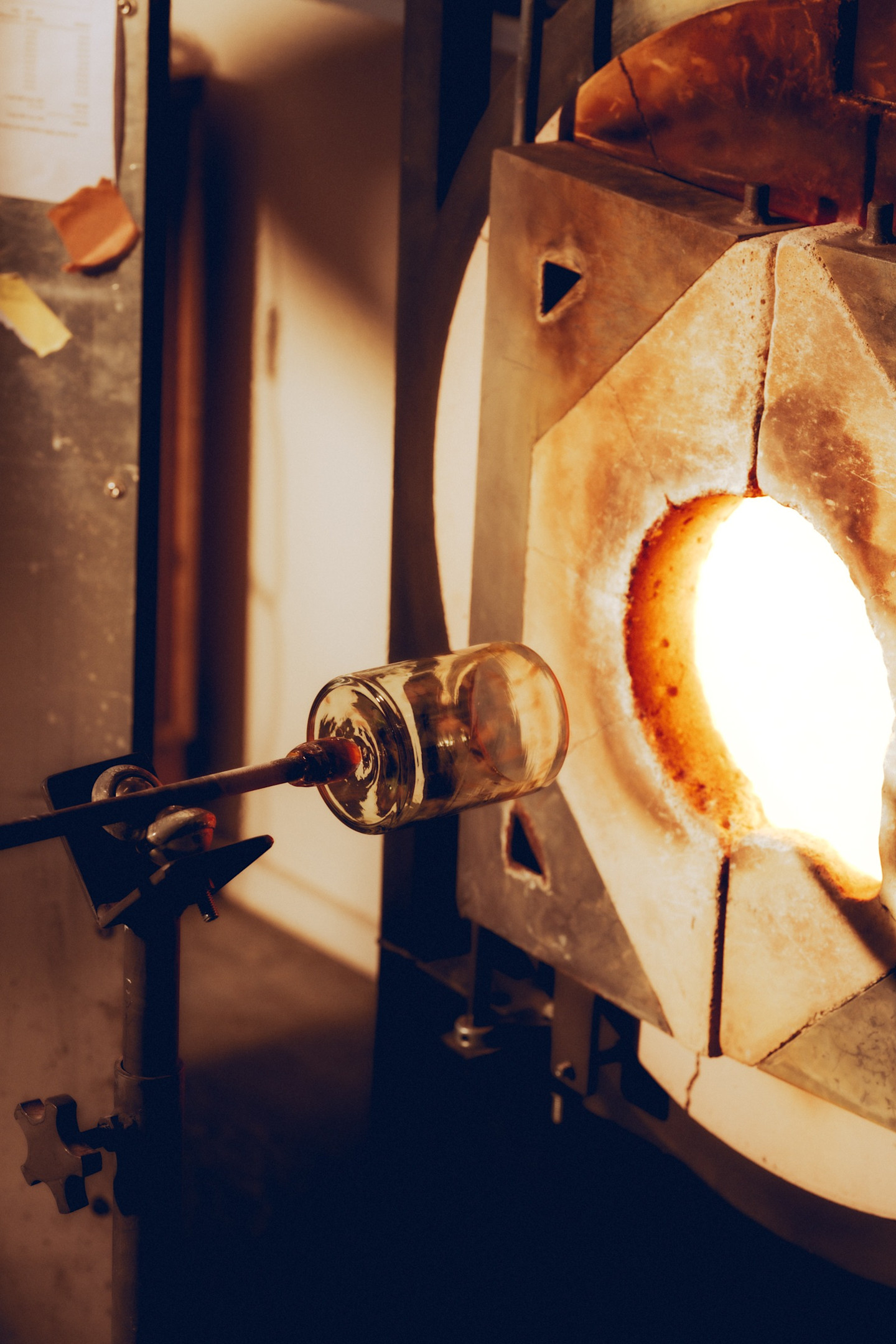
Further back, in the “hot shop”, two furnaces blaze at almost 1,200C. Stubbs swings open the door on the “glory hole”, where the glass is heated, releasing a blast of heat that almost melts the mascara on my eyelashes. “When you’re a beginner, you’re doing an awful lot of work to resist your fight or flight impulses,” laughs Stubbs, when she sees me flinch. “Whereas now we’re so used to it, things can crack or explode and it barely registers.”
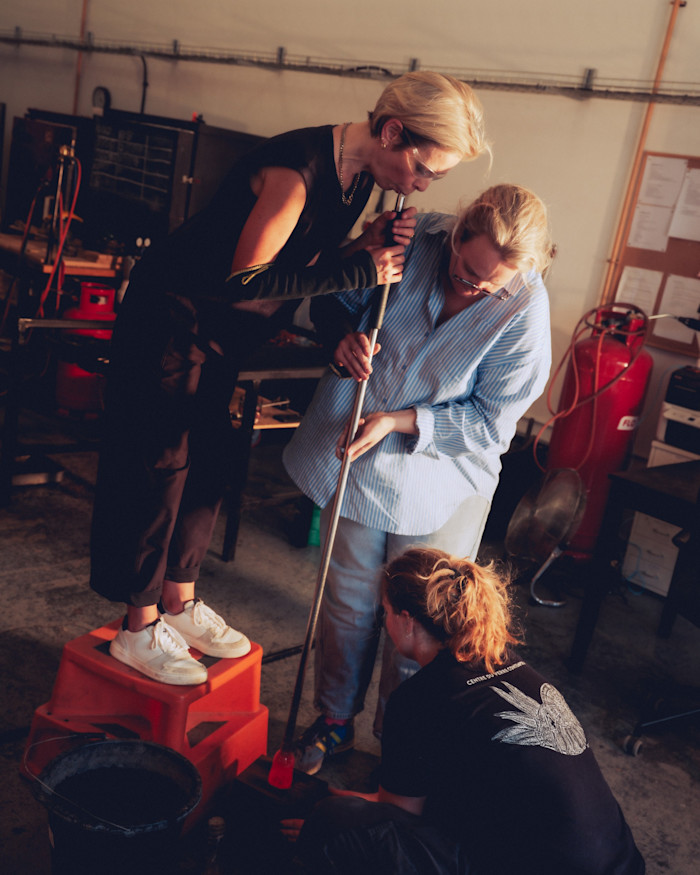
My mission today is to blow the simplest of tumblers – but even that is remarkably complex, requiring two people (or three, in my case) and all manner of dipping, rolling, shaping and blowing to coax it into shape. First, I choose the colour: a limpid blue-green with pale, smoky flecks. Stubbs then performs a trial run so I can familiarise myself with the process. Once we’re underway for real, there won’t be any time to stop. “The glass is constantly running away with itself,” she explains. “You’ve got to keep turning it to fight gravity, and also reheat it so it doesn’t get too cold and crack. We’re using hand tools – you can’t touch [the glass] because it’s more than 1,000°C.”
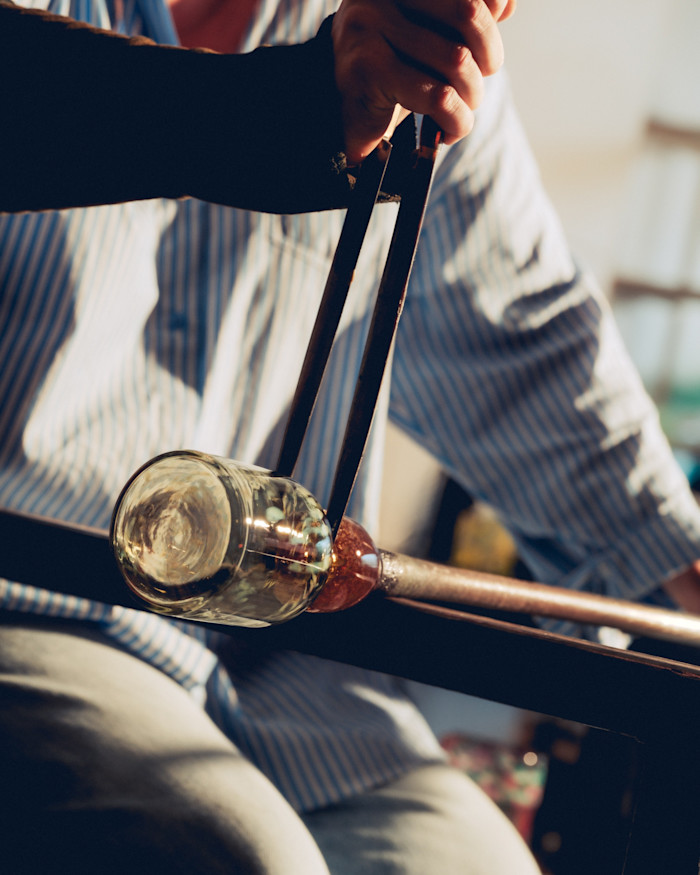
Demo over, Stubbs’s apprentice “gathers” a second blob of molten glass on the end of an iron pipe and places it in my hands. “That ‘gathering’ of the glass is the foundational move of every piece,” says Stubbs. “But we’re also called Gather because of the collaborative nature of the process. And I love entertaining – gathering people together around a table.”
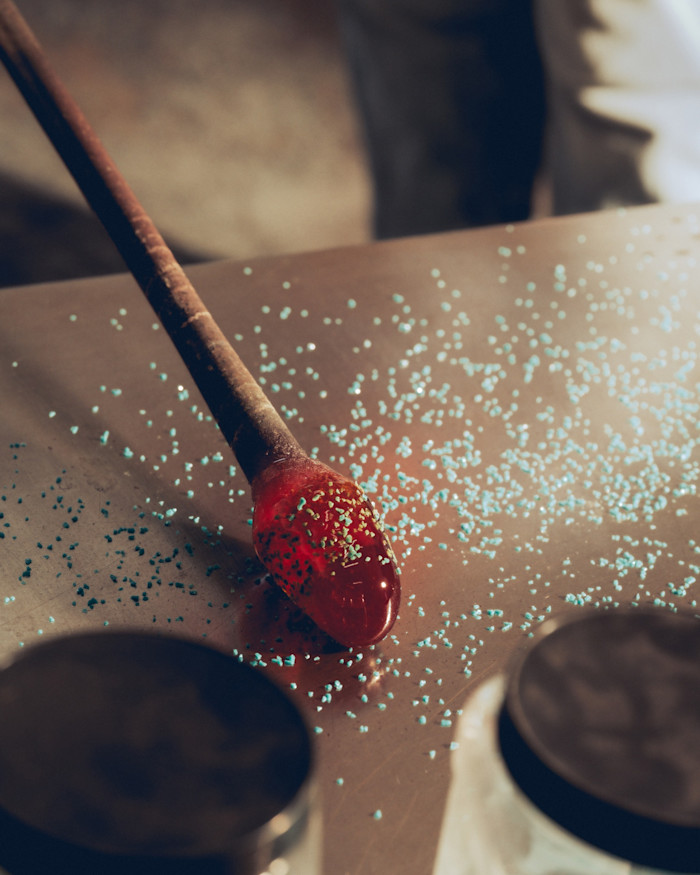
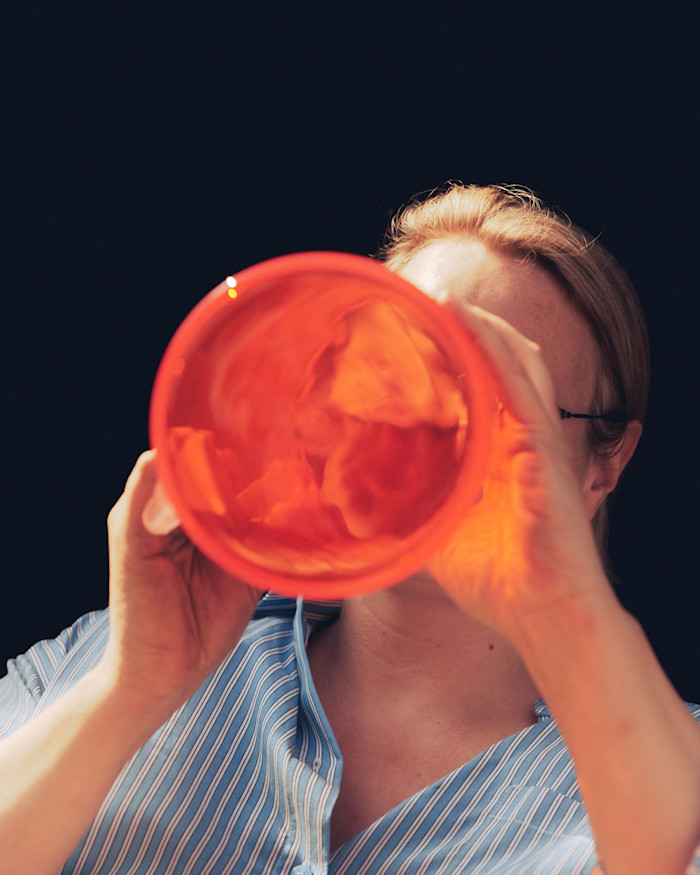
From here, things move quickly. The atmosphere is calm but ultra-focused, with the pair working so intuitively they barely require words. Stubbs shows me how to coat the molten glass in a layer of blue-green and add the textured flecks, before shaping and smoothing the red-hot liquid in a wooden mould that I have to repeatedly cool with a bucket of water with one hand, while keeping the iron rod turning in the other. I then climb up on a stool to blow the glass into a wooden mould below. All the while, the glass must be kept turning and returned to the glory hole to keep it hot.
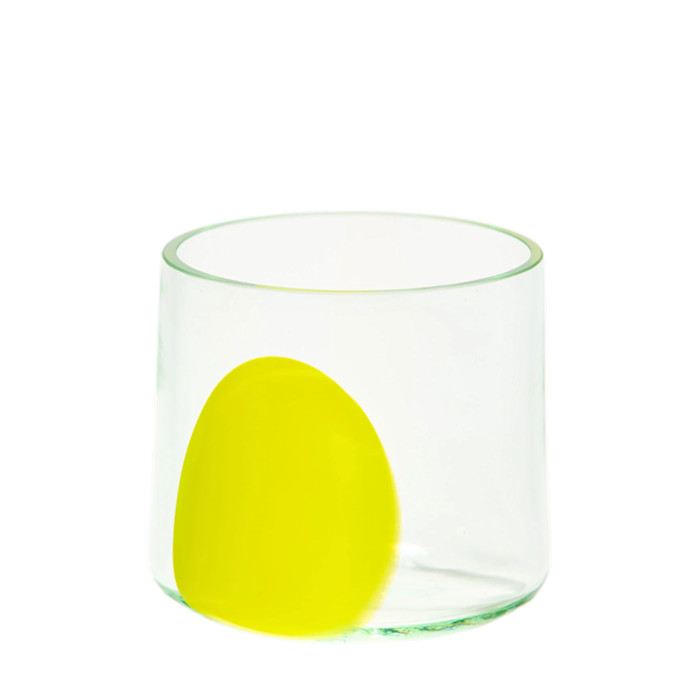
Once blown, the glass is neatly snapped off from the original pipe so we can work on the mouth. There’s a moment, as I’m teasing its lips open with tongs, that it threatens to develop an unsightly flare, but Stubbs pulls it back. “Glassblowing is a relentless failure for many years before you get it. It really attracts people who don’t mind the endless repetitions,” she says. “Everybody’s got to be concentrating and absolutely in the flow of it at the same time.” The finished glass is placed in an “annealing” kiln to cool down gradually overnight. After that it will be ground and polished by hand.
A week later, a parcel containing my handiwork arrives at my house. I absolutely adore it – even more so for its very slight bulge.