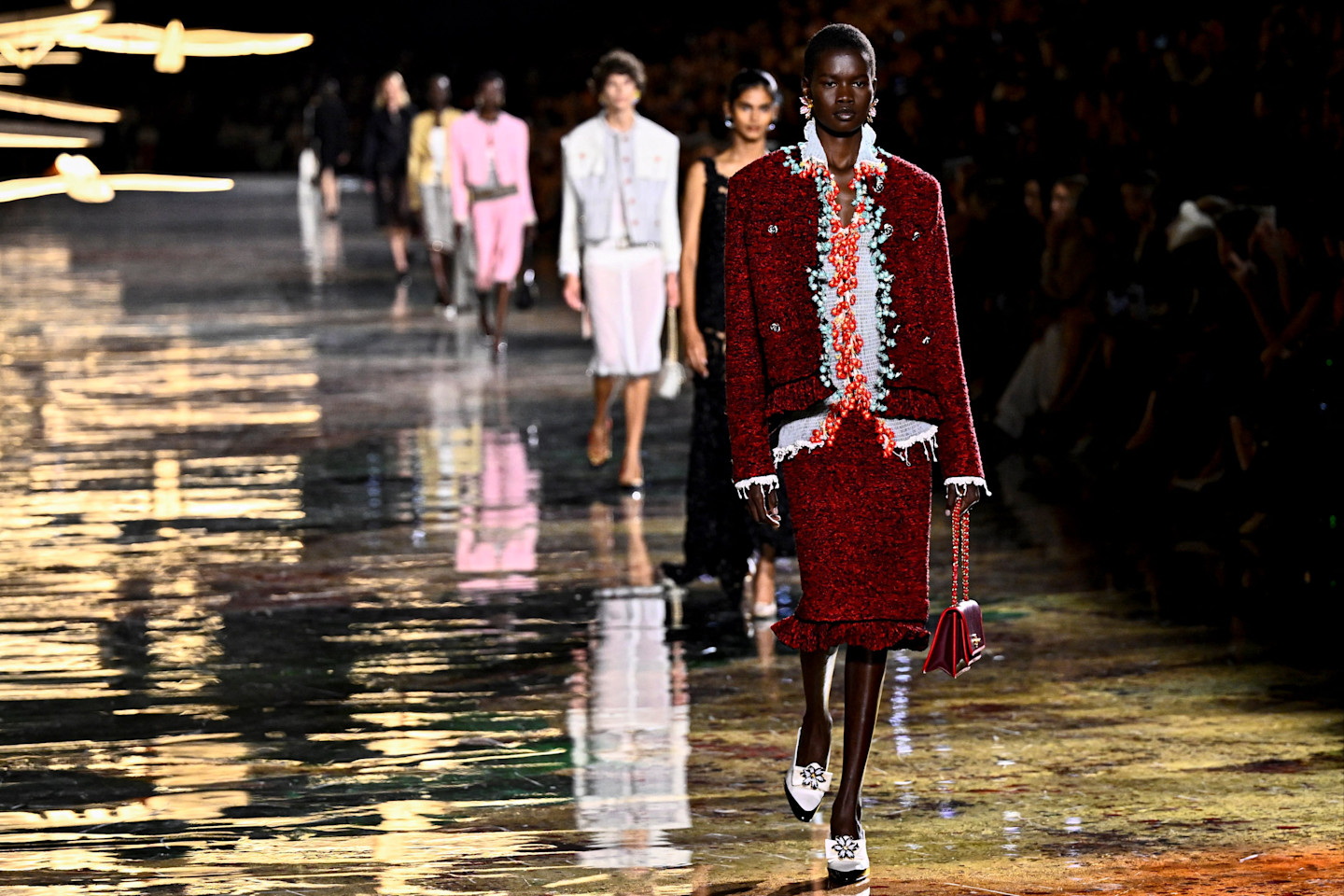
Matthieu Blazy and Chanel are the envy of the entire luxury industry. Amid the dozens of designers who made debuts at a new house last year, only Blazy has triggered a wild global sales frenzy, one yet to be fully reflected in Chanel’s financial results (it reported $19.3bn in sales in 2025). His creative influence — boxier cropped tailoring, fluid tweeds and square-toed shoes — can now be seen on runways everywhere, and expectations from the front row to the street around what Chanel might do next are enormous. God knows what it feels like to Blazy himself.
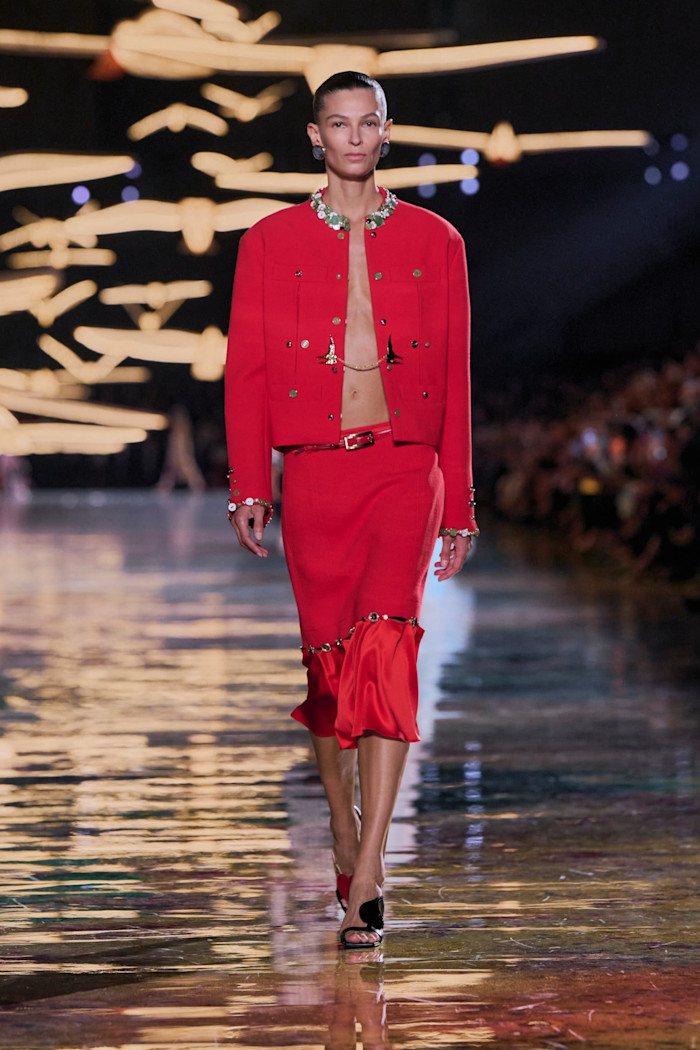
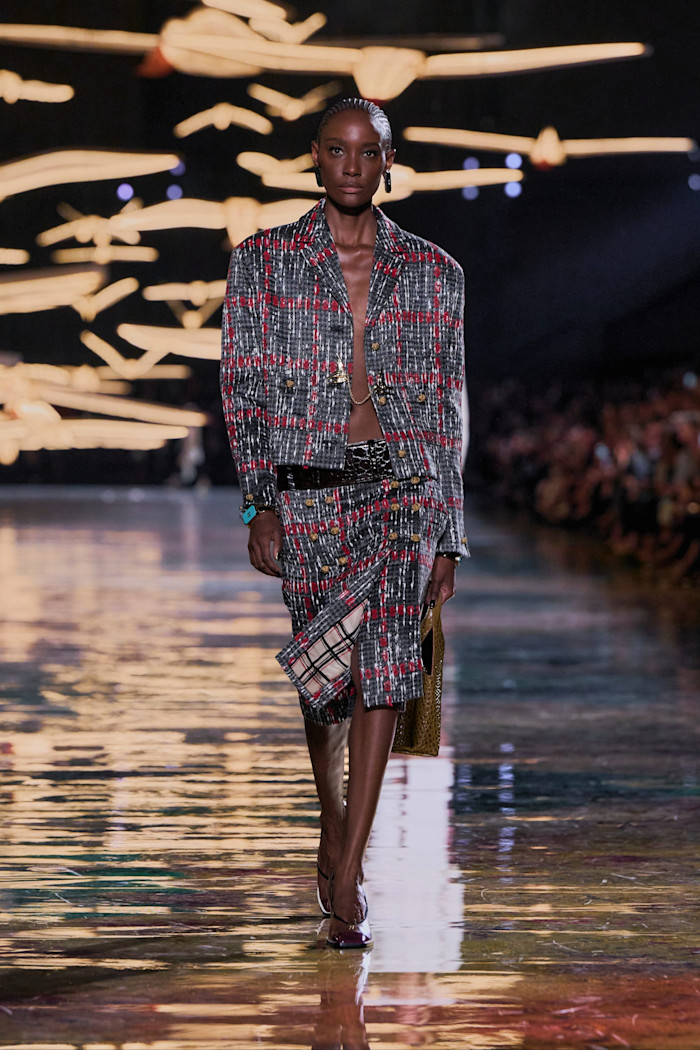
And so to Monday night, where his next collection took flight at the Grand Palais. Overhead, dozens of white paper birds hung from the vast glass ceiling, while the marbled floor in green and brown gave the effect of land and sea seen from the air. Backstage, Blazy explained how he had wanted to move away from being inspired by different women this season. Rather, he wanted to explore multitudes contained within one woman: a girl called Gabrielle who later became Coco Chanel. Behind him stood a mood board, plastered with black and white photos of Chanel from all stages of her life.
So what did this mean for the clothes? One model, Dyanira Hurbuscher, opened and closed the show carrying Chanel’s own 2.55 bag. She began in a fine sheer white slip, with a corsage on the heart, and ended in what looked like a chic and classic black Chanel bouclé skirt suit with round gold buttons. In fact, this was not tweed, but a brand-new material with the stretch and comfort of sportswear, developed by specialists in-house.
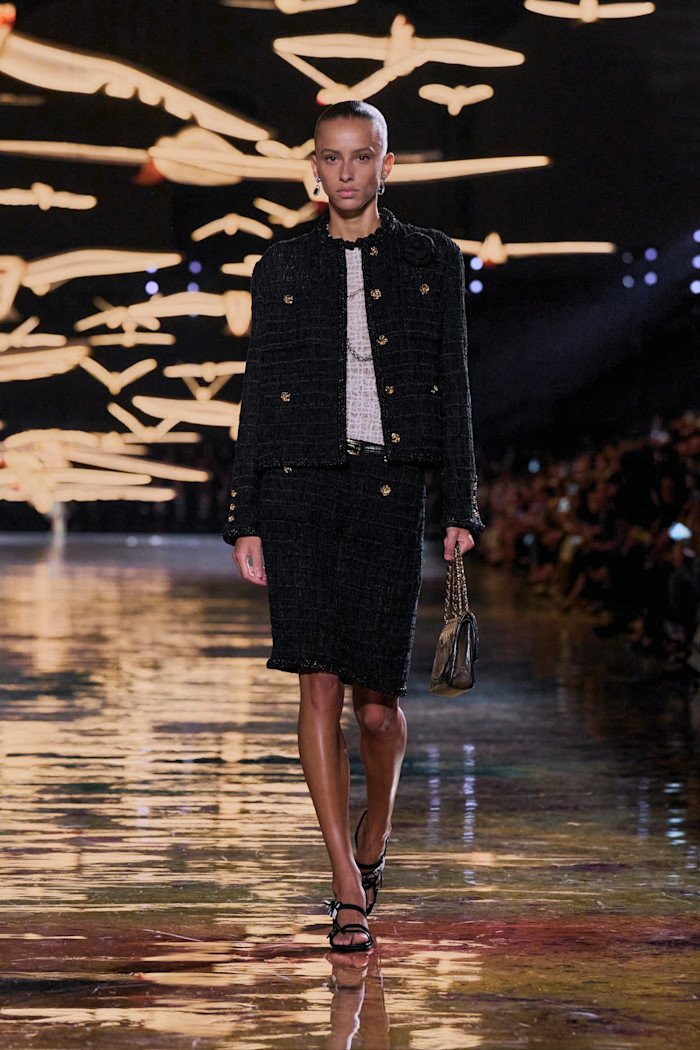
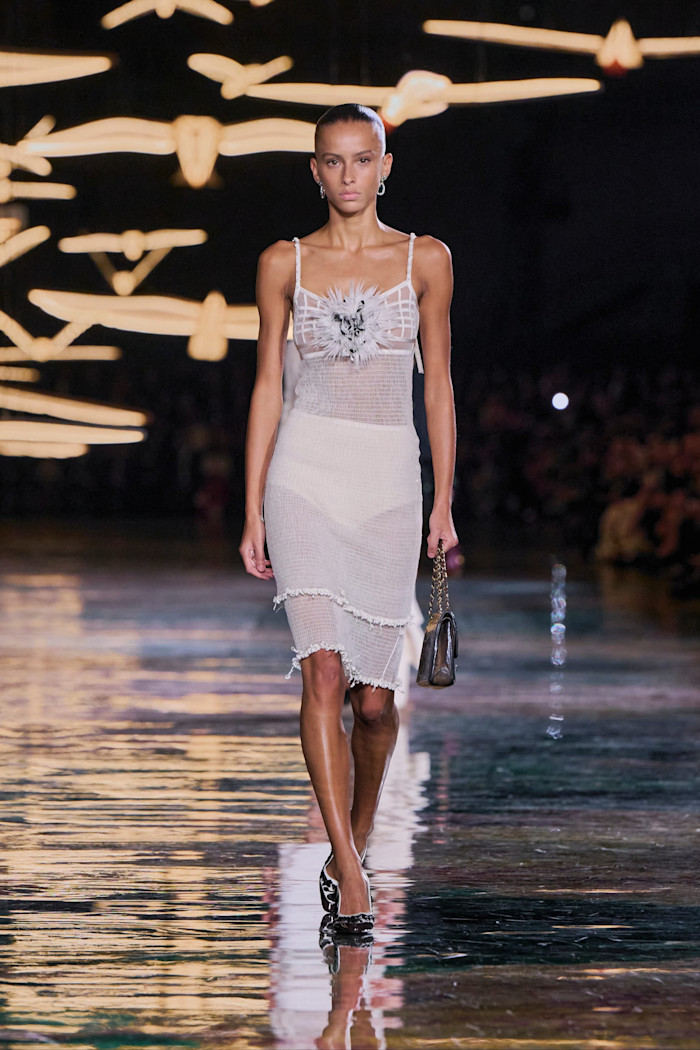
That innovative new fabric (and there were several others) was a hat tip to the fact that despite his recent success, Blazy does not want to stand still. His silhouettes felt more form-fitting this season, with a lower waistline to skirts that largely came belted and with a lot of sexy transparency. The variety in colour and texture of fabrics was rich (there were a lot of smocked tweeds), prints felt bolder and more maximalist (animal and flame prints came in clashing shades) while many jackets were worn straight on to the skin, held together with a fine gold chain and offering fleeting glances of bare flesh.
It felt fresh, joyful and full of a momentum that left guests excited about what might come next. And what did Blazy make of all he has achieved, one year on? “It’s been a good start,” he said with an understated grin.
Here are some other takeaways from the biggest and best shows of the week as the season came to a close.
Celine
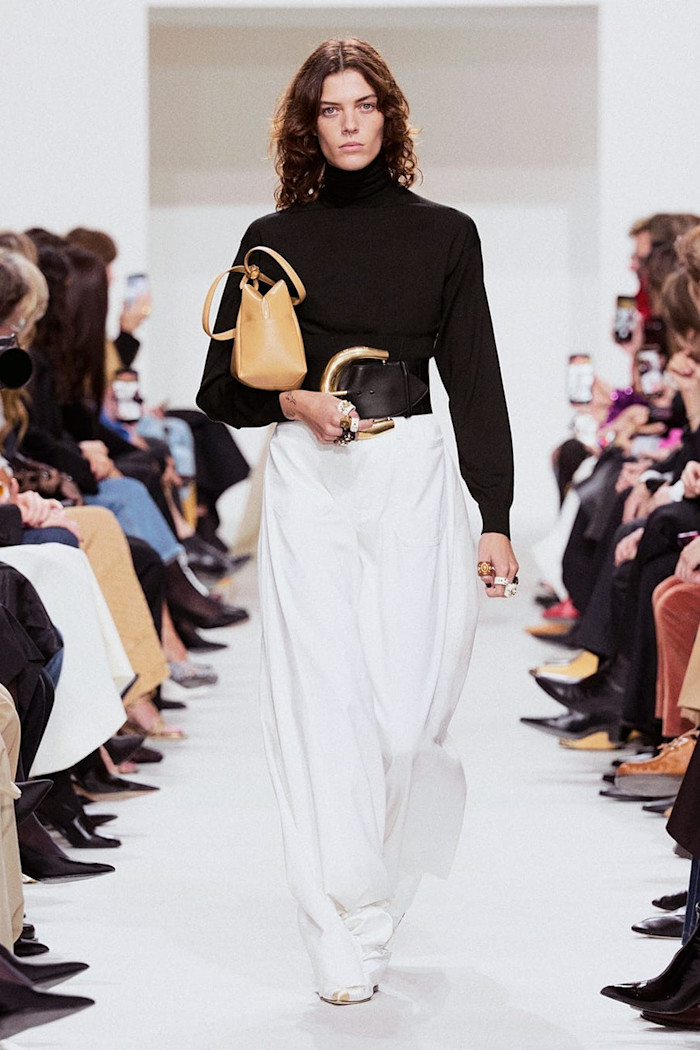
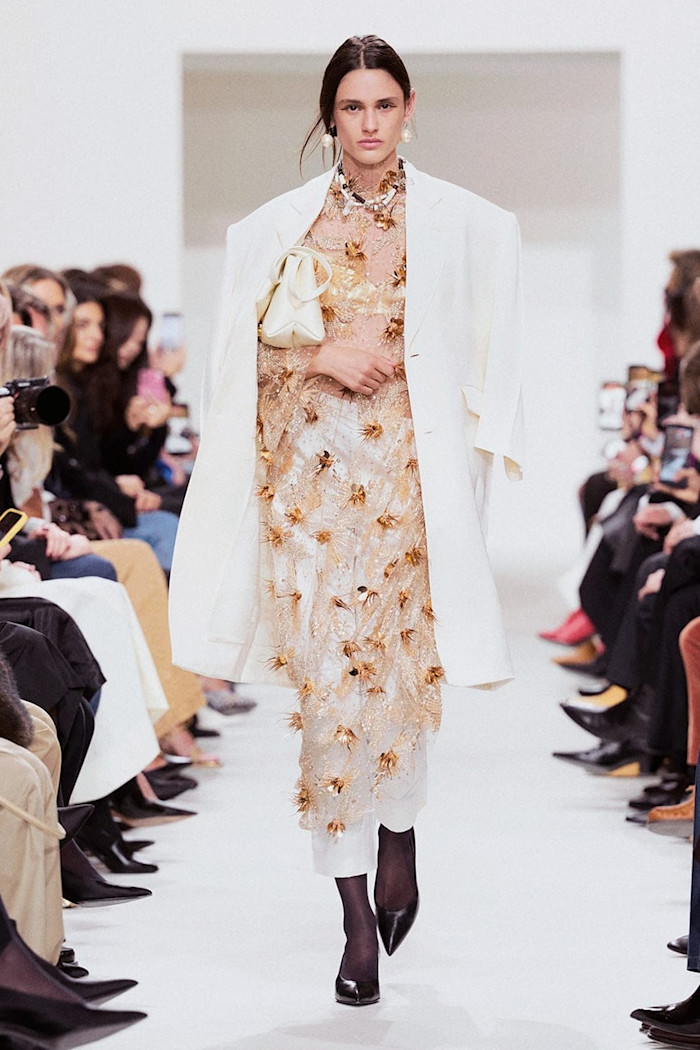
Michael Rider once told me he disliked giving backstage interviews about his Celine collections, adding: “I want the clothes to speak for themselves.” Luckily, unlike some peers in Paris, his clothes don’t need decoding. Rider designs clever and desirable clothes that feel elevated but also completely rooted in real life. His latest collection, shown in the sun-dappled gardens of the Archives Nationales, had roots in Parisian bourgeois codes like sharply tailored blazers and coats, big buckled belts, scarves and satin flourishes. But also thrown into the mix were more rumpled bohemian flourishes including fine gold chains, patchwork print balloon pants and scuffed sneakers.
Every look danced between an effortlessness and elegance that isn’t fully captured in pictures. They also had character, something Rider alluded to backstage post-show. “I tend to find personality in the least-produced moment, which is important to me,” Rider said amid the scrum. “I don’t want Celine now to be about artifice — nothing should be too beautiful. But I do want it to be confident, reassuring and occasionally surprising.” His vision for this brand is all of these things, and more.
Miu Miu
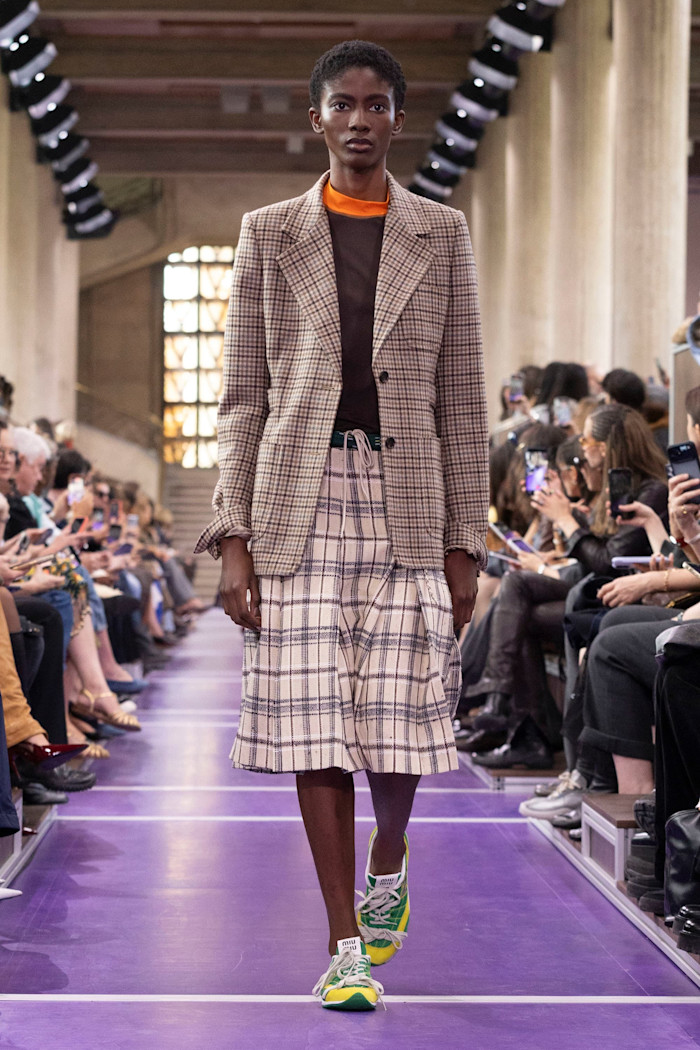
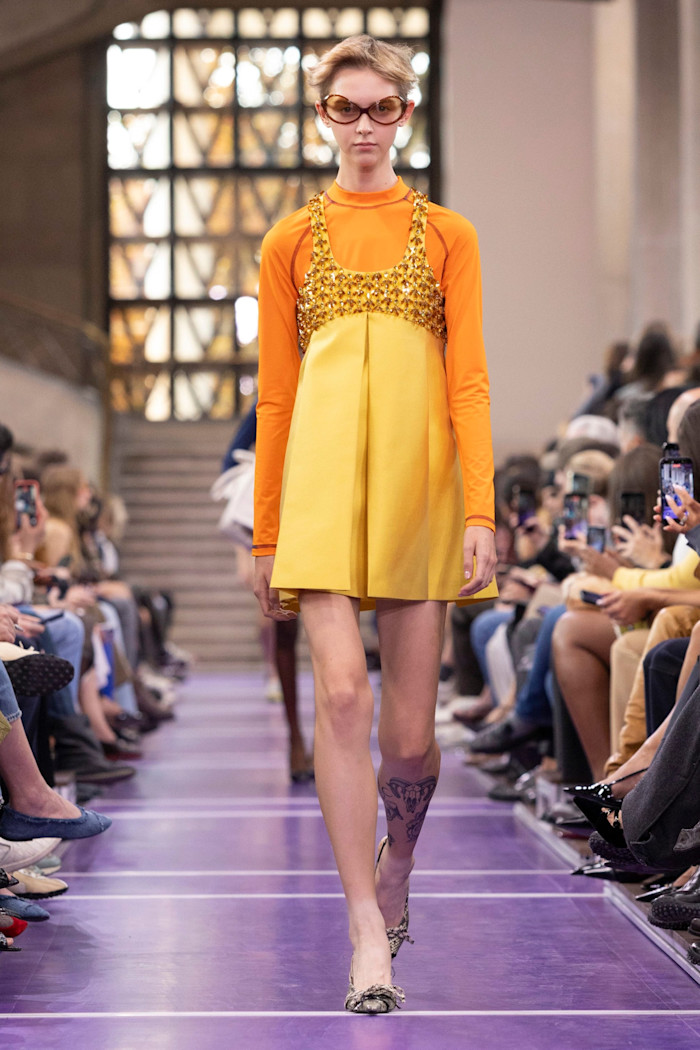
The Miu Miu floor was a big old fashion scene; I tiptoed over several influencers spreadeagled on the bright purple floor for pre-show shots, while actors including Olivia Colman, Jamie Bell and Emma Corrin strode down the runway sporting pieces from the latest collection. But Miuccia Prada, as she so often is, was actually preoccupied with the quotidian parts of a wardrobe. Her opening looks brought to mind busy women rushing down the street; neatly pleated checked skirts and sharply cut blazers mixed with sports tops and trainers (a new collaboration with New Balance). Preppy sweaters came with printed running shorts or track pants with white lacing peeping over the waistband, before a turn to eveningwear, most of which revolved around crystal-encrusted racer-back bra tops layered over everyday items but mainly sportswear. It was, in truth, a bit of a jumble — nor did it rewrite the rule book. But it was rather fun.
Givenchy
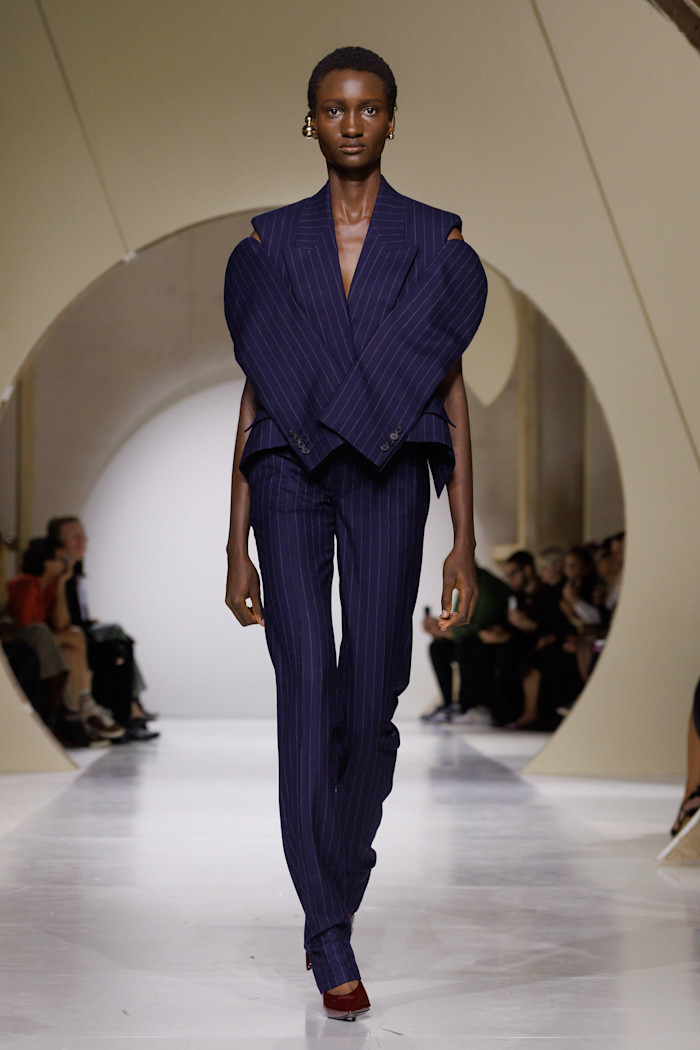
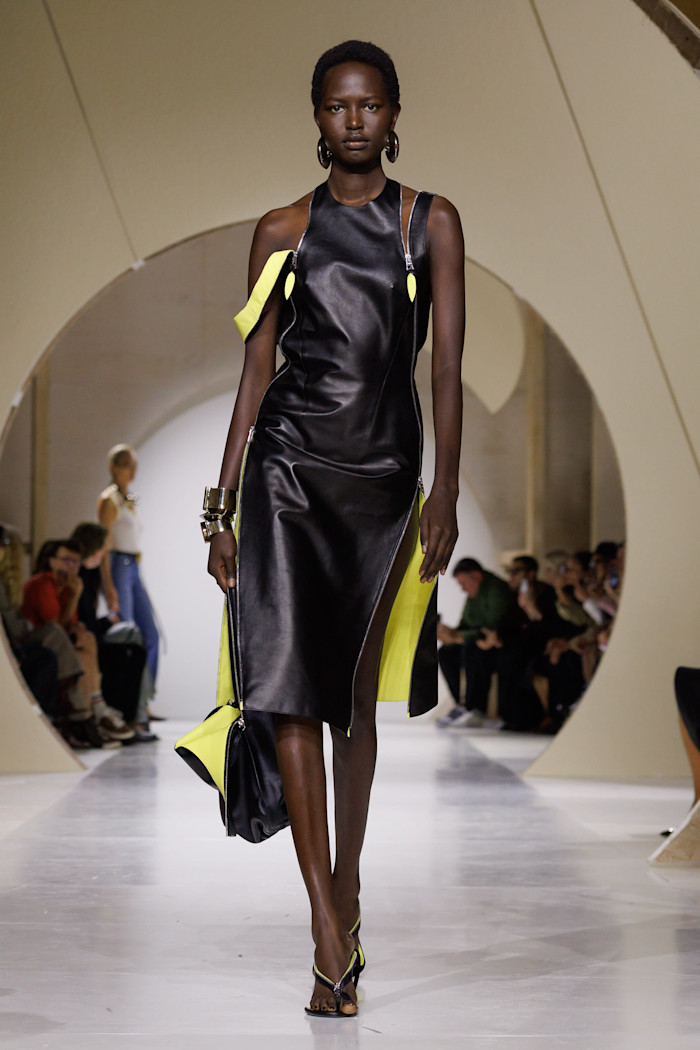
One of Sarah Burton’s greatest strengths as a designer is that you never doubt she has women in mind. And in her latest collection for Givenchy, one sensed that she was aiming to create an empowering sense of control for wearers of her clothes. A yellow-lined black leather halter dress with zips, allowing a woman to decide how much flesh to show, masculine suiting deconstructed and softened, with cutaways at the hips to reveal skin, and practical peplum pockets, all hit the mark. “I wanted a sense of balance and clarity. A wardrobe to bring precision and simplicity to dressing as we speed through the multiple perspectives and perpetual motion of all our lives,” said Burton in her show notes. This intention felt less convincing, however, with looks like a pinstripe blazer with the arms cut off and criss-crossed over the chest, or trousers where waistbands were extended to create fussy folded ruffles on the hips. Sometimes, less is more.
Junya Watanabe
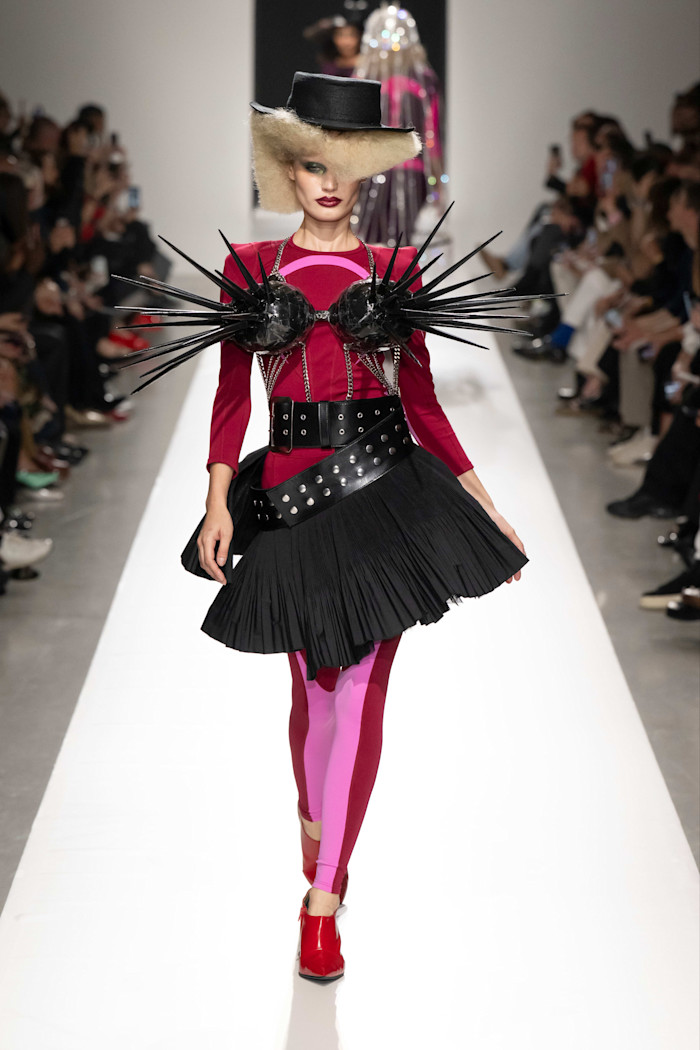
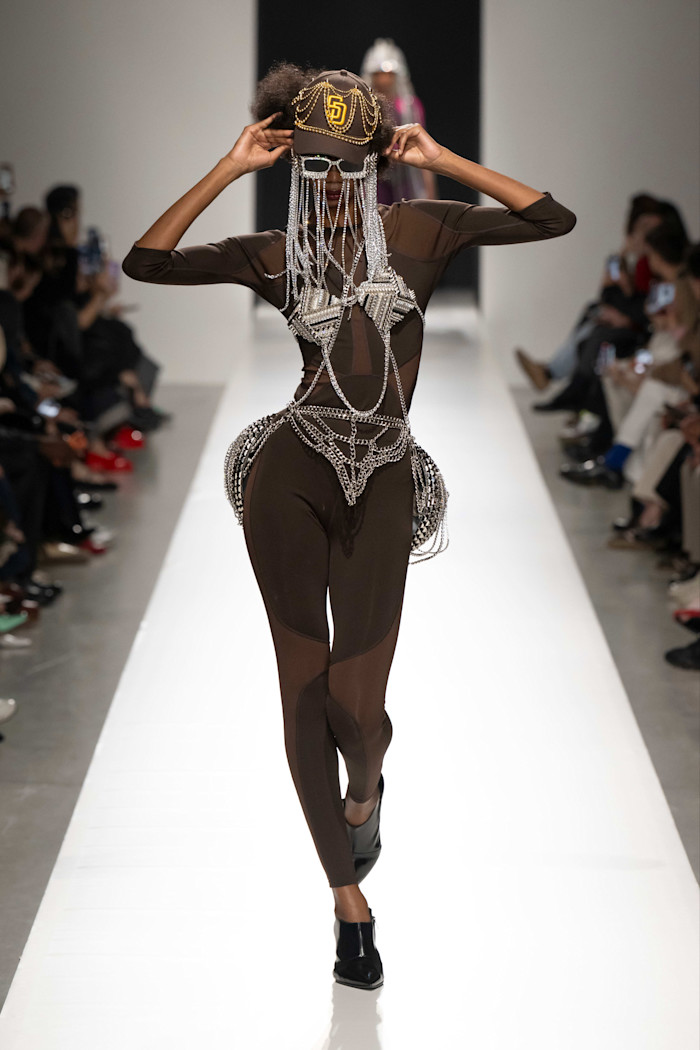
It was the Saturday morning of Paris Fashion Week and Junya Watanabe’s show, titled “Funky”, was a welcome shot in the arm. Crammed on to benches in the belly of Palais de Tokyo, onlookers watched models sashay down the runway to “Like Sugar” by Chaka Khan. They wore printed skin-tight catsuits, base layers for looks including a diamanté bra-pants-sunglasses all-in-one combo, a PVC belt and bra look with spikes that could take your eyes out, chainmail dresses made out of electronic waste and a chandelier headpiece that cascaded from the head to the knees. Was it mad? Of course it was. But in a jittery moment for fashion where so many play it safe, there was also a delight in imperfection and the avant-garde. As both the models and the audience whooped with delight, it felt like a fleeting glimpse of what fashion shows used to be like, before phones, before entertainment complex hype and before billion-dollar parent groups.
Hermès
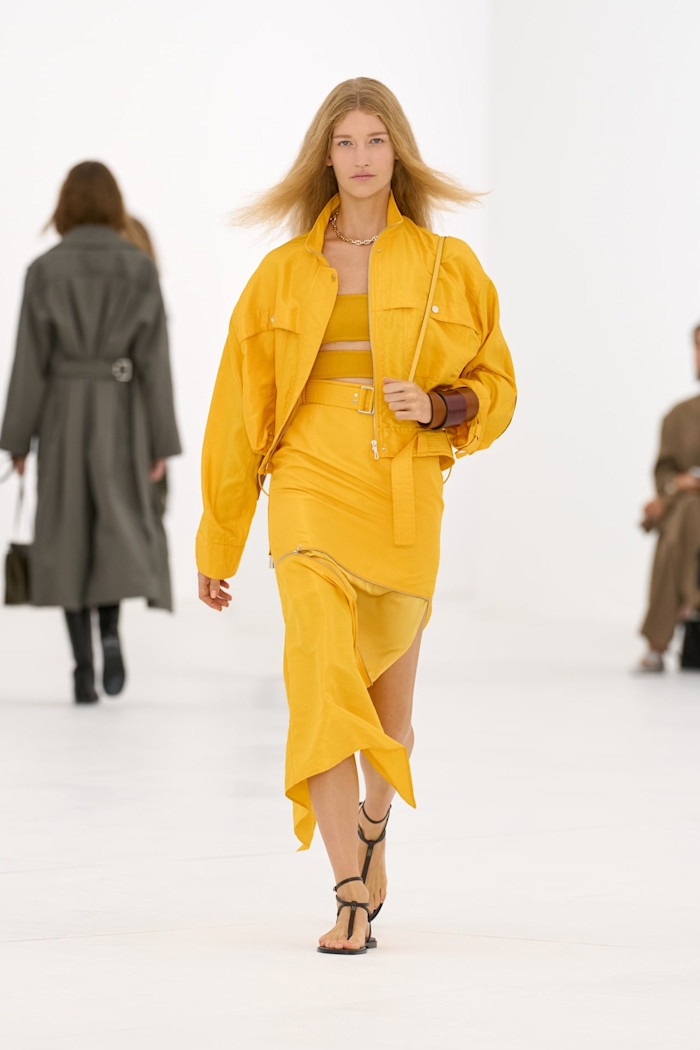
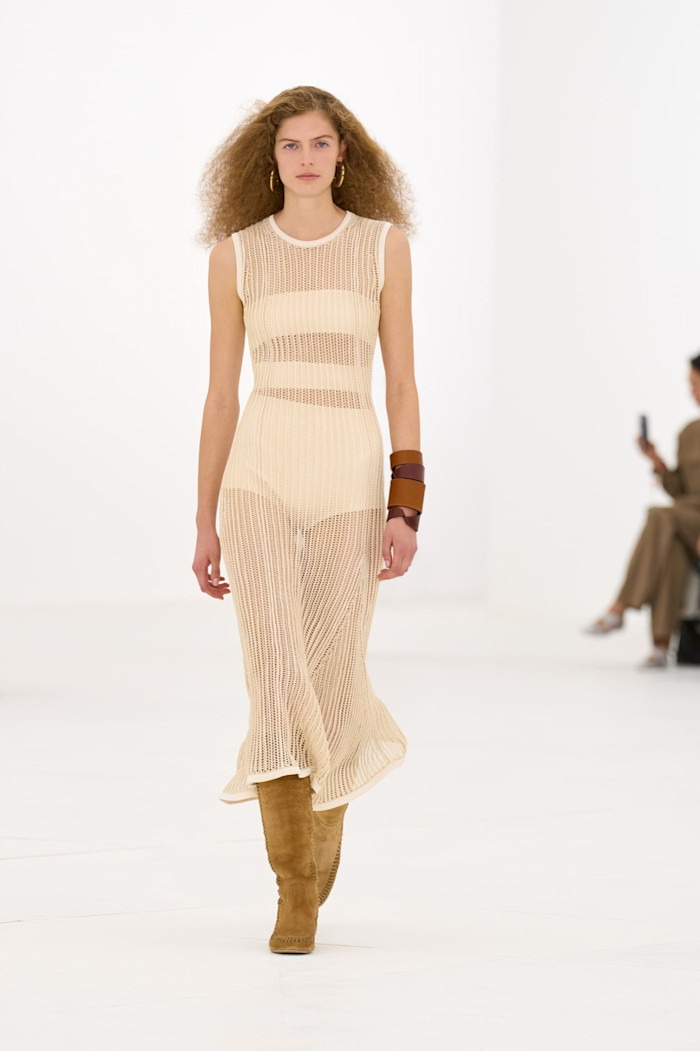
There was an entertaining New Yorker profile of Hermès recently, one that explored how artistic director Nadège Vanhée has been introducing risqué sexiness and psychological depth to a traditionally conservative brand synonymous with equestrian culture. But those looking for whips, harnesses and kinky leathers would have walked away disappointed from Vanhée’s latest show on Saturday. Like other designers this season, after one of France’s hottest summers on record, she had landed on creating airy light clothes. Barely there still has sensuality of course: see fine gauzy knit dresses with delicate leather panelling, sandy-coloured coat dresses with hems cut to ribbons and zippered trousers and skirts. But these clothes, largely in neutrals and citruses, felt more pragmatic than provocative. It left one wondering what direction Vanhée’s debut couture show will take in January.
Loewe
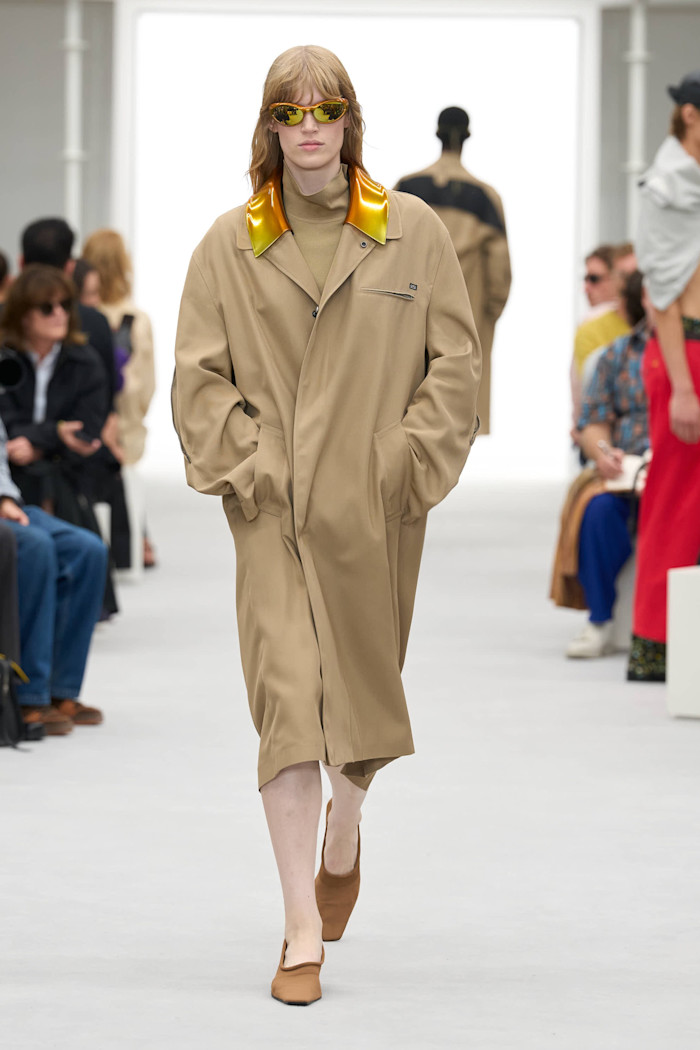
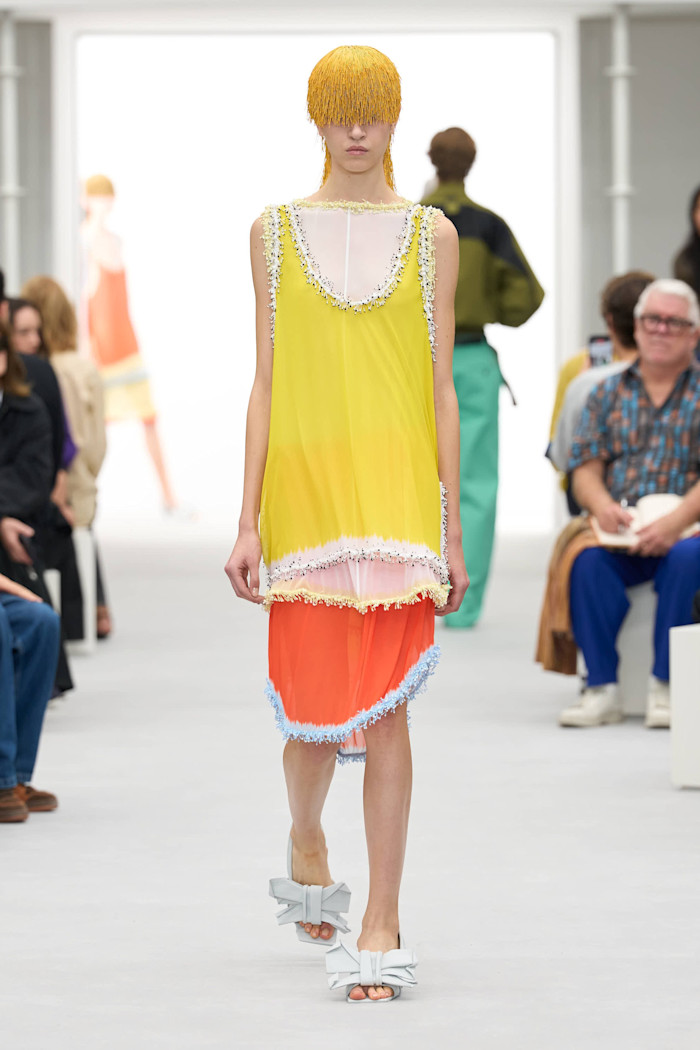
Jack McCollough and Lazaro Hernandez have spent a year since their arrival as co-creative directors at Loewe putting their mark on this 180-year-old brand owned by LVMH. Their direction so far? Playful, sporty and with heavy doses of normcore and craft. It was more of the same at their show this season, held at the very end of the metro line at Château de Vincennes. Gas station sunglasses worn with polo dresses, and oversized macs finished with metallic collars and technical parkas worn over micro mini dresses (and cycling caps) were mixed in with multicoloured layered sleeveless shifts with intricate caviar-beaded hemlines (and headpieces) or hot pants embroidered with flowers. Conceptual clothes, sure, though a bit fussy and not especially wearable — until you saw those ideas translated into the more covetable shoes and bags, ultimately what ends up in the hands of consumers.
Valentino
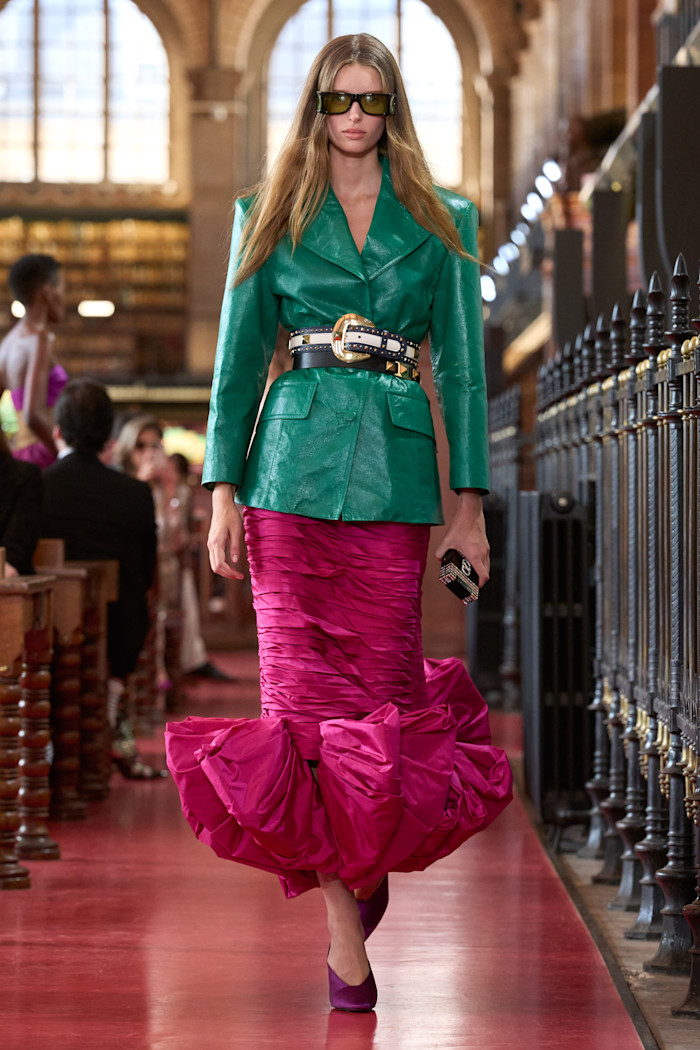
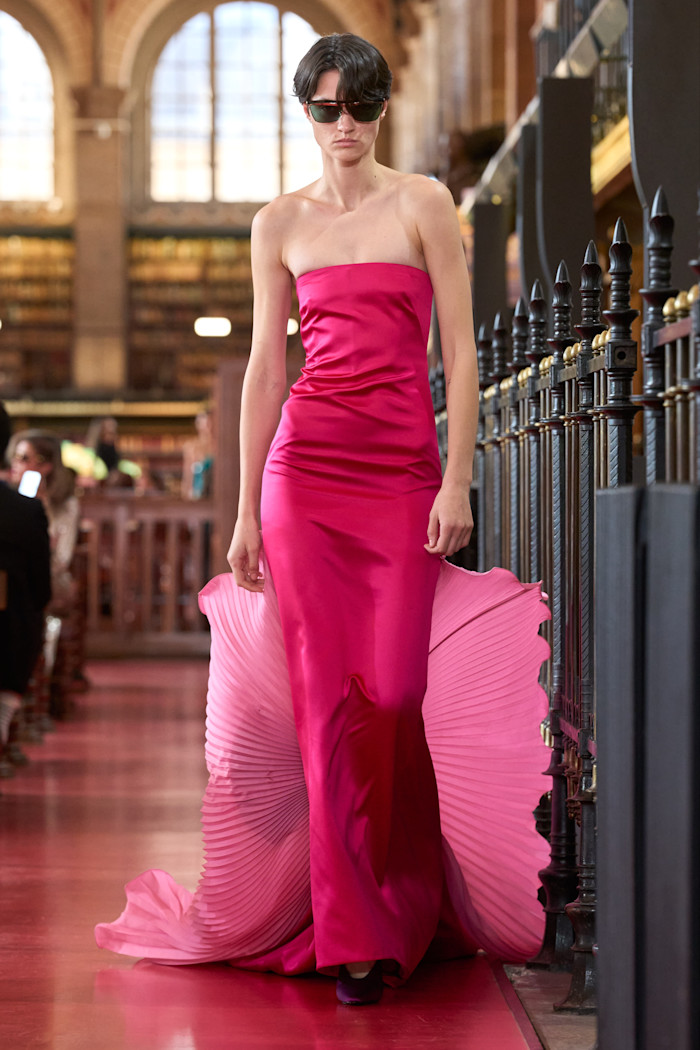
In the vast library in the Latin Quarter where guests gathered for the Valentino show, Alessandro Michele offered almost as many ideas as there were books lining the walls (and there were many). In his defence, this has always been the Michele way: the man has a magpie mind, constantly referencing ideas and epochs then repackaging them in his distinctive grand, colourful aesthetic. Here, there was lots of glamorous ’80s-style partywear, most of which felt in line with the classic Valentino codes: strapless ruched dresses with ruffled bow hems, belted leather jackets with taffeta fishtail skirts; bold-shouldered suits or beaded coats with marabou-fringed sleeves over silky evening gowns. Lots of lace cycling shorts, and extravagant layered necklaces. At more than 80 looks, there was plenty to study, though it didn’t feel like anyone was learning anything new.
Sacai
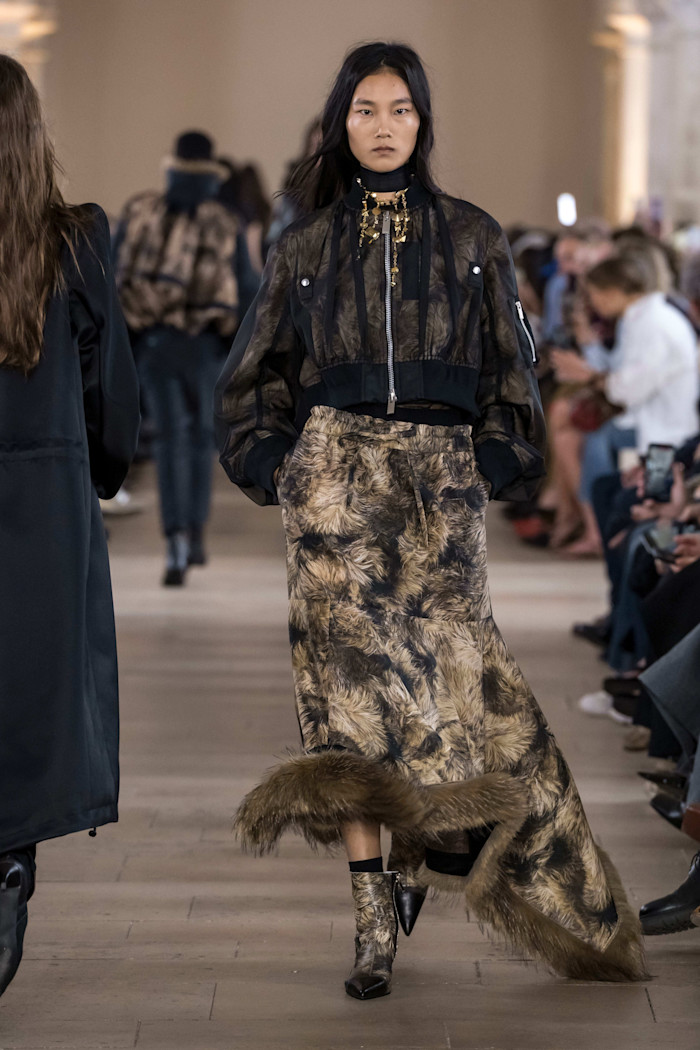
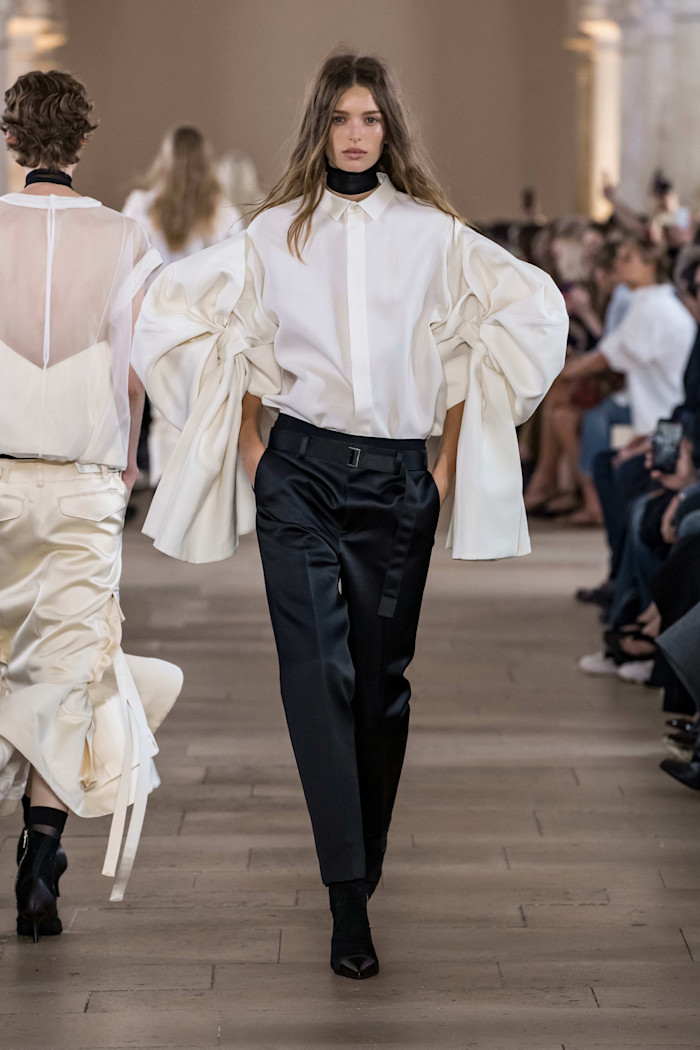
Another Japanese designer happily doing things their own way is Chitose Abe at Sacai. Abe (who once worked with Watanabe) has a penchant for complex cutting and what she calls “hybridisation” — splicing two different clothing styles or fabrics together. This season, she focused on reinterpreting familiar clothing through contrasts in textures, proportions and construction to terrific but still wearable effect. Military-inspired tailoring was feminised with sparkling embellishments, chiffon or satin fabrications and tongue-in-cheek prints like fur or diamonds, with some pieces then finished with the real deal sitting on top of the print. Exaggerated volume was everywhere, especially on skirts and sleeves in technical fabrics, and a great white shirt. Like so many designers, Abe said she wanted to explore tension this season. There was understated spectacle to her work, but also real substance.
Louis Vuitton
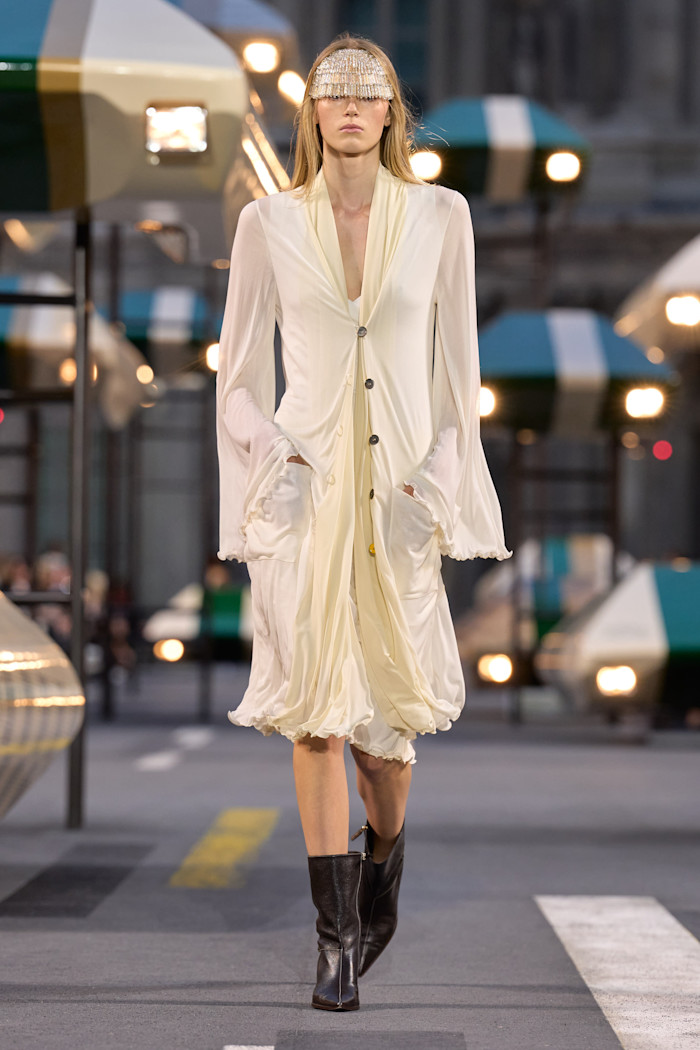
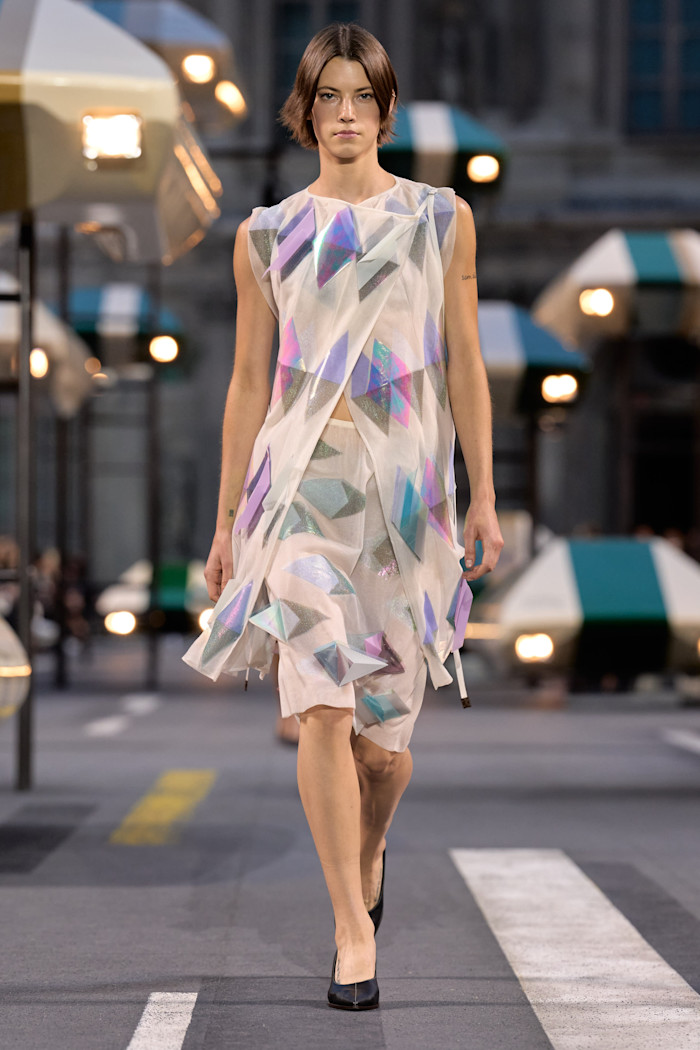
Nicolas Ghesquière has always been a designer who looks ahead. During his 13 years at Louis Vuitton, many shows have fused an air of retro-futurism with bold, almost architectural silhouettes. His latest collection, which closed Paris Fashion Week on Tuesday night, was no exception. A fleet of Back to the Future-style flying cars hovered over the grand historic Louvre courtyard that had been temporarily paved with road markings to create the runway. Will cities ever look like this one day? And, if so, what will we wear?
According to Ghesquière, slip dresses, cardigans and reefer coats in faint greys, silvers and yellows and feather-light fabrics so delicate they danced on the evening wind. Stiff and angular looks were nowhere to be seen this season (except the leather loafers); those clothes had been replaced by something softer and more fluid in the face of weighted, turbulent times. “I am a specialist in fashion that is like armour, fashion with strong architecture, but this summer I think we all felt like we needed a different wardrobe,” Ghesquière told reporters backstage less than a week after he received a knighthood from French President Emmanuel Macron for his contribution to French creative industries. “The world is getting warmer. We need to think differently for clothes to be relevant today and in the future.”
Follow us on Instagram and sign up for Fashion Matters, your weekly newsletter about the fashion industry