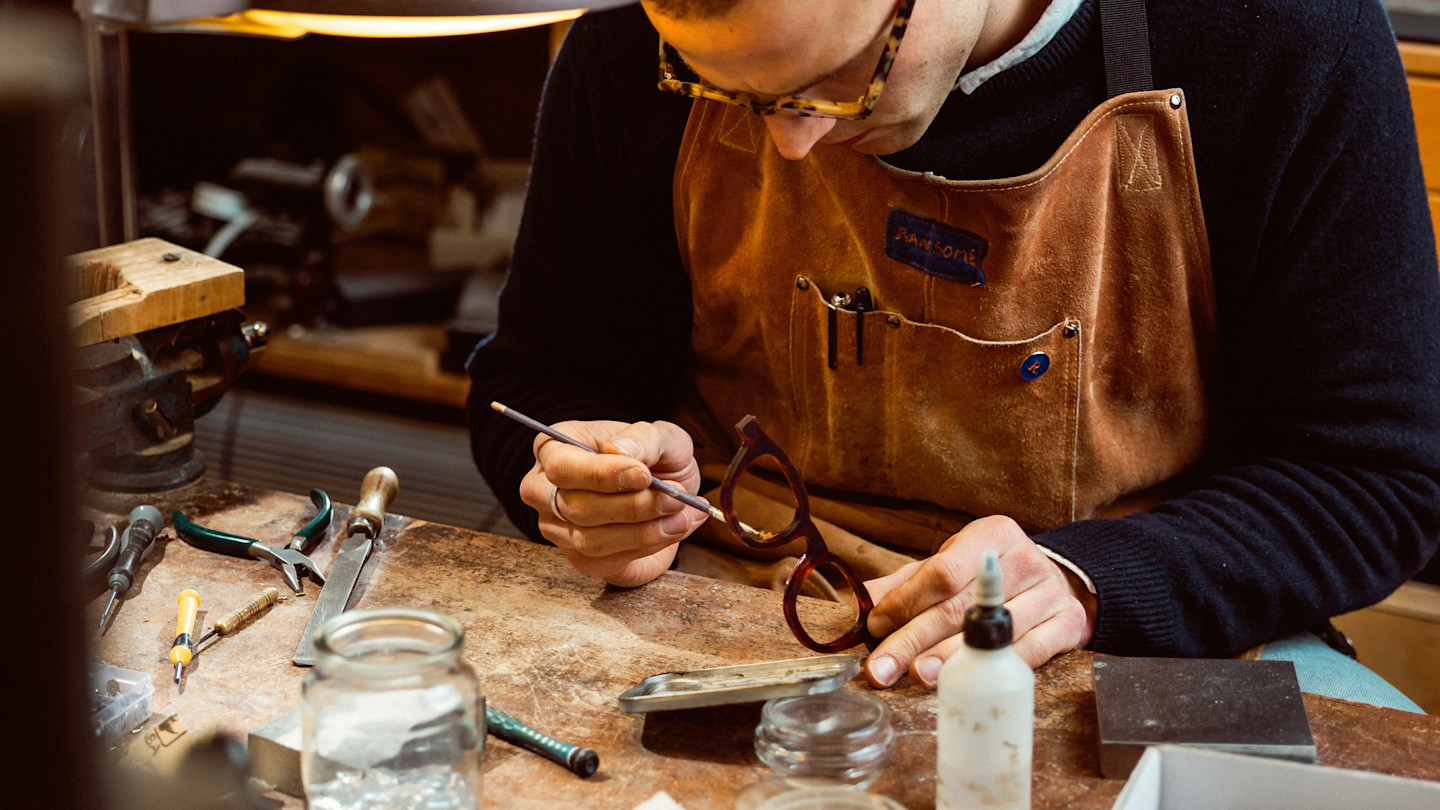
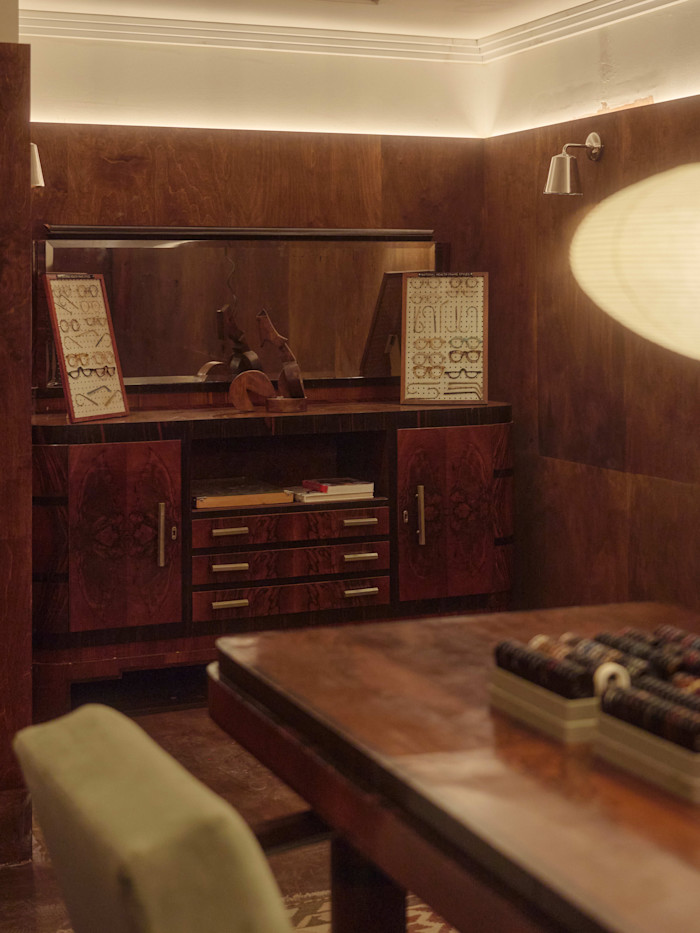
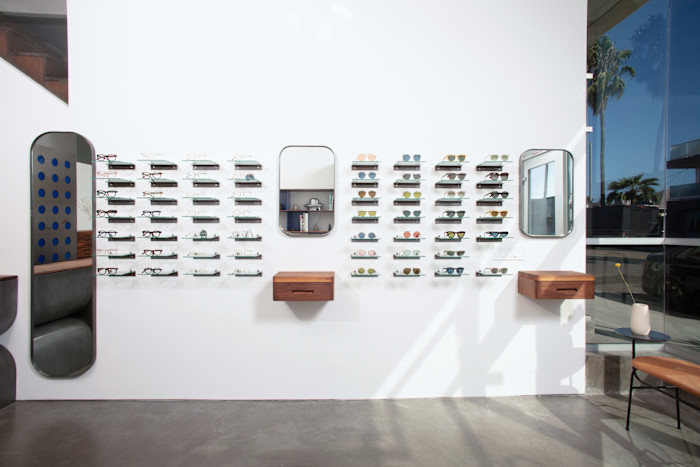
Earlier this year, eyewear label Cubitts opened a new headquarters behind King’s Cross in London. Named The Yard, this is more than just an office, with space for manufacturing eyewear and training a new generation of makers. At its heart is a “bespoke consultation room” where clients can work with the Cubitts team to commission a unique frame.
“We’re trying to grow our made-to-measure and bespoke capacity tenfold,” says Tom Broughton, the brand’s founder. “Currently, we’re making thousands a year, but the plan is The Yard will make tens of thousands.”
Cubitts is an established player in the eyewear industry, with 18 shops across the UK and outposts in New York. Bespoke glasses, more generally, are the domain of smaller outfits. Across the world, the process of designing and making eyewear as if it were a tailored suit is being upheld by a few designers and opticians. Some of them have been doing this for generations; others are self-taught and just getting started.
The bespoke service usually begins with an in-depth consultation and an exhaustive range of measurements. The client will be involved in every aspect of the lengthy — and costly — process, deciding on everything from material and shape to engravings and hinge placements.
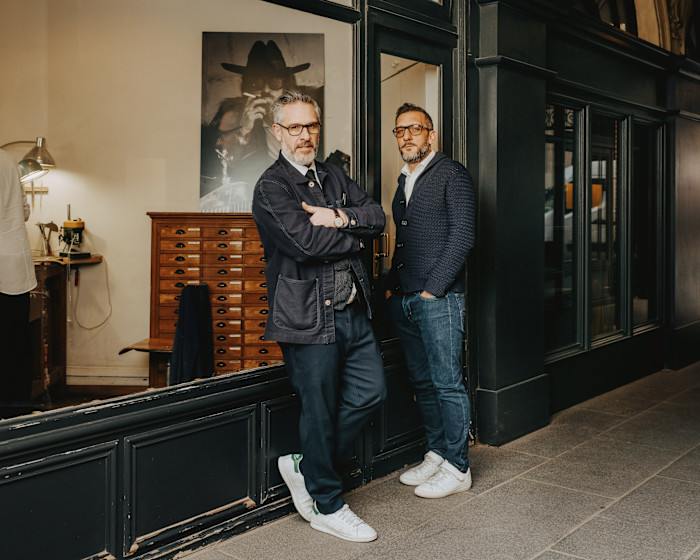
Maison Bonnet is the grande dame of bespoke eyewear, with almost a century of history and a store in Paris’s 1st arrondissement. It has made glasses for Le Corbusier, Yves Saint Laurent, Audrey Hepburn and Brad Pitt. Nowadays, the company is led by Franck Bonnet, the fourth generation to run the business, who works with his brothers Steven and John.
“We do one frame for one face,” Bonnet says. “We need a face to inspire us.” The first meeting takes an hour and a half, and is as much a conversation as it is an eye exam; the team asking questions while they watch how your body moves and shifts. “We all have asymmetries,” Bonnet continues. “Most often, we notice it more on your eyebrow. One eyebrow is slightly higher than the other one. You’ll find the same thing on the ears, on the shoulders and so on.” Almost reflexively, Bonnet begins analysing my face and the glasses I’m wearing. “The shape is not bad,” says Bonnet. “But it’s not very straight.”
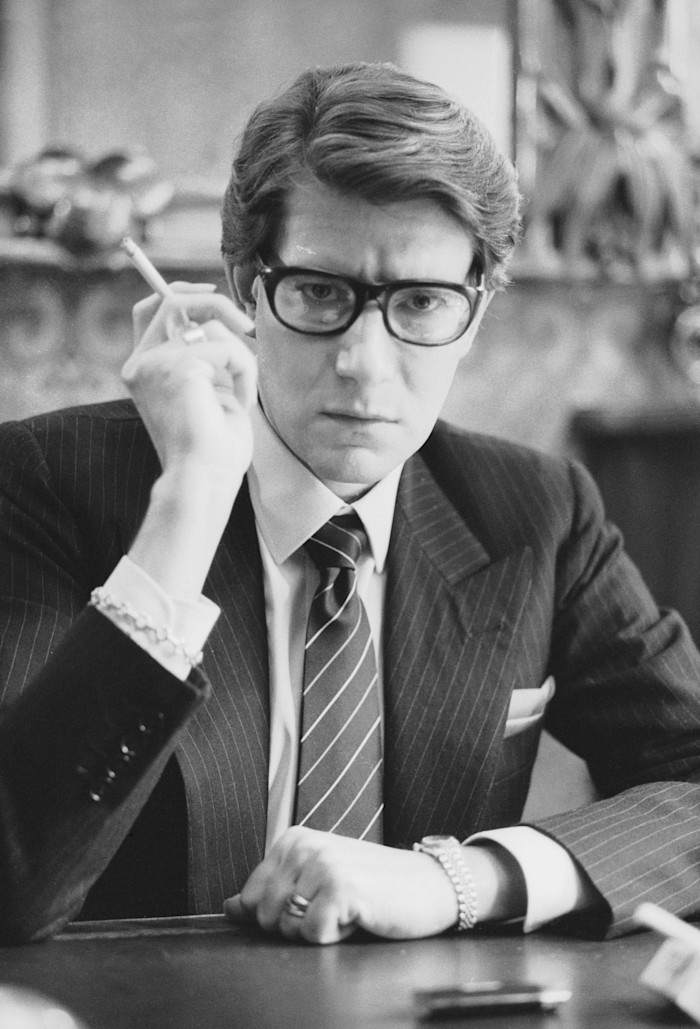
Maison Bonnet frames begin at €1,700 for bio-acetate. Different materials cost more, with buffalo horn starting at €2,400 and tortoise-shell at €10,000 (using pre-existing stocks from turtles that have died from natural causes), then add-ons and adjustments each bring their own cost. For Bonnet, focusing on the price misses the point. “The real question is what is the value of the object you will wear for 15 or 16 hours a day, in the very centre of your face?”
EB Meyrowitz was founded in London in 1875, eventually expanding to open branches in New York and Paris. By the 1960s, the company had faltered and it was split up. The manufacturing side closed down. In 1993, Sheel Davison-Lungley was working at EB Meyrowitz when she had the opportunity to purchase the London company. “She loved the brand, but had become a bit disillusioned by what it had become,” says her son Jamie, who now runs the company with her and serves as creative director.
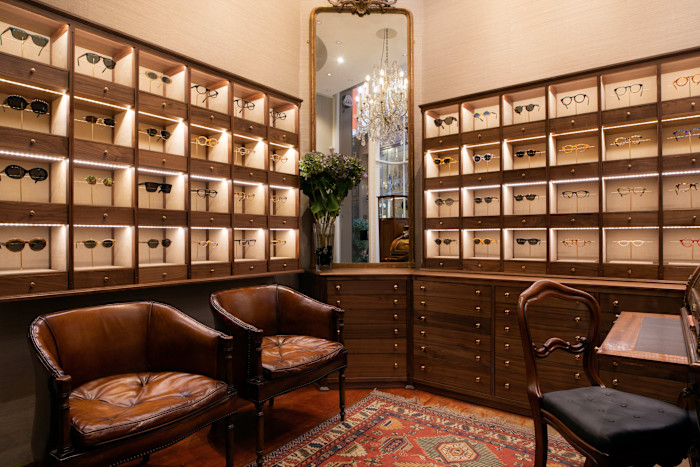
Under the Davison-Lungleys, bespoke has become an important part of EB Meyrowitz once more. “We have more variance in our faces — nose width, eye width, head structure — than any other part of our body,” says Jamie. “Yet spectacles are mass-produced and only conform to a few different sizes.”
Having a pair of glasses made by EB Meyrowitz is a decidedly British experience, and begins at its Royal Arcade store on Old Bond Street. “We always start with a good chat,” Jamie explains. “We try to understand the lifestyle, what they’re looking for from an aesthetic point of view, their facial geometry and how we’re going to translate that vision.” Then, the customer’s decisions begin, including the extensive array of luxury materials that EB Meyrowitz is known for. “Acetate, buffalo horn, real tortoise-shell are the three main materials,” says Jamie, “but we also make in exotic wood . . . and we’re about to work with fossilised coral.” Prices start at £2,500, while rare materials can begin at £8,000.
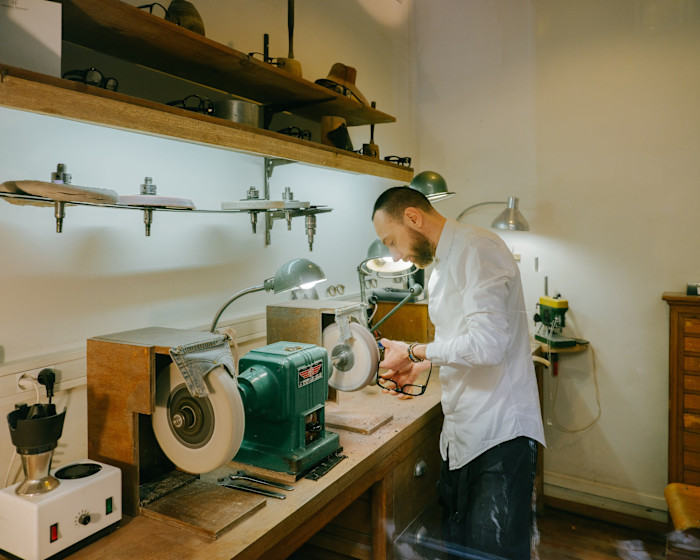
Not all bespoke eyewear companies trade in the old-school luxury and heritage of Maison Bonnet and EB Meyrowitz. Ransome Optical sits close to Hampstead Heath and is a relative newcomer, having opened in 2024. Founded by Jack Ransome Lupton, a qualified optometrist and self-taught glasses maker, the company has collaborated with menswear store Drake’s and made frames for the late artist David Hockney. “We’re the only optician in the UK that makes frames and does eye tests on site,” Lupton says. “What we’re doing is not actually novel, it’s just revisiting the way that opticians used to be.”
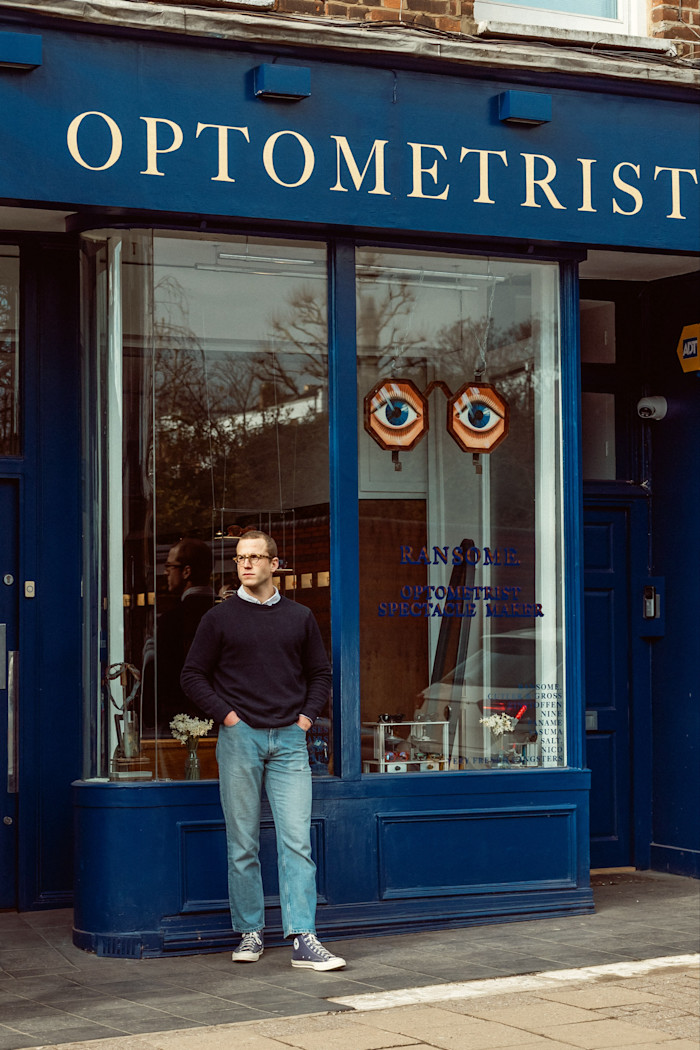
All of Lupton’s frames are made by hand on site. “It might not look like the most perfect frame you see on a shelf, but that’s because it’s made by hand and cut with a saw,” he says. “I think that’s a really beautiful part of the process. In this era when everything is factory produced, it’s cool to see something that isn’t. If you’re always striving towards making the perfect frame, then you end up losing that beauty.” Ransome bespoke, handmade acetate glasses cost a flat £700 (buffalo horn is more expensive). “If you make it too exclusive, it’s not appealing,” Lupton adds.
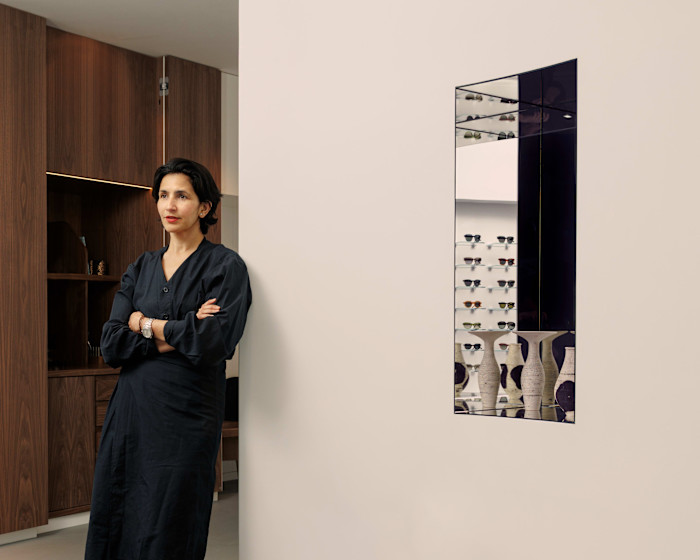
Ransome isn’t the only label doing bespoke differently. Ahlem was founded in 2014 in Los Angeles by Ahlem Manai-Platt and initially didn’t offer a one-of-one service. When regular customer LeBron James asked for a custom pair of glasses, Manai-Platt realised there was a market. “If we could create one-of-one for LeBron, we could create it for anyone,” she says. The process begins with a consultation with Manai-Platt, allowing her to see your face up close. “When we talk, I’m already sketching,” she says. “I can see you, how you talk, how you laugh, how that one eye is going up.”
Ahlem bespoke glasses begin at $4,500, a price that reflects the label’s work with craftspeople who have been awarded the prestigious Meilleur Ouvrier de France. “Of course there is a price tag to it, there is a time tag to it,” Manai-Platt says. The personalisation at Ahlem extends beyond just shape and fit. “I design just for you, I will never repeat it, I will never go close to it,” she says, mentioning a client in New York who wanted the entire frame carved to look like vines. Nowadays, Ahlem has ateliers in Paris, New York, Los Angeles and San Francisco.
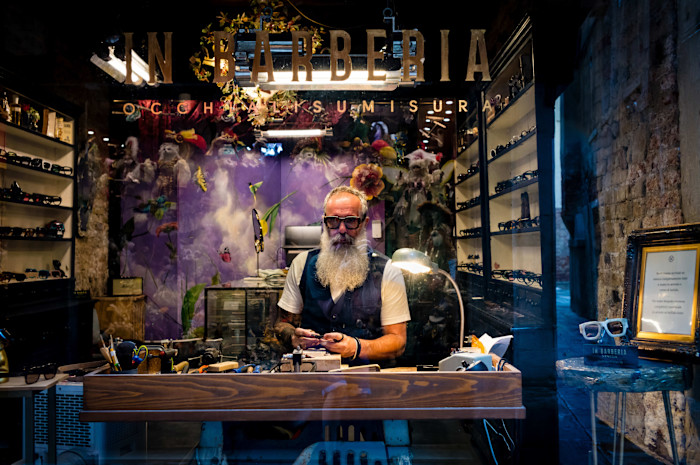
In Venice, In Barberia has been making bespoke eyewear since 1980. The company has become a tourist attraction, with a craftsman carving frames in the shop window. “It’s interesting for people to see the many processes that you need to make a frame,” says co-founder Marco Andreoni. “People can understand how long it takes, so it justifies the investment when they buy a frame from us.”
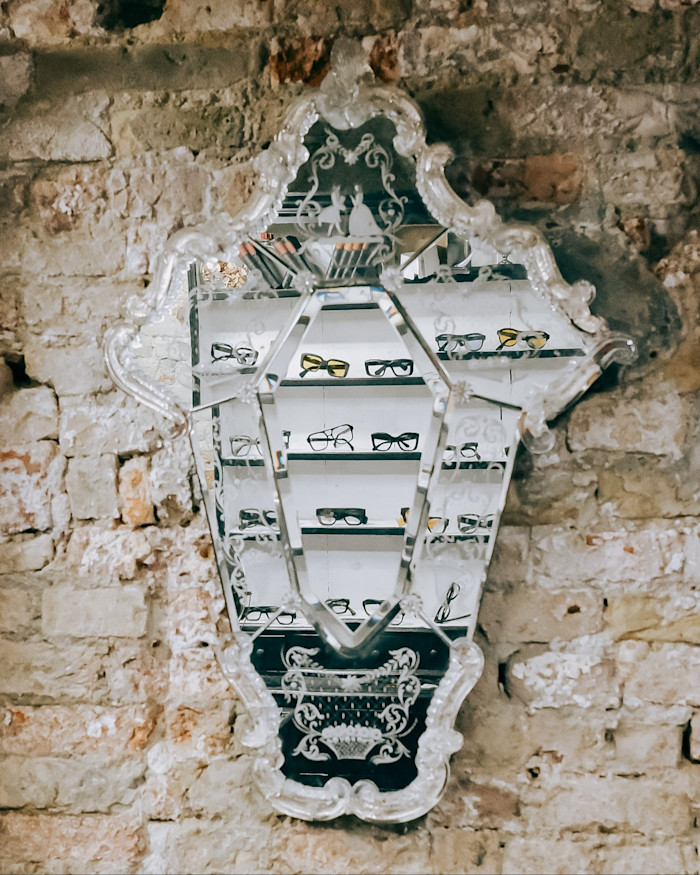
Glasses from In Barberia come in Italian or Japanese acetate and buffalo horn. As with other bespoke framemakers, there are two types of In Barberia customer: those who like how the glasses look and those who aren’t served by conventional eyewear shapes and sizes. “We have customers who couldn’t find frames,” Andreoni says. “So there is also a technical problem to solve, the length of the arms, the width of the frame.” As Bonnet says, bespoke “sometimes it’s not luxury, it’s a need”.
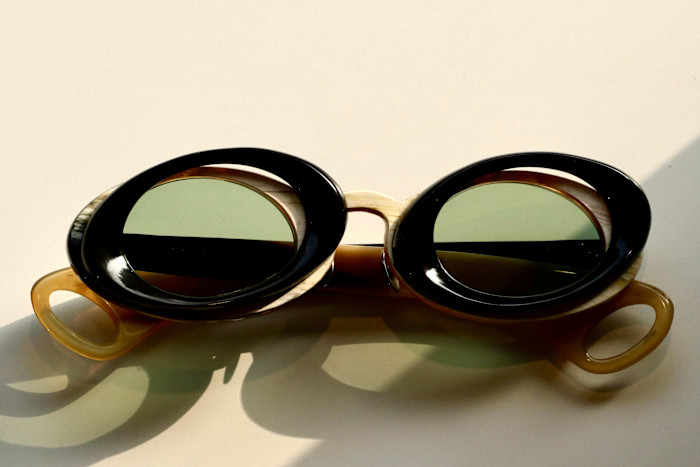
The desire for bespoke glasses extends beyond the traditional fashion capitals. In Bangkok, Chaiwat Wattananukit founded his eyewear label GIMM in 2013 after working as a jewellery designer. With GIMM, Wattananukit introduces a “gimmick” to each frame, a small detail that separates it from the everyday. This could be almost anything, from added extras that can be clipped on and taken off to an unexpected mix of materials or exaggerated proportions and asymmetric details. “Every person is different, and I enjoy creating something that belongs uniquely to that person,” says Wattananukit.
With a bespoke client, Wattananukit has the time to focus on every aspect of the frame. “It’s not just about making a pair of glasses, it’s about choosing the material, shaping the design, and working through every small detail by hand. I enjoy the process of turning an idea into something that can be worn every day and, hopefully, kept for years. Bespoke work gives me the freedom to make things that would be difficult or impossible to produce in a mass-production environment.”
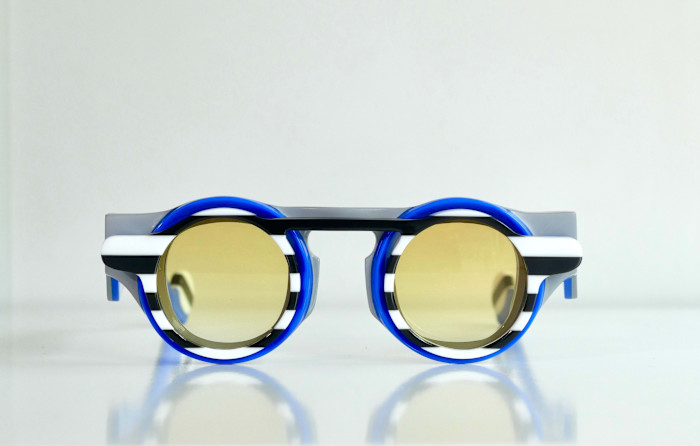
It might seem strange to spend hundreds or even thousands of pounds on a pair of glasses, and to wait for the best part of a year until you can use them. But you’ll also know that they have been made exactly for your measurements and for every idiosyncrasy of your face. It’s for this reason that their makers think they are worth the investment.
“People put up with things with their glasses that they wouldn’t tolerate with clothes or shoes,” says Bonnet. “At some point, they come to bespoke, because when you have to wear glasses from day to night every day of your life, comfort and aesthetics aren’t just details.”
Follow us on Instagram and sign up for Fashion Matters, your weekly newsletter about the fashion industry