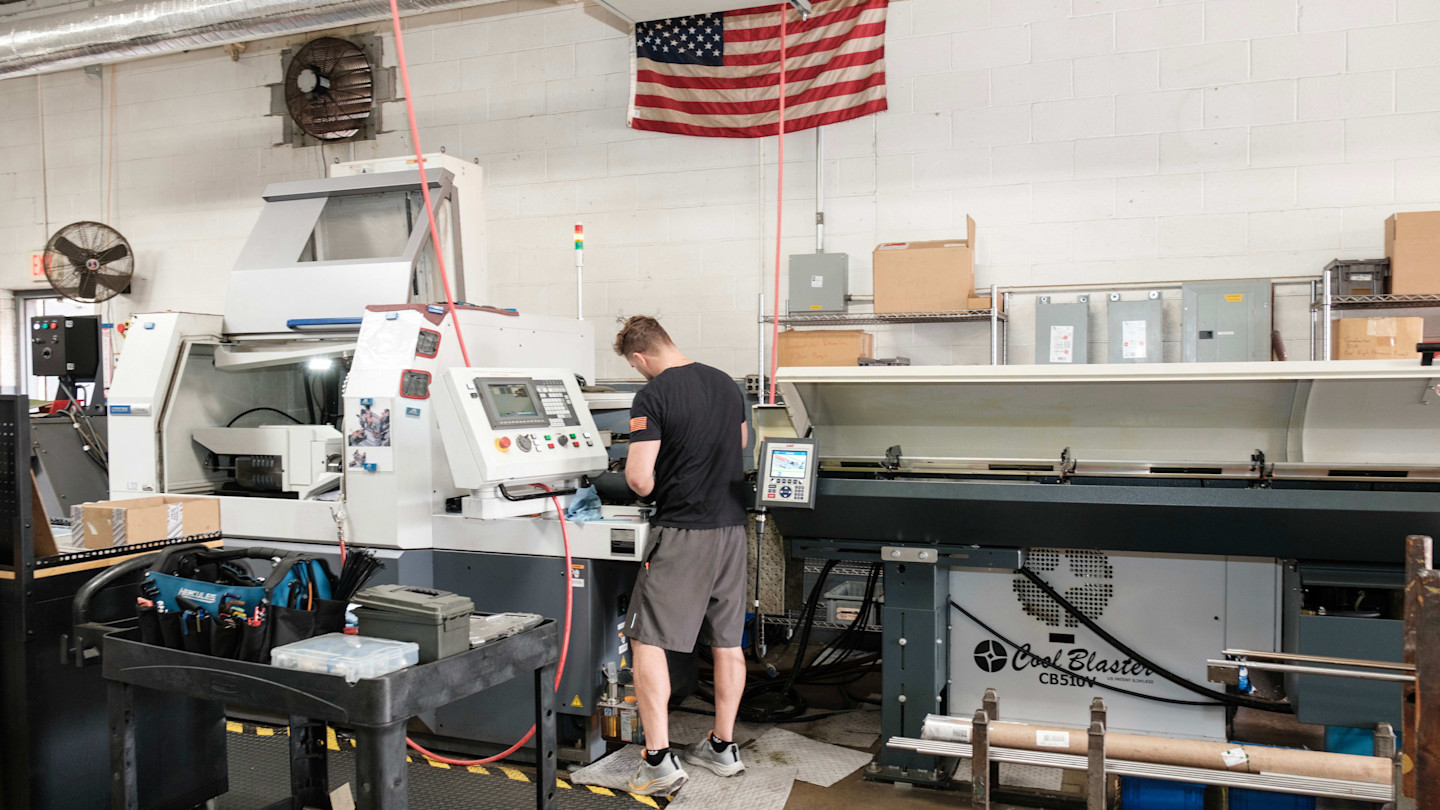
Rob Hines has been unable to find a new job since being told in January that his Ohio factory — owned by President Donald Trump’s Wall Street backer John Paulson — would close and move a chunk of production to China.
The plant, which made brass musical instruments for 60 years, laid off about 150 workers. The closure jarred with the US president’s promise to reindustrialise the country with trade wars.
“A lot of our people believed in Trump, believed in Vance,” said Hines, referring to vice-president JD Vance, who is from Ohio. “This administration was good at selling dreams.”
The Conn Selmer factory sits in a cluster of manufacturing plants dotting the busy roads of Eastlake, a Republican stronghold on the outskirts of Cleveland. Small factories are sprinkled among barber shops and diners. A sign plastered on the window of a flagpole store urges customers not to fly the stars and stripes “on a flagpole made in China”.
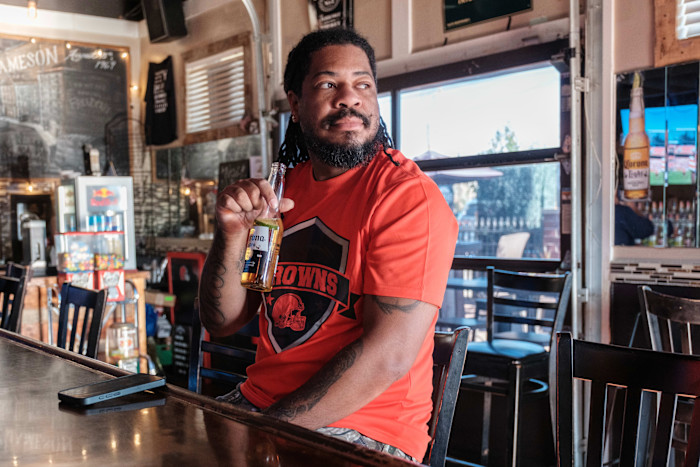
This corner of the American industrial heartland is among the most contested electoral battlegrounds in November’s midterm elections. Ohio has voted for Trump since 2016, endorsing his pledge to end decades of decay across the upper Midwest and revive everything from steelmaking to making cars.
But Democrats say they can reverse this trend. In Ohio, Sherrod Brown — who lost a US Senate race two years ago — is fighting to reclaim a seat in the chamber, with a pitch squarely directed at the kind of blue-collar voters that have abandoned a Democratic Party perceived as run by coastal elites. Polls put him ahead of the sitting Republican senator, Jon Husted. Republicans hold a 53-47 majority in the US Senate.
“This administration has let a lot of people down, and it’s going to be a moment of reckoning in the midterms,” Hines said. “I think Republicans are going to get smoked.”
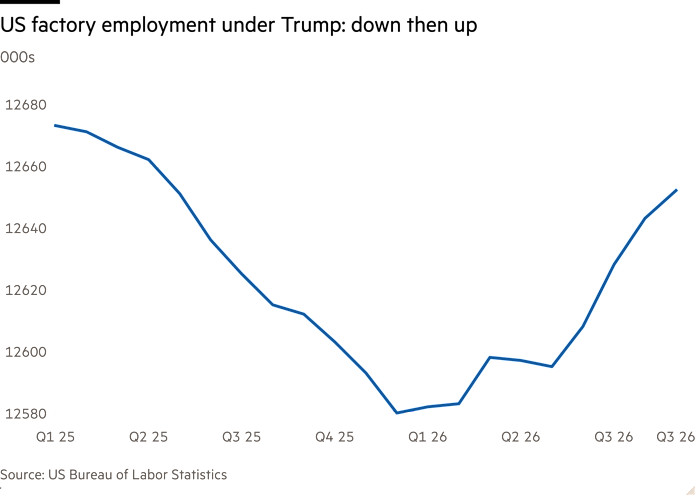
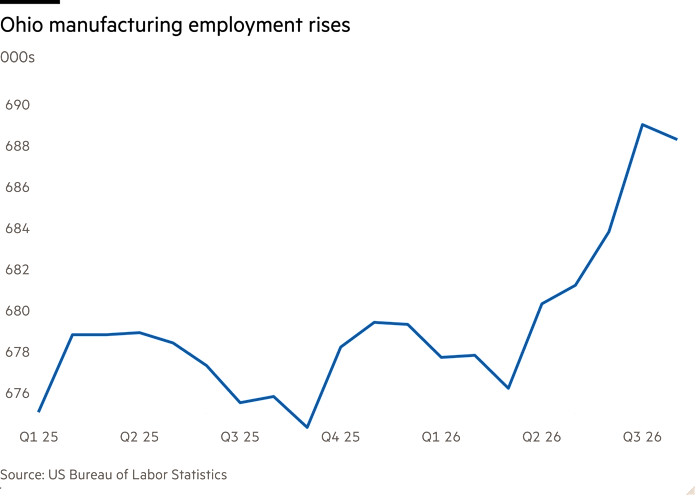
Although the White House keeps touting the manufacturing boom Trump has said is under way across the country, the picture is complex. Ohio has gained about 13,000 manufacturing jobs since he returned to office. The St Louis Fed estimates the US added roughly 70,000 jobs in the sector from a low point at the end of last year. But the overall picture remains worse now than before the president began his second term: the US has shed more than 21,000 manufacturing jobs since January 2025.
At the same time, persistent inflation and the heavy cost of everyday goods, groceries and fuel had added to the burdens of expensive tools and machinery needed by Ohioans running their manufacturing businesses.
It means the midterm elections in Ohio have become a referendum on Trump’s presidency, with both parties linking November’s vote to a judgment on his record.
“Trump has repeatedly asked voters to consider him on the ballot as they choose their candidate,” said Frank Luntz, a Republican political consultant and pollster. “In Ohio, that would be problematic.”
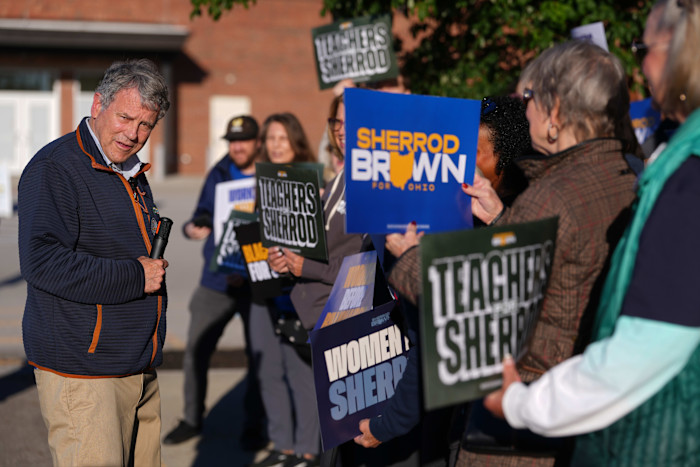
For Brown, his quest to win back voters is also a test of the Democratic Party’s appeal to America’s working class. The senator had spent decades backing unions and vehemently opposing free trade, making him a leader of the Democratic old guard, with an original brand of economic populism. His defeat in 2024 during Trump’s rout of Kamala Harris pointed to a party that had lost touch with the blue-collar voters that once formed its base.
On the campaign trail, Brown has tried to direct Ohioans’ economic anger at the billionaires that he accuses his Republican opponent of being in cahoots with. He has taken aim at Husted over his support for the proliferation of data centres across the state, accusing him of offering billions of dollars in tax breaks to Big Tech.
“The billionaires, trillionaires and corporations all know Jon Husted is for sale,” Brown said in a recent campaign speech. “He’ll put them before hardworking families every single time.”
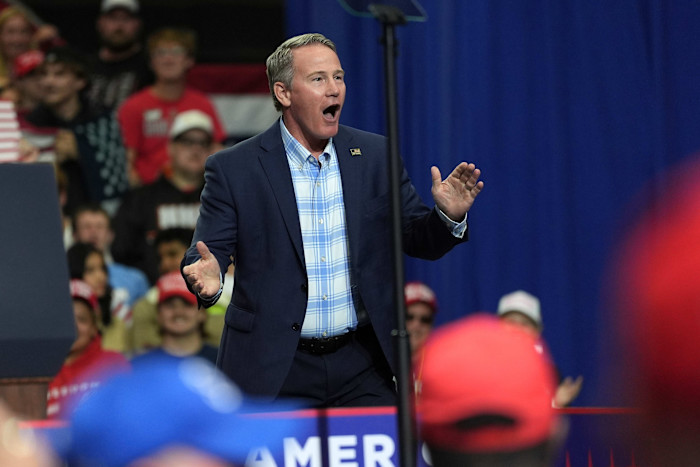
Husted is also pitching himself as the candidate for the working man, touting his upbringing as the son of a machine tooler who lost his job when the factory closed.
“It closed because Ohio and America were losing their competitive edge,” said Husted in a campaign video. “America’s leaders have let China and other countries steal our technology and our jobs. It didn’t have to be that way.”
As a state representative, Husted said he helped deliver Ohio’s largest tax cut “to help working families keep more of their money”. As lieutenant-governor, he said, he led efforts to bring thousands of jobs to Ohio.
But Husted is trailing. A New York Times/Siena poll released on Saturday showed Brown leading him by three percentage points among likely voters. Other polls also put the Democrat ahead.
In the governors’ race, Vivek Ramaswamy, a Trump ally and wealthy biotech entrepreneur who was part of Elon Musk’s programme to slash federal jobs, is battling former state health director Amy Acton. Ohio has not elected a Democratic governor since 2006, but the non-partisan Cook Political Report, a respected forecaster, says the race is too close to predict.
The prospect of defeat in Ohio, Vance’s home that was crucial to the hardscrabble backstory he described in his book Hillbilly Elegy, has triggered alarm among top Republicans.
The party has spent $240mn on campaign adverts running between the start of September and election day in early November. Most has been spent on the Senate race, making it one of the most expensive contests in the country. Democrats had spent just over $149mn by late September.
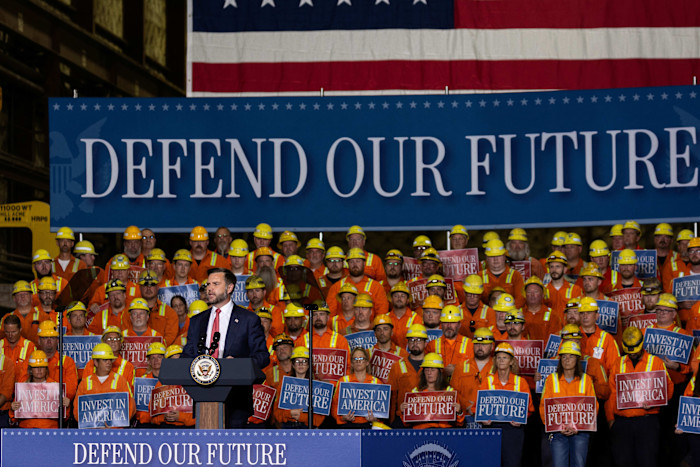
Vance returned to his hometown of Middletown recently to campaign at the steel factory where his grandfather worked to try to assure people that Trump had not forgotten them.
“You made a choice to reverse 40 years of American decline and make Donald Trump the president of the United States,” Vance said. “And I’m not saying it’s going to be easy or it’s all going to happen overnight, but in just 18 months, we have seen an explosion of rebuilding in the American heartland.”
Some voters remain willing to give the president and his party time to fulfil his re-industrialisation agenda, even as they gripe about the economy.
Robert Begovic, 35, runs Quick Turn Machining, a small plant employing 14 people in Eastlake that was founded by his parents in 1998. The facility’s complex machinery, which makes aerospace components, is spread across three adjacent warehouses, which Begovic takes pride in keeping clean.
He said some Trump policies — such as tariffs — had increased his costs.
“Machinery and tools are all coming from out of the country, unfortunately, so it does cost more,” Begovic said. “Then there’s the gas prices, which is hurting everyone.”
“I’m hoping for short-term pain for long-term gain — like jobs coming back,” he said.
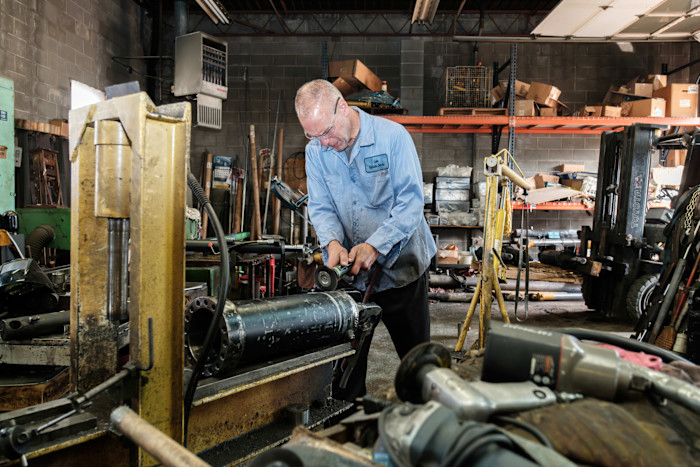
A few blocks away, James Leicher has been making hydraulic cylinders from a small manufacturing business for 40 years. In the back of his small and cluttered shop, a metal locker bore stickers urging customers to buy American goods.
Leicher said tariffs could help and hurt manufacturing. “It depends on the industry,” he said. “I have a customer who can only get components from overseas — he’s got to pay tariffs.”
“Everything is more expensive,” he said. “I’m making more coming in but keeping less.”
Leicher still backed Trump and hoped Brown would lose the Senate race.
Kyle Kondik, political analyst at the University of Virginia Center for Politics and the author of a book on Ohio’s political history, said the state would always have loyal Republicans ready to acknowledge problems but stick with the party.
He also warned there could be “fools’ gold” polling in Ohio giving Democrats false hope. “Polling in Ohio for Democrats can sometimes be too good to be true,” Kondik said.
Even so, Brown only needed to perform slightly better than he did in 2024 to win, Kondik said. National polling points to deep voter anxiety about the economy, high cost of living, the Iran war and Trump himself.
Ohio is hardly the only place where discontent with the president is hurting his party. In Maine, Democrats are battling to oust a five-term sitting Republican senator, while in Texas the party is bullish that rising Democratic star James Talarico can win them another coveted red-state seat.
Across the rust-belt states of Michigan, Ohio, Pennsylvania and Wisconsin, a clutch of sitting Republicans in the House of Representatives are also at risk of losing their races to Democratic challengers, threatening to end Trump’s control of both congressional chambers.
There are signs of Trump’s support fading among union voters. Polling by the AFL-CIO — a federation of 65 unions representing 15mn people — showed that more than 60 per cent of its members now had an unfavourable view of the president.
The president appears undeterred, continuing to paint a rosy picture of his economy.
At a rally in Vandalia, Ohio, over the weekend, he said the state was “booming”, tariffs were triggering “trillions” of dollars of investment and there was “almost no inflation”.
Travis Sarka, who worked at the Conn Selmer plant until earlier this year, had a different view.
Sarka described putting in tens of job applications daily. Months later, he eventually found a job that pays about $7 less than his wage at the plant.
“I’ve resorted to eating just chicken, veg and water,” he said. “Working-class people don’t get the respect of people who are in suits all day — it’s unfair.”
But Sarka said he did not know who to vote for. “I’m not left and I’m not right — the campaigns are just all too crazy.”